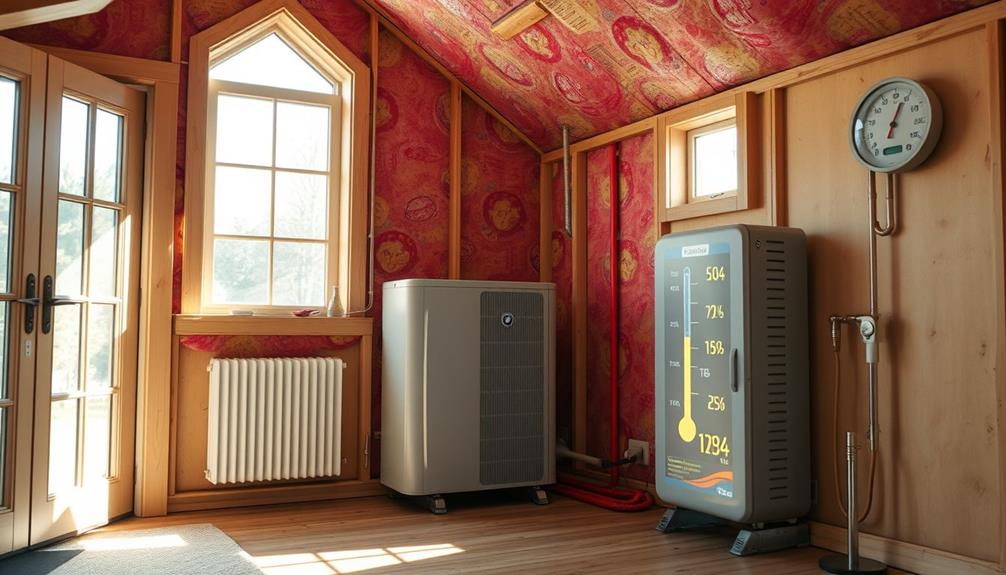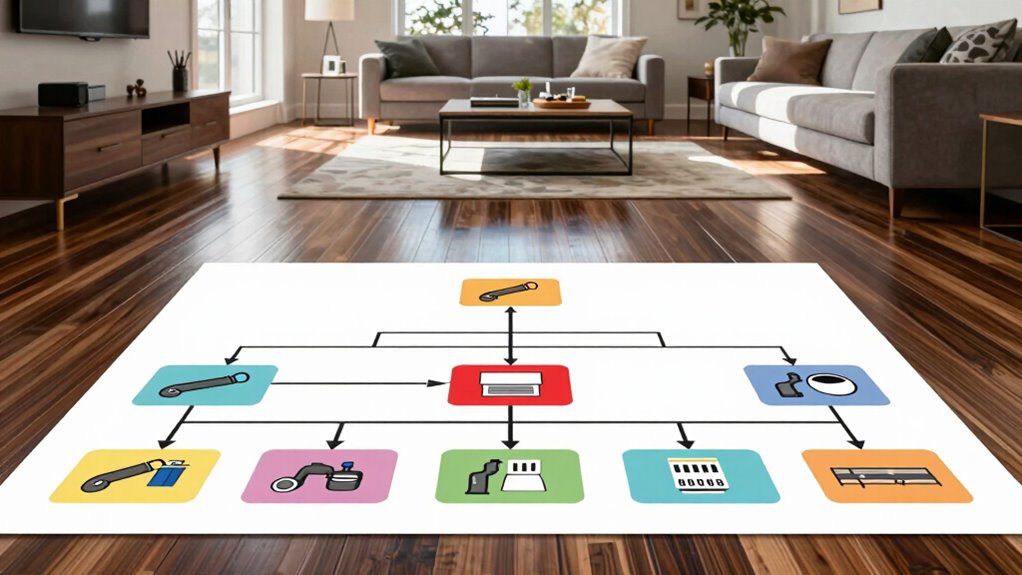

To choose the right heated-floor system for your renovation, you’ll need to take into account your home’s insulation, flooring material, and energy sources. If you get plenty of sunlight and have good insulation, solar heating could be ideal. For less sunny days, electric or hydronic systems are options. Match your flooring type for efficiency—tiles work well with radiant heat, while carpets need thicker layers. Keep in mind the long-term savings. Continue exploring to uncover how to make these decisions confidently.
Key Takeaways
- Evaluate sunlight availability and insulation quality to determine suitability of solar heating options.
- Match flooring material conductivity with appropriate heating system for optimal efficiency.
- Consider insulation type and thickness to maximize heat retention and reduce operational costs.
- Balance initial installation costs against long-term energy savings and environmental goals.
- Use a decision tree framework to select the most sustainable, efficient heating solution aligned with renovation needs.

Deciding on the right flooring for your renovation project can feel overwhelming, but a clear decision tree can simplify the process. When it comes to heated floors, your choice hinges on understanding how different systems work and what fits your space and budget best. One of the first considerations is whether you want a system that integrates with solar heating or relies on traditional energy sources. Solar heating can be a sustainable option, especially if your home already has solar panels, but it requires careful planning to guarantee consistent warmth. If going solar, you’ll need to assess whether your location receives enough sunlight and whether your existing insulation options support efficient energy use. Well-insulated floors prevent heat loss, making solar heating more effective and reducing your overall energy costs. If solar heating isn’t feasible, electric or hydronic systems become primary options, each with their own advantages and installation considerations. Incorporating digital content formats into your planning can help visualize options and outcomes more effectively. Additionally, understanding the energy efficiency** of different systems can help you make more sustainable choices in the long run. Recognizing the importance of thermal performance can assist in selecting systems that maximize comfort and efficiency. Moreover, considering renewable energy integration** can enhance the sustainability of your heating setup and potentially qualify you for incentives or rebates.
A key aspect to consider is the cost-effectiveness of various heating options, especially when factoring in both initial investment and ongoing operational expenses. Your decision tree should then evaluate the type of insulation options available for your space. Proper insulation beneath heated floors is essential, regardless of the system you select. For example, if you choose hydronic radiant heating, insulation helps contain the heat within the room, maximizing efficiency. Types of insulation—like foam boards, reflective barriers, or fiberglass—vary in cost and effectiveness, so you need to match your choice to your project’s scope and your home’s thermal needs. Better insulation not only improves heat retention but also reduces the load on your heating system, saving you money over time. This is especially important in areas with colder climates or older homes where thermal performance may be compromised.
Next, you should consider your flooring material. Some materials conduct heat better than others. For instance, tiles and stone are excellent conductors, providing rapid warmth, making them ideal for radiant heating systems. Carpets and wood, however, insulate better and might require thicker heating layers or alternative systems to achieve the same level of warmth. Your choice of flooring material will influence the type of heating system you install and its overall efficiency. It’s beneficial to select flooring options that complement the heating system to optimize energy use and comfort.
Finally, think about your budget and long-term savings. While solar heating combined with high-quality insulation might have higher upfront costs, it offers significant savings and sustainability in the long run. Conversely, electric systems might be cheaper to install initially but could cost more to operate. A thorough assessment of your home’s energy profile, insulation options, and environmental goals will guide you toward the most suitable heated-floor system. By following this decision tree, you can confidently select a flooring solution that provides comfort, efficiency, and aligns with your renovation goals.

LuxHeat 20sqft Electric Radiant Floor Heating System – 120v Heated Tile Floor Kit – Includes UDG4 Programmable Thermostat w/GFCI, Heating Cable, Uncoupling Membrane, Flooring Sensor & Alarm
- Luxury and Comfort: Easy-to-install electric floor heating system
- Complete Kit Included: Heating cable, membrane, thermostat, sensor, alarm
- Design Flexibility: Custom configurations with waterproof, crack-preventing membrane
As an affiliate, we earn on qualifying purchases.
As an affiliate, we earn on qualifying purchases.
Frequently Asked Questions
What Is the Average Cost of Installing Heated Floors?
You can expect the average cost of installing heated floors to range from $6 to $20 per square foot, depending on the system and labor. Considering energy efficiency, heated floors often save money long-term by reducing heating bills. When doing a cost comparison, remember that electric systems tend to be cheaper upfront, while hydronic systems might be more efficient over time. Your choice depends on your budget and energy-saving goals.
How Long Does a Heated-Floor Installation Typically Take?
Installing heated floors usually takes about 1 to 3 days, but it can feel like forever if you’re excited to enjoy warm toes! You’ll need to prepare by adding proper floor insulation to maximize efficiency. The process involves careful layout planning, electrical wiring, and laying the heating system beneath your flooring. Once complete, you’ll have cozy warmth, but the installation’s speed depends on your space size and complexity.
Are Heated Floors Suitable for All Types of Flooring Materials?
Heated floors aren’t suitable for all flooring materials. You need to take into account flooring compatibility and material considerations carefully. For example, tile, stone, and concrete work well because they conduct heat efficiently. However, some laminate, vinyl, or hardwood floors may not be compatible, as they can warp or crack with heat. Always check manufacturer guidelines and consult professionals to ensure your chosen flooring material is appropriate for radiant heating systems.
What Maintenance Is Required for Heated Flooring Systems?
Think of heated flooring systems like a garden that needs regular tending. You’ll want to periodically check for leaks, clean the filters, and guarantee the thermostat works smoothly. Proper maintenance keeps the system running at peak thermal efficiency, saving you energy and money. While maintenance costs are generally minimal, neglect can lead to costly repairs. Regular upkeep ensures your heated floors stay warm and efficient for years to come.
Can Heated Floors Be Installed in Existing Structures Easily?
Installing heated floors in existing structures can be challenging due to retrofit challenges. You might need to make structural modifications, like removing or adjusting subflooring, to accommodate the heating system. It’s not always straightforward, especially in older buildings with limited space or specific constraints. Planning ahead and consulting professionals can help you navigate these retrofit challenges and guarantee a smooth installation process.
As an affiliate, we earn on qualifying purchases.
Conclusion
Now that you’ve navigated the heated-floor decision tree, you’re armed with the map to your cozy, warm haven. Think of this guide as your compass through a chilly forest, guiding you toward the perfect choice for your renovation. With every step, you’re lighting a fire of confidence, transforming a cold space into a warm embrace. Trust your instincts, follow the path, and soon, your home will radiate comfort like a hearth in winter’s heart.
thermal insulation foam boards for floors
As an affiliate, we earn on qualifying purchases.
As an affiliate, we earn on qualifying purchases.
solar compatible radiant floor heating
As an affiliate, we earn on qualifying purchases.
As an affiliate, we earn on qualifying purchases.