TL;DR

Get backup power and energy gear delivered free with Prime
- Fast, free delivery on millions of items
- Prime Video, Amazon Music and more included
- Member-only deals all year
A Canary Media report describes how aluminum lost in U.S. recycling systems could help ease supply pressure if it is recovered and sorted more effectively. New sensor and AI systems are being tested, but national recovery gains and the effects of proposed policy changes remain uncertain.
Millions of tons of aluminum scrap are still discarded in the United States, while new sorting systems using sensors, lasers and artificial intelligence are being deployed to recover more of the metal, according to a report by Canary Media. The report describes recycling as a potential way to strengthen domestic supply without relying entirely on new smelters, which require large amounts of electricity.
Aluminum recycling uses about 5% of the energy required to produce virgin aluminum in a smelter, according to the report. The United States also has a substantial supply of scrap, but much of it is not recovered as high-quality metal. Scrap can be mixed with copper, brass, titanium and other materials, and identifying specific aluminum alloys is difficult with conventional equipment.
Those alloys matter because aluminum is blended with other elements for different properties and uses, including in electrical equipment and vehicle parts. The report says U.S. scrap is often shipped overseas for hand sorting, or shredded and melted into lower-value products rather than separated into useful grades.
Technology firms are developing systems to improve that sorting. Sortera Technologies raised $45 million last year to build a second facility in Lebanon, Tennessee, where it aims to separate valuable alloys from mixed scrap. Greyparrot, a U.K.-based company, installs AI cameras at recycling plants to monitor materials such as aluminum cans and identify what is passing through the facility.
Recycling Could Relieve Supply Pressure
Recovering more scrap could add a domestic source of aluminum at a time when global supply concerns and U.S. tariffs are putting pressure on the market, according to the Canary Media report. Aluminum is used in products and infrastructure ranging from beverage cans and cars to solar panels, power cables and data centers, so supply constraints can affect a wide set of industries.
Recycling may also reduce the need for additional smelting, which uses far more energy than reprocessing scrap. That matters as proposed or planned U.S. smelters compete for electricity with other large users, including data centers. The benefit depends on whether recycling systems can collect and sort scrap into material that manufacturers can use.
Joe Quinn, executive director of the Center for Strategic Industrial Materials at SAFE, described the issue as a supply-chain concern. He said the goal is to return metal to the market, alongside the environmental benefits of recycling. The report also notes that more recycled aluminum could leave supplies of virgin metal available for sectors such as defense and aerospace, which require high-purity material.
aluminum recycling sorting machine
As an affiliate, we earn on qualifying purchases.
As an affiliate, we earn on qualifying purchases.
Where Current Sorting Falls Short
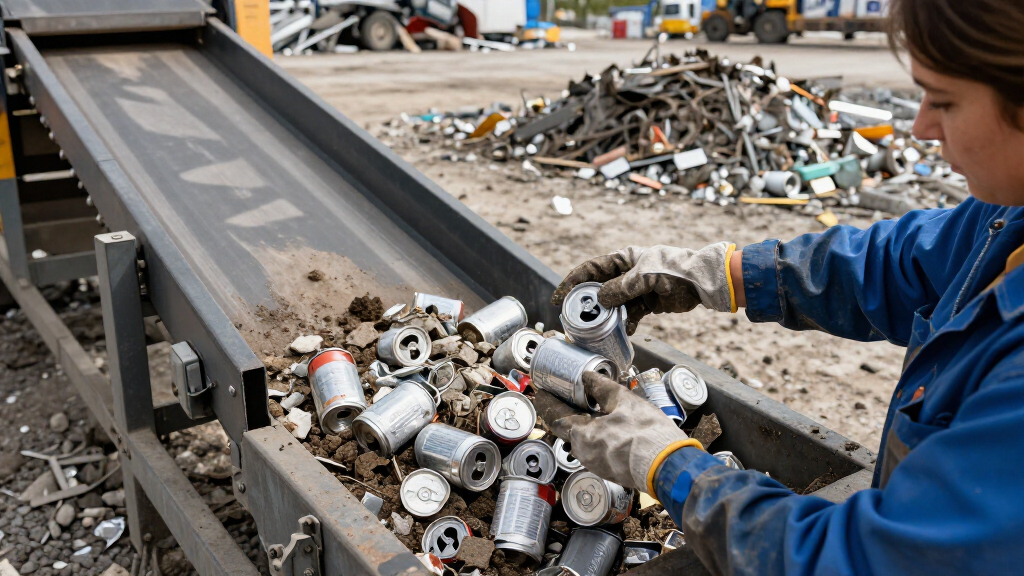
Conventional recycling lines can miss recoverable material, particularly when too much waste moves through at once or equipment is faulty. Greyparrot co-founder Ambarish Mitra told Canary Media that mechanical systems can overlook recyclables on conveyor belts. AI cameras can track material through a plant and help operators see what is being missed, but monitoring alone does not establish how much additional metal will ultimately be sold or reused.
At Circular Services’ facility in Brooklyn, which processes most of New York City’s curbside recycling, Greyparrot installed its system earlier this year. Mitra said the company’s analysis found that 89% of aluminum passing through the plant was recyclable, a figure he said was nearly double the average extraction rate for U.S. facilities. That is a company-reported finding from one facility; the source does not provide a nationwide measurement or independently verified comparison.
SAFE’s Center for Strategic Industrial Materials published a report this month on the U.S. aluminum deficit, according to the source article. The center has called for federal incentives and increased research funding for advanced sorting technologies. Those are policy recommendations, not measures the report says have been adopted.
““It’s a secure supply chain issue.””
— Joe Quinn, executive director of the Center for Strategic Industrial Materials at SAFE
As an affiliate, we earn on qualifying purchases.
National Recovery Gains Remain Unknown
The report does not quantify how much additional aluminum the new technologies could recover across the United States, or how quickly that material could reach manufacturers. Greyparrot’s 89% figure applies to aluminum passing through one Brooklyn facility, as reported by Mitra; it is not a nationwide recovery rate and does not by itself show how much aluminum is currently going to landfills across the country.
It is also unclear how many recycling plants can afford or install advanced equipment, whether improved sorting will consistently produce marketable alloy grades, and how much demand manufacturers will have for the recovered material. The source does not detail the cost of the systems, their performance across different facilities, or the likely effect of the recommended federal incentives. The scale of aluminum lost to landfills is described as millions of tons, but no time period or detailed national accounting is supplied.
As an affiliate, we earn on qualifying purchases.
Policy and Facility Results to Watch
The next developments to watch are whether policymakers act on SAFE’s calls for incentives and research funding, and whether more recycling facilities adopt advanced sorting systems. Sortera’s planned Tennessee facility is one test of whether specialized processing can recover valuable alloys from mixed scrap at commercial scale.
Further evidence will be needed to establish how much additional aluminum these systems recover, what grades they produce, and whether the metal is sold into domestic manufacturing. Until broader facility results and policy decisions are available, improved sorting is a potential supply strategy, not a demonstrated national solution to the aluminum crunch.
As an affiliate, we earn on qualifying purchases.
Key Questions
Why is aluminum being lost in U.S. recycling?
Scrap often arrives mixed with other metals, and conventional systems can struggle to identify aluminum alloys or miss material on conveyor belts. The report also points to inconsistent recycling policies and the practical difficulty of recovering high-quality scrap.
How much energy does aluminum recycling use compared with smelting?
The Canary Media report says recycling aluminum uses about 5% of the energy needed to make virgin metal in a smelter.
What did Greyparrot find at the Brooklyn recycling plant?
Greyparrot co-founder Ambarish Mitra said the company found that 89% of aluminum passing through Circular Services’ Brooklyn facility was recyclable. The source does not present this as a national figure.
Has the federal government adopted the proposed recycling incentives?
The source describes incentives and increased research funding as recommendations from SAFE’s Center for Strategic Industrial Materials. It does not report that those proposals have been adopted.
Can recycled aluminum replace all newly smelted aluminum?
The report does not say that it can. It notes that some sectors, including defense and aerospace, require high-purity metal, and argues that expanded recycling could free up virgin aluminum for those uses.
Source: rss
Halloween Picks
halloween
As an affiliate, we earn on qualifying purchases.