
To spot a bad airflow problem before your coil freezes, look for signs like weak or uneven airflow from your vents and unusual noises such as rattling or whistling. Check for visible dust or debris in the ductwork, and pay attention to uneven temperature distribution across rooms. If airflow seems reduced, it could indicate obstructions or dirty filters, which can strain your system. Keep these signs in mind—the more you notice, the easier it is to prevent costly damage.

Get backup power and energy gear delivered free — and shop member deals
- Fast, free delivery on millions of items
- Access to Prime Big Deal Days deals on October 6–7
- Prime Video, Amazon Music and more included
Key Takeaways
- Notice weak or inconsistent airflow from vents, indicating possible duct obstructions or filter issues.
- Listen for unusual noises like rattling or whistling coming from ductwork.
- Check for uneven heating or cooling across rooms, signaling airflow irregularities.
- Inspect and replace dirty filters regularly to prevent reduced airflow and coil freezing.
- Monitor for signs of system strain, such as increased energy bills or frequent cycling.

Poor airflow can silently undermine your HVAC system’s efficiency and comfort. When airflow isn’t ideal, your system has to work harder to heat or cool your space, which can lead to increased energy bills and worn-out components. One of the most common culprits is neglecting air filter maintenance. A dirty or clogged air filter restricts airflow, forcing your system to strain and reducing overall performance. Regularly check and replace your air filter, especially during peak usage months, to keep airflow smooth and prevent potential issues.
Neglecting air filter maintenance reduces airflow, strains your system, and increases energy bills. Regular checks prevent costly repairs.
Beyond the filter, duct obstruction signs are another vital indicator that something’s wrong with your airflow. Over time, dust, debris, or even pest nests can block sections of your ductwork, creating bottlenecks that prevent proper air distribution. You might notice uneven heating or cooling, with certain rooms feeling much colder or warmer than others. You could also hear unusual noises like rattling or whistling coming from the ducts, which often point to blockages or leaks. If you observe these signs, it’s time to inspect your ductwork closely or call in a professional to diagnose and clear any obstructions. Additionally, understanding airflow capacity and how it impacts your system can help you identify issues before they worsen.
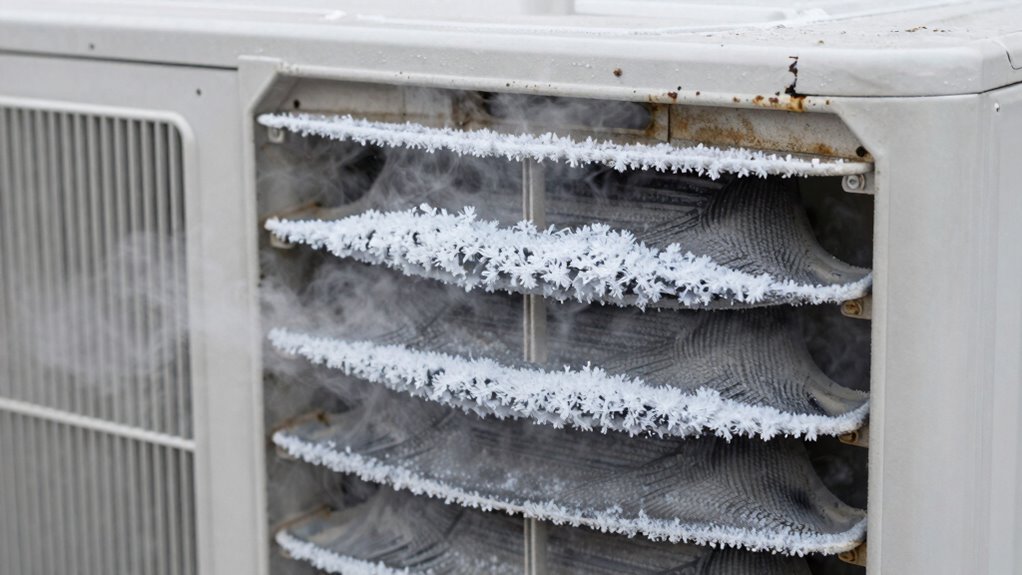
Monitoring your system for airflow issues isn’t just about comfort; it’s also about preventing damage. When airflow drops substantially, your evaporator coil can start to freeze because it’s not getting enough warm air passing over it. This can cause your AC to shut down or cycle improperly, leading to more severe damage if left unchecked. To avoid this, keep a close eye on how your system responds. If your vents blow weak air or if certain areas feel stagnant, it’s a warning sign of a potential airflow problem that could freeze your coil eventually. Regular duct inspections and proper ventilation practices can help maintain optimal airflow levels and prevent such issues. Furthermore, understanding the importance of system design can assist in diagnosing airflow challenges caused by layout or installation factors.
Taking proactive steps to secure proper airflow includes routine maintenance and awareness of duct condition. Regularly replacing or cleaning air filters is the simplest way to improve airflow immediately. Additionally, inspecting accessible ductwork for visible signs of damage or obstruction can help you identify issues early. If you suspect duct obstruction signs or notice reduced airflow, don’t delay addressing the problem. Clearing obstructions, sealing leaks, and maintaining your filters will keep your HVAC system running efficiently, preventing the costly repairs that come with a frozen coil or system breakdown.
As an affiliate, we earn on qualifying purchases.
Frequently Asked Questions
Can Airflow Issues Cause Long-Term Damage to the System?
Yes, airflow issues can cause long-term damage to your system. When airflow is restricted, your system works harder, reducing efficiency and increasing wear on components. Over time, this strain can lead to compressor damage or coil freezing. Regular maintenance routines help identify airflow problems early, ensuring your system runs smoothly and efficiently, preventing costly repairs. Addressing airflow issues promptly keeps your system healthy and extends its lifespan.
How Often Should I Check for Airflow Problems?
Did you know that poor airflow accounts for nearly 50% of HVAC failures? You should check for airflow problems at least once a month. Regular air filter maintenance keeps airflow steady, preventing clogs that hinder ventilation effectiveness. By staying vigilant, you can catch issues early, ensuring your system runs smoothly and efficiently. Consistent checks help avoid costly repairs and keep your home comfortable year-round.
What Tools Are Best for Diagnosing Airflow Issues?
You should use a digital manometer or airflow meter to diagnose airflow issues accurately. Check the air filter; a dirty filter restricts airflow, so replace it if needed. Also, inspect the blower fan; verify it’s operating properly without obstructions or noise. These tools, combined with visual inspections, help identify airflow problems early, preventing frozen coils and maintaining your system’s efficiency.
Are Certain HVAC Models More Prone to Airflow Problems?
Like a ship vulnerable in stormy seas, some HVAC models are more prone to airflow problems due to design flaws. You’ll find that models with subpar HVAC design and manufacturing quality often struggle with consistent airflow, leading to freezing coils. Cheaper or poorly constructed units tend to have less durable fans and ductwork, making them more susceptible. Investing in high-quality brands can help prevent these issues from sinking your system.
Can Poor Airflow Affect Indoor Air Quality?
Poor airflow can negatively impact your indoor air quality by reducing ventilation efficiency, causing dust, allergens, and pollutants to linger. When airflow is restricted, your HVAC system struggles to circulate fresh air effectively, leading to stuffy environments and potential health issues. You should regularly check filters, ducts, and vents to guarantee proper airflow, which helps maintain good air quality and promotes a healthier, more comfortable indoor space.
As an affiliate, we earn on qualifying purchases.
Conclusion
If you notice subtle signs of uneven cooling or lingering frost, it’s like your system whispering for a little attention. Addressing airflow issues early keeps your coil cozy and functioning smoothly, preventing more serious troubles down the line. Think of it as nurturing your comfort sanctuary—small adjustments now can mean a warm, worry-free environment later. By tuning into these gentle cues, you’re safeguarding your home’s heart, ensuring it remains a haven of comfort and peace.
As an affiliate, we earn on qualifying purchases.
As an affiliate, we earn on qualifying purchases.
Evergreen bestsellers Picks
bestsellers
As an affiliate, we earn on qualifying purchases.