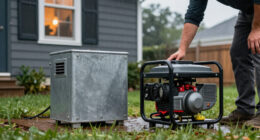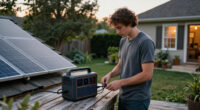
Comparing solar backup power stations is really a choice between covering a few essentials and keeping more of a household running. A compact portable station typically has a smaller battery, lower output, and a carry-friendly design. An expandable home backup station costs more and takes up more space, but it can hold more energy, support higher-wattage devices, and accept extra batteries or solar panels on compatible models.

Get backup power and energy gear delivered free with Prime
- Fast, free delivery on millions of items
- Prime Video, Amazon Music and more included
- Member-only deals all year
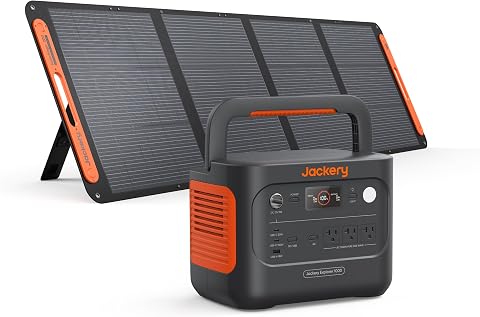
Jackery Solar Generator 1000 V2 with 200W Solar Panel
- ✔ Capacity: 1,070Wh
- ✔ AC output: 1,500W
- ✔ Surge peak: 3,000W

Jackery Explorer 300 Portable Power Station, 292Wh
- ✔ Capacity: 292Wh
- ✔ Rated output: 300W
- ✔ Peak output: 600W

ZeroKor 300W Portable Power Station with 60W Solar Panel
- ✔ Maximum output: 300W
- ✔ Battery capacity: Not specified in supplied product information
- ✔ Solar panel: 60W monocrystalline; 20.5% stated conversion efficiency
Neither category is automatically the better purchase. If you want to charge phones, run a router, and keep a few lights on during a short outage, a compact unit may cover the job without paying for capacity you rarely use. If outages last for days, or you need to power a refrigerator, medical equipment, or several devices at once, the larger system may be worth the added cost. The deciding factors are your loads, outage duration, charging opportunities, and whether you can safely connect the station to household circuits.
At a Glance
| Criteria | Compact portable solar power station | Expandable home backup power station | Winner |
|---|---|---|---|
| Battery capacity and runtime | Lower capacity; suited to short runtimes or a few essential devices | Higher capacity, often with optional extra batteries | B |
| AC output and supported loads | Lower output; check each device’s running and startup wattage | Higher output on many models; can support more demanding appliances if ratings allow | B |
| Portability and setup | Usually lighter and easier to store, carry, and deploy | Heavier and bulkier; often best kept near the home backup area | A |
| Solar charging | Can recharge from compatible panels, but smaller capacity limits stored energy | Can accept larger solar arrays on compatible models, subject to input limits and conditions | B |
| Expandability | Often limited or unavailable; varies by model | A key strength on models designed for additional batteries or panels | B |
| Upfront cost and value | Lower initial spend for basic backup needs | Higher initial spend, justified when extra capacity and output are used | Depends |
| Best outage use | Short outages, camping, and charging small electronics | Longer outages and broader household backup | Depends |
Jackery Solar Generator 1000 V2 with 200W Solar Panel
For buyers who want a solar backup station that can do more than top up phones, the Jackery Solar Generator 1000 V2 is the most capable choice here. Its 1,070Wh capacity and 1,500W AC output give it a much wider job range than the Explorer 300 or ZeroKor, both of which top out at 300W. That difference matters when you want to run several devices, or an appliance whose operating draw exceeds the smaller stations’ limits. The 3,000W surge rating also provides headroom for brief startup demands, though it does not change the station’s continuous output rating.The included 200W solar panel makes this a more ready-to-use solar bundle than the Explorer 300, which needs a separately purchased panel. It is also a higher-wattage panel than the ZeroKor’s 60W unit, a useful advantage when conditions are favorable and replenishing a larger battery is the goal. Actual solar charging depends on sunlight and setup, so buyers should not read panel wattage as a guaranteed charge rate. The 23.8 lb station is still portable for car camping or moving between rooms, but it is a less casual carry than either 300W-class unit.Its LFP battery is specified for more than 70% capacity after 4,000 charge cycles, which supports a longer-use backup role. App-controlled charging modes, including quiet overnight operation, add control beyond what the simpler Explorer 300 offers. The advertised one-hour full charge requires enabling emergency charging in the app; the default is 1.7 hours. Also, the station and panel ship separately, so buyers should account for separate delivery. We rank it first for its combination of stored energy, output, and included solar hardware—not because it can replace a household generator or run every appliance.
Pros:
- 1,070Wh capacity and 1,500W AC output cover a broader range of loads than the two 300W options.
- Includes a 200W solar panel, the largest panel in this comparison.
- LFP battery is rated for more than 70% capacity after 4,000 charge cycles.
- App charging modes include quiet overnight operation.
Cons:
- At 23.8 lbs, it is much heavier than the Explorer 300 and less convenient for frequent carrying.
- One-hour AC charging requires emergency charging to be enabled in the app; default charging is listed at 1.7 hours.
- The station and solar panel ship separately.
Best for: Campers, road-trippers, and outage-prepared households that need more capacity and appliance flexibility than a 300W station can provide.
Not ideal for: Buyers who prioritize the lightest possible kit, need whole-home or continuous high-power backup, or want every item to arrive in one shipment.
Bottom line: We recommend the 1000 V2 as the most capable solar backup bundle here, provided its weight and portable—not whole-home—scope fit your needs.
“We recommend the 1000 V2 as the most capable solar backup bundle here, provided its weight and portable—not whole-home—scope fit your needs.”
Jackery Explorer 300 Portable Power Station, 292Wh
The Jackery Explorer 300 is the portability pick: at roughly 7.5 lbs, it is easier to lift into a tent, vehicle, or emergency kit than the 23.8 lb 1000 V2. Its 292Wh capacity and 300W rated output are suited to keeping phones, small electronics, and other modest loads going, not to powering a broad set of household appliances. That clear limit is also its appeal: buyers who need a compact station for essentials may not want the bulk or greater capability of our top pick.Two AC outlets and a mix of USB-C, USB-A, and car-port connections let several smaller devices share the station. The 100W USB-C PD port is particularly useful for compatible devices, while the 300W AC ceiling still determines which plug-in equipment is appropriate. Unlike the ZeroKor package, the Explorer 300 does not include a solar panel. It supports solar charging, and the supplied information lists about 80% charge in approximately 2.8 hours with a 100W panel, but buyers need to source that panel separately. That added step makes it less turnkey than either bundled-panel option.The stated LiFePO4 chemistry and rating of over 4,000 cycles to 70% capacity give it a long-cycle-life proposition similar in broad intent to the 1000 V2, but with far less stored energy. Product information also conflicts on its weight, listing 7.5 lbs in the description and 7.1 lbs in specifications, so we would treat it as a light, roughly seven-pound class unit rather than rely on one exact figure. Choose it when carrying ease and smaller electronics matter more than appliance range; skip it if you expect a long outage or want a solar panel included.
Pros:
- Compact, lightweight design is easier to carry than the 1000 V2.
- 292Wh capacity and 300W rated output suit many small-device charging tasks.
- Multiple ports include 100W USB-C PD, two USB-A, and a car port.
- Supports solar charging and lists over 4,000 cycles to 70% capacity.
Cons:
- Solar panel is not included, unlike the ZeroKor and 1000 V2 bundles.
- The 300W output and 292Wh capacity limit appliance range and runtime.
- Supplied product information lists conflicting weights of 7.1 and 7.5 lbs.
Best for: Solo campers and prepared households seeking a lightweight station for phones, communication devices, and other small electronics.
Not ideal for: Anyone who needs to power higher-wattage appliances, store energy for extended outages, or get a panel in the box.
Bottom line: We favor the Explorer 300 when low carry weight matters more than bundled solar or the larger backup reserve of the 1000 V2.
“We favor the Explorer 300 when low carry weight matters more than bundled solar or the larger backup reserve of the 1000 V2.”
ZeroKor 300W Portable Power Station with 60W Solar Panel
The ZeroKor 300W is the straightforward pick for shoppers who want a small station and a solar panel together. Its foldable 60W monocrystalline panel is included, unlike the Explorer 300’s separately purchased panel, so the basic solar setup is less of a sourcing project. The kit can also recharge through an AC outlet or a 12V car port, giving it options when sunlight is unavailable. This makes it appealing for modest camping use or small-device backup, but the panel’s 60W rating is a modest match for a station intended for light loads.Its 300W maximum output puts it in the same basic appliance class as the Explorer 300, rather than the 1,500W 1000 V2. Two AC outlets, USB connections, and a DC port offer flexibility for compatible devices, while the built-in flashlight adds a practical camping and outage feature. These conveniences should not obscure the main boundary: port count does not increase the station’s maximum output, and higher-power appliances remain out of scope. Capacity is not specified in the supplied product details, which makes it harder to estimate runtime against the two Jackery options.Compared with the Explorer 300, the ZeroKor wins on including a panel, but the Explorer has a clearly stated 292Wh capacity and a 100W USB-C PD port. Compared with the 1000 V2, the ZeroKor is a smaller-scale kit with far less output and a lower-wattage panel. The panel junction box is not waterproof, so outdoor use calls for care around moisture. Product guidance also recommends regular charging and discharging to avoid protection mode. We see this as a convenient basic package, not a robust outage system for essential appliances.
Pros:
- Includes a foldable 60W monocrystalline solar panel.
- Can recharge through compatible solar input, an AC outlet, or a 12V car port.
- Offers AC, USB, and DC connections for different small devices.
- Built-in flashlight provides reading and SOS modes.
Cons:
- 300W maximum output excludes higher-power appliances.
- Solar panel junction box is not waterproof.
- Product guidance calls for regular charging and discharging to avoid protection mode.
Best for: Occasional campers and buyers who want a small solar panel included for charging modest devices and camping gear.
Not ideal for: Buyers who need a stated large battery reserve, fast solar replenishment, weatherproof panel components, or power for high-draw appliances.
Bottom line: We choose the ZeroKor when an included panel and simple small-load kit matter most, but its output and panel size make it a limited backup choice.
“We choose the ZeroKor when an included panel and simple small-load kit matter most, but its output and panel size make it a limited backup choice.”
As an Amazon Associate we earn from qualifying purchases.
Key Differences
The largest practical gap is stored energy. Battery capacity, usually stated in watt-hours, gives a rough guide to how long a station can run a load; actual runtime is lower than a simple capacity calculation suggests because power conversion and device behavior use energy too. A compact station is a sensible match for intermittent, low-draw essentials. A larger expandable system offers more reserve, but it still cannot run every household appliance indefinitely. High-draw devices can drain even a large battery quickly.
Output ratings matter just as much as capacity. A station must supply enough continuous power for the devices operating together, and some appliances draw extra power when starting. The expandable category usually offers more output and more ways to add batteries or panels, but specifications differ substantially by model. The tradeoff is weight, space, complexity, and price. Pay more for a larger station when your load list or outage plan makes the added capacity useful; otherwise, the compact option is better value.
Detailed Comparison
Battery capacity and runtime (Expandable home backup power station wins — major)
Winner: B; major gap for extended outages. Expandable home backup stations generally start with more stored energy and may let owners add compatible batteries. That can extend runtime for a refrigerator, networking equipment, lights, or other selected loads. A compact station is more appropriate for a smaller set of devices or a brief interruption. Neither category has a fixed runtime: estimate your needs from the devices’ wattage and hours of use, then allow for conversion losses and changing loads. If you need multiple days of backup, also plan how to recharge the battery.
AC output and supported loads (Expandable home backup power station wins — major)
Winner: B for larger loads; moderate-to-major gap. Larger systems commonly provide higher continuous AC output, making them more capable of running several devices or appliances at once. Compact models tend to suit electronics, lights, and other modest loads. Check both continuous and surge ratings against the appliance’s requirements, especially for equipment with a motor or compressor. A high capacity does not compensate for an inverter that cannot deliver enough power, and a high output does not mean the battery can sustain it for long.
Portability and setup (Compact portable solar power station wins — major)
Winner: A; major gap when frequent carrying matters. A compact station is easier to move between rooms, pack in a vehicle, or store until needed. The larger battery and enclosure of a home backup model add weight and bulk; wheels or handles may help, but do not make every unit easy to carry. For a fixed outage location, that burden may be minor. For camping, evacuation, or regular transport, it can change whether the station is practical. Compare actual product weight and dimensions rather than relying on category labels.
Solar charging (Expandable home backup power station wins — moderate)
Winner: B for sustained household backup; moderate gap, model-dependent. Expandable systems often support a larger solar input, which can help replenish a larger battery during a long outage. Compact stations can also charge from panels and may be easier to pair with a small portable array, but their input limits and battery size can restrict how much energy they collect or store. Charging speed depends on panel compatibility, sunlight, orientation, temperature, and the station’s input rating. Treat advertised charging times as conditional, not guaranteed. A larger station is not automatically faster if its panel input is limited.
Expandability (Expandable home backup power station wins — moderate)
Winner: B; major if needs may grow, minor if they will not. A home backup system may support additional batteries or panels, allowing capacity to grow without replacing the main unit. This is useful when a household later adds loads or discovers that outages last longer than expected. Compact stations are often self-contained, which keeps them simpler and easier to move but limits upgrades. Expansion works only within the manufacturer’s supported ecosystem, so check compatibility, limits, and the added cost before treating it as a future-proofing benefit.
Upfront cost and value (moderate difference)
Winner: Depends; the compact station usually wins on entry price. A smaller unit costs less to buy and can be better value when its job is limited to phones, a router, lights, or occasional portable use. The larger system asks for more money and may require additional batteries or panels to reach the intended backup plan. That premium is justified when the extra output, runtime, or expandability will be used. Buying more capacity than your household needs ties up money in weight and storage; buying too little can leave important loads unsupported.
Best outage use (major difference)
Winner: Depends on the outage plan. For a short outage where the goal is to keep communication, lighting, and small electronics available, A is usually the more convenient choice. For longer interruptions or a carefully selected set of higher-demand household appliances, B is the stronger starting point. Neither category should be treated as a whole-house solution without checking capacity, output, transfer equipment, and installation requirements. If the station will feed home wiring, use compatible transfer equipment installed as required by local rules; do not connect it to a wall outlet with a backfeeding cable.
Compact portable solar power station: Pros and Cons
Pros:
- Lower purchase cost for limited backup needs
- Lighter, smaller, and easier to transport
- Practical for phones, lights, laptops, and networking equipment
- Can serve as a portable power source outside outage use
Cons:
- Less stored energy for long outages
- Lower output may rule out demanding appliances
- Often has limited battery expansion
- May need frequent recharging when several devices are used
Expandable home backup power station: Pros and Cons
Pros:
- More capacity for longer backup runtimes
- Higher output on many models supports a broader range of loads
- Some models accept extra batteries and larger solar arrays
- Better suited to a planned home backup setup
Cons:
- Higher upfront cost, especially with add-on batteries and panels
- Heavier and less convenient to transport
- Requires more storage space and a more deliberate setup
- Large capacity alone does not guarantee whole-home backup or fast solar charging
Who Should Choose What
Choose Compact portable solar power station if:
- You mainly want to keep phones, a router, lights, and a laptop running through short outages.
- You need a station that can move between home, a vehicle, and outdoor use.
- Your budget is limited and you have confirmed that the unit’s capacity and output match your essential loads.
Choose Expandable home backup power station if:
- Outages can last long enough that a small station’s runtime would be inadequate.
- You need to support a refrigerator or several household devices, and their wattage fits the model’s output limits.
- You value adding compatible battery capacity or solar input as your backup plan develops.
Skip both if: You need automatic, whole-house backup for heavy loads or multi-day operation without managing appliances and recharging. Compare a professionally installed home battery, generator, or other system designed for that duty.
Value for Money
The compact station is usually the better value when its task is clearly limited: keep a few low-draw essentials powered, then recharge it when electricity returns. Its lower cost and portability can outweigh the runtime sacrificed. Do not pay for a larger system simply because its capacity number is higher if you have no plan to use that reserve.
Paying more for an expandable home backup station makes sense when it solves a real constraint: too little runtime, insufficient output, or a need to add capacity later. Compare the complete setup, not only the base unit. Extra batteries and solar panels can materially raise the total cost, while solar performance depends on input limits and conditions. For a household with important loads and recurring or prolonged outages, that spending may be worthwhile; for occasional short interruptions, the compact unit is generally the more economical choice.
Final Verdict
Choose a compact portable station if your backup plan is modest, your loads are small, or you need power you can carry. For most people seeking phone, light, laptop, and router backup during brief outages, it is the more sensible purchase: less expensive, easier to store, and adequate for the job.
Choose an expandable home backup station if you have measured higher loads, need longer runtimes, and will use its greater output or add-on capacity. The deciding factor is not the size of the outage alone but the combination of device wattage, hours of use, and realistic recharge access. If those needs are substantial, pay more for B. If not, A is the better value. For whole-house service or demanding loads that exceed either station’s limits, skip both categories and look at a system designed and installed for that purpose.
Frequently Asked Questions
Can a solar backup power station run a refrigerator?
Possibly, but check the refrigerator’s running wattage, startup surge, and the station’s continuous and surge output. Then estimate runtime from usable battery capacity and the fridge’s cycling behavior. A larger station is often the more suitable category, but the specific model and usage pattern decide whether it will work.
Does a solar power station include solar panels?
Some are sold with panels and some are not. Check the package contents, connector compatibility, and the station’s maximum solar input before buying panels separately. Actual charging time varies with sunlight and setup, so do not rely on ideal-condition estimates as a guaranteed outage schedule.
Is an expandable station worth the higher price?
It is worth paying more when the added capacity, output, or upgrade path supports loads you genuinely need to run. If you only need to charge small electronics and power a few lights, a compact station is usually the better value. Include the cost of compatible batteries and panels in the comparison.
Can I connect a power station to my home’s electrical panel?
Only with equipment and a connection method approved for the station and installed in line with local requirements. Never feed power into a household outlet, since backfeeding can endanger utility workers and damage equipment. Ask a qualified electrician about safe transfer equipment and supported loads.
Columbus Day / Indigenous Peoples' Day Picks
long weekend sales
As an affiliate, we earn on qualifying purchases.