
TL;DR

Get backup power and energy gear delivered free with Prime
- Fast, free delivery on millions of items
- Prime Video, Amazon Music and more included
- Member-only deals all year
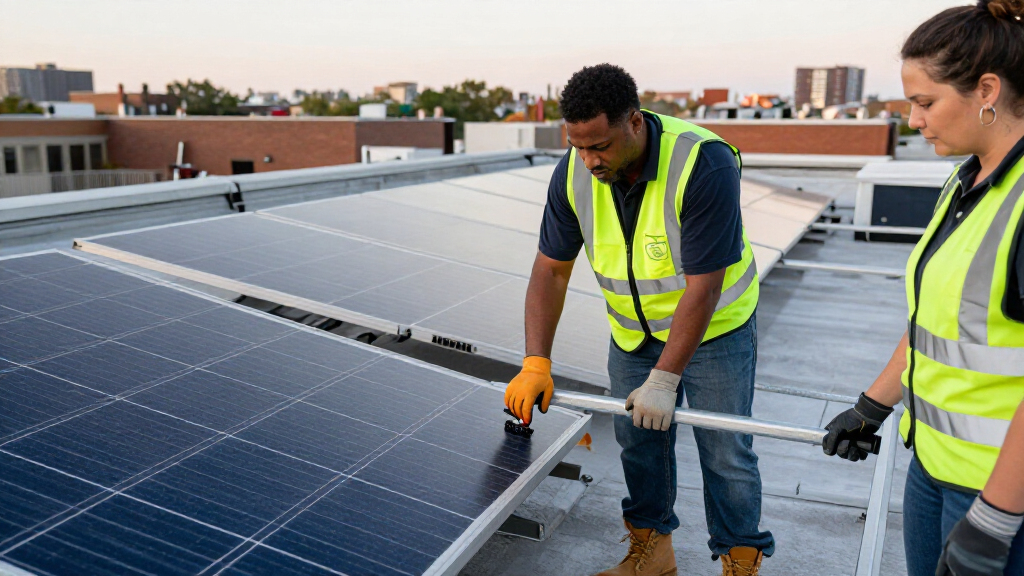
The Safer Foundation in Chicago trains people who have been involved with the criminal justice system for work in the solar and broader clean-energy industries. The nonprofit says more than 100 people earned clean-energy-related certifications through its training in the past three years, and 79 obtained jobs.
The Safer Foundation is training people in Chicago who have been involved with the criminal justice system for jobs in solar and other clean-energy fields, pairing technical instruction with employment support and social services. The nonprofit says that in the past three years, more than 100 trainees earned industry-related certifications and 79 got jobs.
Training takes place at Safer’s West Side headquarters, inside a building that also houses an adult transitional center for men completing sentences and preparing to reenter society. A former gymnasium has been converted into a two-story practice home under construction, where trainees can work with building materials and electrical fixtures as they prepare for solar-industry work. The program also serves other men and women with criminal justice involvement.
Safer President and CEO Mark Yates described clean energy as a promising field because it offers entry-level positions, prospects for advancement and experience in carpentry and electrical work that can transfer to other industries. The foundation works with employers, including utility-scale developer Millennium Solar Electric and residential installer SunRun, to connect trainees with jobs. Safer says employer relationships can help address reluctance to hire people with convictions or gaps in their work histories.
The training covers more than solar technology. Safer Training and Employment Account Executive Katrice Harris said the program includes workplace and diversity training, financial literacy and other professional skills. Trainees can also access counseling, substance-use treatment and other services, including support that may help meet court requirements. Safer’s job-development team builds employer relationships and seeks agreements to hire program participants, Harris said.
How Training Can Open Clean-Energy Work
The program addresses two linked barriers: employers’ hesitation to hire people with criminal records and the technical and workplace skills required for energy jobs. Its approach combines hands-on instruction with job connections and services intended to help participants stay on track after release. That makes the reported figure of 79 job placements relevant as an early measure of whether training is leading to employment, although the source does not provide details about job duration or pay.
The initiative also ties reentry employment to Illinois’ clean-energy workforce goals. For trainees, solar work may provide an entry point into a sector with roles that use electrical and construction skills. For employers, partnerships can offer a channel to recruit workers while supporting people who often face additional hurdles in the hiring process.
Products Worth Considering

Samsung 48 4K OLED Smart TV (2026) with WireLogic 8ft Ultra High Speed HDMI Cable

Arlo Pro Wireless Security Camera, 2K HDR, 6th Generation, 4-Camera System

Dyson V8 Cyclone Cordless Vacuum
As an affiliate, we earn on qualifying purchases.
Illinois’ Clean-Energy Training Framework
Illinois’ 2017 and 2021 clean-energy laws created workforce programs that prioritize people from marginalized communities. According to the source report, the programs can include remedial education, professional and interpersonal skills training, and wraparound assistance for issues such as childcare, transportation, mental health and other needs.
Safer Foundation, a nonprofit headquartered at the West Side site, has worked with formerly incarcerated people on job skills and employment since 1972. Its solar training sits within that longer reentry-workforce effort. The source describes solar as one route into clean energy, rather than reporting that all trainees enter solar-specific positions.
“Clean energy offers entry-level jobs, opportunities to advance, and carpentry and electrical experience that also translates to other fields.”
— Mark Yates, Safer Foundation president and CEO
Placement Figures Need More Detail
The reported results cover more than 100 certifications and 79 jobs over the past three years, but the source does not specify the exact dates, how many people entered training, or whether some participants earned more than one credential. It also does not say how many of the 79 jobs were specifically in solar rather than other clean-energy work.
Details about wages, job retention, full-time status and advancement are not provided. The source describes employer partnerships and hiring agreements but does not give the number of agreements or identify how many placements came through each employer. The figures are attributed to Safer staff and are not independently evaluated in the report.
Employer Links and Job Outcomes
Safer’s described next step is to continue connecting trainees with employers through its job-development team and hiring agreements. The foundation’s training combines technical credentials with services aimed at addressing barriers to employment, while participants prepare for work in solar and related fields.
The source does not announce a new enrollment target, funding decision or expansion schedule. Further information on job retention, pay, the share of placements in solar and future training cohorts would help show how the program’s results develop beyond the reported three-year period.
Key Questions
Who does the Chicago program serve?
Safer Foundation trains men and women who have been involved with the criminal justice system, including residents completing sentences at an adult transitional center.
What kind of training do participants receive?
Participants receive clean-energy and solar-related training, including hands-on practice, along with workplace skills, financial literacy and other professional preparation. Safer also offers access to counseling and substance-use services.
How many people have found work through the program?
Safer says that over the past three years, more than 100 people earned clean-energy-related certifications and 79 got jobs. The source does not specify how many of those jobs were in solar or how long participants remained employed.
Which employers work with Safer?
The source identifies utility-scale developer Millennium Solar Electric and residential installer SunRun as employers with relationships to the foundation. It does not detail the number of hires made by either company.
What remains unknown about the results?
The available report does not provide the program’s exact enrollment total, placement rates, wages, job-retention figures or a breakdown of placements by clean-energy occupation. Those details would clarify the longer-term employment outcomes.
Source: canarymedia.com