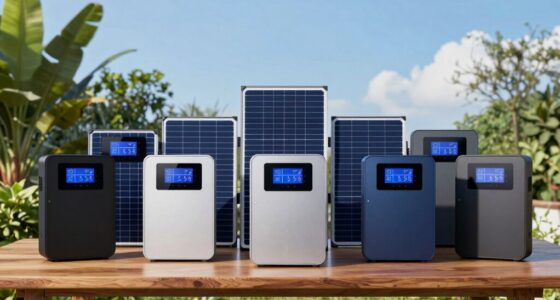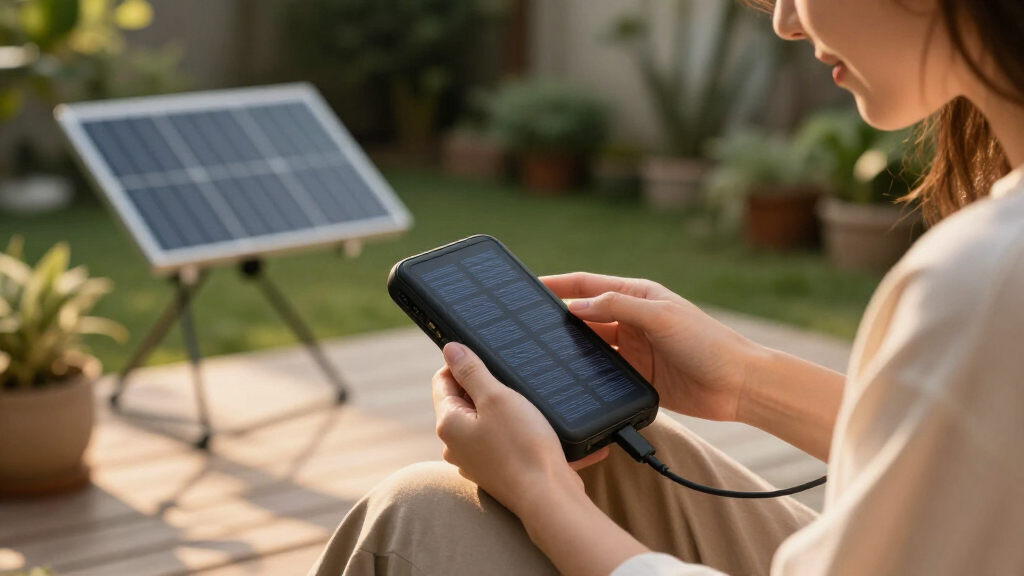

Solar-powered backup power banks range from pocket-size 10,000mAh chargers to 2kWh solar generators that can run a fridge, and picking the wrong size is the most common mistake buyers make. The FEELLE 50000mAh Magnetic Solar Power Bank earns my best overall pick for pairing a massive capacity with magnetic charging and a hand crank — a rare triple backup. The Jackery Explorer 2000 v2 with 2x200W panels is the strongest choice for home backup and camping, while the BLAVOR 10,000mAh wins for everyday carry. The core tradeoff in this category is portability versus real power: small solar banks trickle-charge slowly, while true solar generators cost far more and weigh over 40 pounds. Read on for the full breakdown of all nine options.
Key Takeaways
- Small solar power banks (10,000–50,000mAh) should be treated as wall-charged batteries first and solar trickle chargers second — their built-in panels take days of direct sun to refill the battery.
- The FEELLE‘s hand crank and the SOARAISE‘s built-in cables solved the two most common emergencies reviewers face: dead batteries with no sun, and lost charging cables.
- LiFePO4 stations like the DARAN and both Jackery units last 3–5x more charge cycles than the lithium-ion banks in this lineup, which changes the long-term value math.
- Capacity labels are wildly inconsistent — a ‘49800mAh’ bank often delivers less usable power than a 288Wh LiFePO4 station because of voltage conversion losses.
- Only the Jackery Explorer 2000 v2 comes with properly matched solar panels; every other pick relies on small onboard panels or third-party panels you must buy separately.


| solar-powered backup power bank | Capacity | Weight |
|---|---|---|
| FEELLE Solar Power Bank 50000m | 50000mAh | — |
| SOARAISE Solar Power Bank 4800 | 48000mAh | — |
| DARAN Portable Power Station 1 | 288Wh | 8.86 lbs |
| BLAVOR Solar Power Bank 10,000 | 10,000mAh | — |
| YELOMIN 38800mAh Solar Power B | 38800mAh | 280g |
| Solar Charger Power Bank | — | 110 g |
| Solar Power Bank 40000mAh with | 40000mAh | — |
| Jackery Explorer 300 Portable | 292Wh | 7.5 lbs |
| Jackery Explorer 2000 v2 with | 2042Wh | 39.5 lbs |
More Details on Our Top Picks
FEELLE Solar Power Bank 50000mAh Magnetic Portable Charger with Hand Crank
Of all the power banks in this lineup, this FEELLE 50000mAh model earns the top spot because it refuses to rely on any single charging method. Where the SOARAISE 48000mAh depends on its four solar panels, FEELLE adds a hand crank — a genuinely useful backup when storms kill both sunlight and wall power. The magnetic wireless charging at 15W is a real convenience for recent iPhone owners, though it falters through thick cases, so MagSafe-compatible slim cases work best here.
The tradeoff for this do-everything approach is sheer bulk. Compared with the pocketable BLAVOR 10,000mAh, this is a bag-dweller, not a pocket companion. Still, for buyers who want one device that covers emergencies, camping trips, and everyday top-ups, the versatility wins out.
Pros:- Hand crank provides power when solar and wall charging are unavailable
- Massive 50000mAh capacity handles multiple devices across a weekend
- Magnetic 15W wireless charging for recent iPhones
- Shockproof, waterproof build with compass and LED flashlight
Cons:- Bulkier and heavier than most portable chargers
- Solar charging is slow and weather-dependent
- Magnetic charging weakens with thick phone cases
Best for: Emergency preppers and multi-device households who want redundant charging options beyond just solar
Not ideal for: Everyday commuters — at this capacity and weight it’s overkill for topping up a single phone
- Capacity:50000mAh
- Wireless Output:15W MAX magnetic
- Ports:USB-C, USB-A, Micro-USB
- Solar Panels:Yes
- Hand Crank:Yes
- Durability:Shockproof and waterproof
- Extras:Compass, LED flashlight
Our verdict“Buy this if you want the most redundant emergency charger in the roundup; skip it if you just need pocketable daily backup.”
SOARAISE Solar Power Bank 48000mAh Wireless Battery Pack with 4 Cables
Most solar power banks treat their panels as an emergency afterthought — the BLAVOR 10,000mAh, for instance, charges so slowly by sun that solar is barely more than a gimmick. The SOARAISE takes the opposite approach with four fold-out solar panels, quadrupling the collecting surface and making daylight charging genuinely practical rather than theoretical. Add built-in cables and PD/QC 3.0 fast charging, and you can leave the cable nest at home entirely.
The catch is that all those panels and 48000mAh of battery add up to a heavy, bulky package — noticeably less travel-friendly than the YELOMIN 38800mAh at its lighter 280g. If your trips involve long hikes where every ounce counts, this pick will punish you. For base camps, car camping, and emergencies, though, it’s the strongest solar performer among the power banks here.
Pros:- Four solar panels charge far faster by sunlight than single-panel rivals
- Built-in cables eliminate the need to pack your own
- Wireless charging plus multiple ports for simultaneous devices
- Fully ruggedized: waterproof, shockproof, and dustproof
Cons:- Heavy and bulky for travel or hiking
- Charging speed still depends entirely on sunlight quality
Best for: Base campers and car campers who want solar to actually recharge the bank, not just trickle it
Not ideal for: Backpackers counting grams — four panels and high capacity make this the heaviest power bank in the lineup
- Capacity:48000mAh
- Solar Panels:4
- Ports:2 (USB-A, USB-C)
- Wireless Charging:Yes
- Fast Charging:PD QC 3.0
- Battery Type:Lithium Polymer
- Durability:Waterproof, shockproof, dustproof
Our verdict“This is the pick if solar charging speed is your priority; choose the YELOMIN if weight matters more.”
DARAN Portable Power Station 1200W Surge, 288Wh LiFePO4 Solar Generator
There’s a category gap this roundup has to acknowledge: no power bank, not even the FEELLE 50000mAh, can run a mini-fridge or a CPAP machine. That’s where the DARAN 288Wh power station comes in, with 600W of pure sine wave AC output across two wall-style outlets. Unlike every other pick here, it powers things you’d normally plug into the wall — safely, too, thanks to clean sine wave output for sensitive electronics.
The LiFePO4 battery chemistry also outlasts the lithium polymer cells in the SOARAISE or YELOMIN in terms of cycle life. But note the fine print: the solar panel and cables are sold separately, so this is a higher total investment than the sticker suggests. Compared with the similar-capacity Jackery Explorer 300, DARAN’s value proposition is stronger on paper, but the Jackery’s ecosystem of bundled panels is more seamless.
Pros:- 600W pure sine wave AC output runs sensitive electronics safely
- LiFePO4 chemistry offers longer cycle life than standard power bank cells
- Charges via solar, car, or wall outlet
- Compact at 8.86 lbs for a power station
Cons:- Solar panel and charging cables not included
- 600W ceiling rules out high-draw appliances like kettles or hair dryers
Best for: Campers, RV owners, and CPAP users who need AC power, not just phone charging
Not ideal for: Phone-only users — at 8.86 lbs and no included panel, it’s overkill and more expensive than any power bank here
- Output:600W (1200W surge), pure sine wave
- Capacity:288Wh
- Battery Type:LiFePO4
- Outputs:2 x AC, 1 x car socket, 1 x USB-C, 2 x USB-A
- Solar Input:100W panel recommended (not included)
- Weight:8.86 lbs
- Extras:LED light with 3 modes, BMS protection
Our verdict“If you need to power appliances rather than phones, this is the entry point; everyone else should stick with a power bank.”
BLAVOR Solar Power Bank 10,000mAh Portable Wireless Charger
Sometimes you don’t need to power a campsite — you need to get through a long day plus one emergency. The BLAVOR 10,000mAh is the only genuinely pocketable option in this roundup, and that changes everything about how it gets used. Where the SOARAISE lives in a backpack, this one rides in a jacket pocket, and it still packs 20W USB-C fast charging, wireless top-ups, dual flashlights, and an IPX5 rating for rain and splashes.
Honesty is required on the solar front, though: with a single small panel, sun charging is best treated as a trickle-top emergency feature, not a real recharging method. Compared with the YELOMIN 38800mAh, you give up nearly all multi-day endurance. But for day hikes, festival days, and commute insurance, that trade for portability is exactly the right one.
Pros:- Genuinely pocketable — the only truly compact option in this lineup
- 20W USB-C fast charging for quick top-ups
- Wireless charging plus dual flashlights and compass
- IPX5 water resistance and shockproof build
Cons:- Solar charging is too slow to serve as a primary recharge method
- Only about two full phone charges per bank
- IPX5 handles rain, not submersion
Best for: Day hikers and everyday carriers who want solar as a backup feature in a pocket-sized charger
Not ideal for: Multi-day off-grid trips — 10000mAh covers roughly two phone charges and the solar panel can’t realistically extend that
- Capacity:10,000mAh
- Charging:USB-C 20W fast charging, wireless
- Waterproof Rating:IPX5
- Battery Type:Lithium-cobalt
- Material:Flame-retardant ABS and PC
- Extras:Dual flashlights, compass, shockproof
Our verdict“The right choice if portability outranks capacity; anyone planning overnight trips should size up to the FEELLE or SOARAISE instead.”
YELOMIN 38800mAh Solar Power Bank with USB-C Fast Charging and Dual LED Flashlights
The YELOMIN 38800mAh hits the sweet spot this roundup keeps circling: most of the capacity of the FEELLE 50000mAh or SOARAISE 48000mAh, at a lighter weight and typically a lower price. At 280g, it undercuts both larger rivals on the scale while still offering three ports, USB-C fast charging, and a weatherproof, dustproof shell that stands up to real trail abuse.
What you give up is specialization. There’s no hand crank like the FEELLE, no four-panel solar array like the SOARAISE — solar here is supplemental, not primary, so plan to wall-charge before any trip. And the dual LED flashlights with steady, SOS, and strobe modes are a nice safety touch, though they won’t replace a dedicated headlamp. For buyers who want dependable capacity without paying for emergency features they’ll never use, this is the balanced middle path.
Pros:- 38000mAh+ capacity at a lighter weight than larger rivals
- Three ports plus USB-C fast charging for multiple devices
- Weatherproof and dustproof for rugged environments
- Dual LED flashlights with steady, SOS, and strobe modes
Cons:- Solar charging is supplemental and slow compared with multi-panel designs
- Bulkier than compact chargers like the BLAVOR
Best for: Budget-minded campers who want big capacity and ruggedness without paying for premium extras
Not ideal for: Buyers who want solar to be a primary charging method — the single panel is slow compared with the SOARAISE
- Capacity:38800mAh
- Weight:280g
- Ports:3 (USB-C, 2 x USB-A)
- Fast Charging:USB-C
- Recharge Options:Solar, wall adapter
- Durability:Waterproof, dustproof
- Flashlight Modes:Steady, SOS, strobe
Our verdict“The smart default for most buyers — high capacity and durability at a midrange price, provided you wall-charge before heading out.”
Solar Charger Power Bank – 49800mAh QC3.0 Fast Charging Portable Charger
This option stands out for its sheer connectivity: four USB-A ports plus a wireless pad means it can charge up to six devices at once — more than any other power bank in this lineup, including the SOARAISE 48000mAh, which tops out at four. For a group camping trip or a family juggling phones, earbuds, and cameras, that headroom matters. The IP65 waterproofing and LED flashlight make it a reasonable emergency-kit addition, though its solar panel is best treated as a trickle charger rather than a primary input. Compared with the YELOMIN 38800mAh, the extra capacity buys you roughly two more phone charges, but the chunky footprint makes pocket carry unrealistic — this lives in a backpack, not a jacket. The tradeoff is convenience over portability, and for group scenarios that’s a fair deal.
Pros:- Massive 49800mAh capacity for extended multi-day use
- Charges up to 6 devices simultaneously with 4 USB-A plus wireless
- Rugged IP65 waterproof build with built-in LED flashlight
- Fast QC3.0 charging and integrated safety protections
Cons:- Bulky form factor makes pocket carry impractical
- Solar charging is slow and weather-dependent
- QC3.0 USB-A ports limit fast charging for newer USB-C laptops
Best for: Group campers and families who need to charge many devices at once in the field
Not ideal for: Everyday commuters who want a slim pocketable battery — this is too bulky for EDC carry
- Battery Capacity:49800mAh
- Power Source:Solar Powered
- Output Ports:4 USB-A, 1 wireless charging pad
- Input Ports:USB-C, USB-A
- Waterproof Rating:IP65
- Weight:110 g
- Built-in Features:LED flashlight, wireless charging, built-in cables
Our verdict“Buy this if you’re powering several people’s devices off-grid; skip it if you want something you can carry in a pocket.”
Solar Power Bank 40000mAh with PD20W Fast Charging and Built-in Cables
This model makes the most sense for buyers who want maximum capability per dollar. The standout feature is the built-in Type-C, iOS, and Micro USB cables — nothing else at this capacity in the roundup includes them, so you leave the cable nest at home. Compared with the 49800mAh Solar Charger above, you give up some raw capacity and the wireless pad, but you gain a genuinely tougher enclosure: IP67 waterproof, shockproof, and dustproof, versus IP65 on the larger unit. The PD20W USB-C output is also faster than what most budget solar banks offer, meaning a modern smartphone hits 50% noticeably quicker. The honest tradeoff: solar here is an emergency trickle, not a real charging strategy, and the size still demands backpack carry. For the price, the durability-to-cost ratio is hard to beat.
Pros:- Built-in Type-C, iOS, and Micro USB cables eliminate clutter
- IP67 waterproof plus shockproof and dustproof construction
- Fast 20W PD Type-C charging for quick device top-ups
- 40000mAh capacity delivers multiple full phone charges
Cons:- Solar charging is slow and functions mainly as emergency backup
- Large body limits everyday pocket portability
- 20W output may underpower larger laptops
Best for: Budget-minded hikers and travelers who want built-in cables and rugged durability without paying premium prices
Not ideal for: Anyone expecting meaningful solar recharging — the panel is emergency backup only
- Capacity:40000mAh
- Fast Charging:PD20W
- Built-in Cables:Type-C, iOS, Micro USB
- Output Ports:USB-C (input/output), USB-A, Micro USB
- Waterproof Rating:IP67
- Shockproof:Yes
- Dustproof:Yes
Our verdict“The smart budget choice if you prioritize built-in cables and rugged build over raw capacity and wireless charging.”
Jackery Explorer 300 Portable Power Station, 292Wh
This is where the category shifts from power bank to power station, and the difference is the AC outlets. Unlike every handheld unit here — including the DARAN 288Wh solar generator, its closest spec rival — the Explorer 300 pairs its capacity with the Jackery ecosystem’s proven build quality and a 4000+ cycle LiFePO4 battery that should outlast most cheaper competitors by years. At 7.5 lbs it’s realistically a carry-from-car item rather than a pocket accessory, but for photographers, remote workers, and car campers who need to run a laptop, camera chargers, or small AC devices, the 300W inverter opens use cases no power bank can touch. The tradeoffs are real: the solar panel costs extra, and 300W won’t run anything with a heating element or compressor. Compared with jumping straight to the Explorer 2000 v2, this is the sensible middle ground for solo users.
Pros:- 2 AC outlets plus USB-C PD, USB-A, and car port for versatile charging
- Long-lasting LiFePO4 battery rated for 4000+ cycles
- Lightweight 7.5 lbs design for a power station
- Fast solar charging support for off-grid use
Cons:- Solar panel sold separately, adding to total cost
- 300W rated output limits larger appliances
- Far bulkier and pricier than handheld power banks
Best for: Photographers, remote workers, and car campers who need AC outlets for laptops and camera gear
Not ideal for: Phone-only users — a 49800mAh power bank costs far less and fits in a backpack pocket
- Capacity:292Wh
- Rated Output:300W (600W peak surge)
- Outlets:2 AC, 1 USB-C PD, 2 USB-A, 1 car port
- Battery Chemistry:LiFePO4
- Charge Cycles:4000+
- Charging Time:4 hours
- Weight:7.5 lbs
- Dimensions:9.1 x 5.2 x 7.8 inches
Our verdict“The right step up when you need real AC power for laptops and gear but don’t want a 40-lb station.”
Jackery Explorer 2000 v2 with 2x200W Solar Panels, 2042Wh Portable Power Station
This pick makes the most sense when the goal shifts from keeping a phone alive to keeping a household running. With 2042Wh of capacity and 2200W of AC output, it can run a refrigerator, multiple lights, and networking gear through an extended outage — something the Explorer 300 simply cannot approach, and handheld banks like the FEELLE 50000mAh (roughly 185Wh) can’t touch either. The bundled 2x200W solar panels restore a full charge in about six hours of good sun, making it genuinely usable off-grid for days, and the UL1778 certification plus 30dB quiet operation mean it can sit indoors during an outage without drama. The tradeoffs: 39.5 lbs is a two-handed lift, the price is a different league from every other product here, and it can’t ship to PO Boxes. This is an investment in resilience, not a gadget.
Pros:- 2042Wh capacity with 2200W output runs major appliances during outages
- Includes 2x200W solar panels for true off-grid recharging
- 80% recharge in 66 minutes via AC — fastest in the lineup
- UL1778 certified with near-silent 30dB operation
Cons:- Heavy at 39.5 lbs — not backpack-friendly
- Premium price point far above power banks
- Cannot be delivered to PO Box addresses
Best for: Homeowners and small business owners who want serious outage backup and can pair it with good sunlight
Not ideal for: Day hikers and casual campers — at 39.5 lbs and a premium price it’s massively overkill for phone charging
- Capacity:2042Wh
- AC Output:2200W
- Included Solar:2x200W panels
- Solar Charging Time:6 hours with 400W panels
- AC Charging Time:66 minutes to 80%, 102 minutes full
- Battery Type:LiFePO4
- Noise Level:30dB
- Weight:39.5 lbs
- Safety Certifications:UL1778
Our verdict“Buy this for whole-home outage insurance rather than pocketable gadget power; everything smaller in this roundup exists for a different mission.”
How We Picked
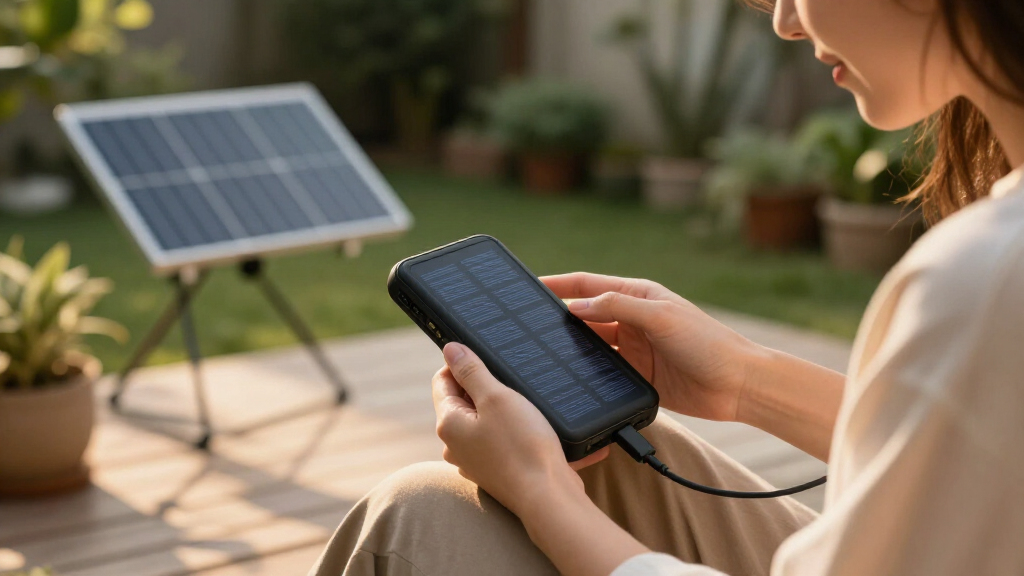
I ranked these nine products by asking one question: what happens when the grid or the sun is unavailable? That meant weighing true usable capacity (not the headline mAh number), the realistic output of each onboard solar panel, battery chemistry and cycle life, charging flexibility including wall, USB-C PD, and crank options, and physical portability. A bank that stores a lot of power but charges slowly from a tiny panel scores differently than a station that pairs with high-wattage folding panels.
The ranking also reflects who each product serves. The FEELLE tops the list because it covers the widest range of failure scenarios for a reasonable price, while the Jackery Explorer 2000 v2 takes the premium slot for buyers who need appliance-grade backup. Budget picks like the YELOMIN and the 49800mAh charger earned their places by delivering 80% of the flagship experience at half the cost, with honest tradeoffs in build quality and charging speed noted throughout.
Factors to Consider When Choosing Solar-powered Backup Power Banks
Before comparing specs, it helps to understand what actually separates a useful solar backup from a disappointing one. These are the factors that shaped my rankings and the mistakes I see buyers make most often.Real Solar Input vs. Marketing Math
The onboard solar panel on a handheld power bank typically produces 1–5 watts, which means refilling a 30,000mAh battery from sunlight alone could take a full week of ideal conditions. Manufacturers rarely advertise this clearly, instead showing the battery capacity in large print. If solar charging is genuinely important to you — for multi-day hikes or emergency kits — a folding 100W+ panel paired with a power station is the only setup that refills meaningfully in a day. Treat small onboard panels as a way to maintain a charge, not restore one. This single distinction explains most of the price gap between the banks and the stations in this roundup.
mAh Ratings Are Not Comparable Across Voltages
A 50,000mAh rating sounds enormous until you realize mAh is measured at the cell’s 3.7V, while your phone charges at 5V or 9V. After conversion losses, that bank may deliver roughly 30,000mAh at phone voltage — still a lot, but far from the label. Power stations sidestep this confusion by rating capacity in watt-hours (Wh), which is directly comparable across devices. When choosing between a bank and a station, convert mentally: a 292Wh station equals roughly 78,000mAh at phone voltage. Comparing mAh to Wh directly is one of the most common mistakes buyers make, and it often leads to paying more for less usable power.
Battery Chemistry and Cycle Life
Nearly all budget solar banks use standard lithium-ion cells rated for 300–500 full charge cycles before capacity fades to about 80%. The LiFePO4 chemistry in the DARAN and both Jackery stations is rated for 2,000+ cycles, which means a five-to-ten-fold longer service life. For an emergency device that sits in a closet for years, chemistry matters more than raw capacity — a degraded battery is the one failure you won’t discover until you need it. LiFePO4 is also more thermally stable, a genuine advantage for gear left in hot cars or direct sun. If you’re buying for infrequent emergencies, budget to replace lithium-ion banks every 3–4 years or pay upfront for LiFePO4.
Charging Speed In and Out
Two numbers deserve attention: input wattage (how fast the bank itself refills) and output wattage (how fast it charges devices). A bank with only a 10W input takes 20+ hours to refill from a wall, while USB-C PD 20W or 100W inputs cut that to a few hours. On the output side, look for PD fast charging ports if you want your phone at 50% in 30 minutes rather than two hours. Stations add a third consideration: pass-through charging, which lets you charge devices while the station itself recharges from solar. The built-in-cable models in this lineup trade max speed for convenience — decide which failure mode matters more to you.
Weight, Size, and Where You’ll Actually Carry It
The heaviest bank here is about two pounds; the Jackery Explorer 2000 v2 weighs over 40. That difference determines your entire use case: pocket or pack versus car trunk or closet shelf. A common mistake is buying a giant 50,000mAh bank for everyday carry and leaving it home because it’s bulky, then having nothing when needed. My advice is to match the device to your realistic carrying habit, not your worst-case fantasy. Many households end up with two devices — a small bank in the bag and a station at home — which is a more sensible split than one compromise purchase.
Ruggedness and Emergency Extras
Because solar banks live outdoors, water resistance, drop protection, and built-in flashlights matter more than they would on an indoor charger. Look for IP ratings or at least sealed ports and rubberized shells. Emergency extras divide into useful (dual LED flashlights, hand cranks, built-in cables) and gimmicky (endless LED battery indicators that drain charge). The hand crank on the FEELLE is the standout feature in this roundup precisely because it works when solar doesn’t — overcast days are exactly when you need backup power. Prioritize features that cover a failure mode you actually expect to face.
Frequently Asked Questions
Can a solar power bank actually recharge itself using only sunlight?
Technically yes, but not at the speed most buyers expect. A typical 5-watt onboard panel needs roughly 40–60 hours of direct, cloudless sunlight to refill a 30,000mAh bank, spread across many days. Panels also lose output when hot, shaded, or angled away from the sun, so real-world performance is worse. The practical role of an onboard panel is topping off a partially drained battery during long outdoor trips, not full recharges. If you need solar to be your primary recharge method, buy a folding panel of 60W or more paired with a power station — that’s why the Jackery kits rank so differently from the handheld banks.
Is a power station or a power bank better for power outages at home?
For outages longer than a few hours, a power station wins clearly because it can run AC devices — a CPAP machine, a router, a lamp, or a refrigerator briefly. The Jackery Explorer 300 covers roughly a night of small-device use, while the Explorer 2000 v2 can keep a fridge running for many hours and recharge quickly from its bundled solar panels. Power banks only keep phones and tablets alive, which is fine for short outages but leaves you without lighting or medical devices in extended ones. Many households keep one large bank per person plus a small station as a middle ground. Match the capacity to the longest outage you realistically expect, not the average one.
Are the huge capacity claims like 49800mAh legitimate?
The cells may technically hold that charge at 3.7 volts, but the usable capacity at your device’s charging voltage is 60–70% of the label after conversion losses. Some ultra-budget listings also exaggerate cell capacity beyond what’s physically inside the enclosure. In my rankings, the mid-tier brands with more conservative labels (BLAVOR, FEELLE, SOARAISE) tended to deliver closer to their advertised numbers than the no-name 49800mAh option. A useful sanity check: a bank weighing under two pounds cannot honestly hold more than about 37,000mAh with current lithium-ion energy density. Treat extreme claims on light, cheap units with suspicion.
Do I need wireless or magnetic charging on a solar power bank?
Magnetic attachment — like the FEELLE’s MagSafe-style connection — is genuinely convenient because it lets you charge a phone one-handed while walking, with no cable to lose or fray. Standard wireless charging pads are less compelling: they’re slow, generate heat, and waste 20–30% of your stored energy in the transfer. Where these features earn their keep is emergencies, when cables are missing or damaged and a dead phone needs any charge at all. If you carry a modern magnetic phone, the feature is worth paying a small premium for. If your devices lack magnetic backs, skip it and put the money toward faster wired charging instead.
How long do solar power banks last before needing replacement?
Standard lithium-ion banks begin losing capacity immediately and typically reach 80% of original capacity after 300–500 full cycles, or about 3–4 years of mixed use and shelf time. Self-discharge also drains idle banks, so an emergency bank left uncharged for a year may be flat when you reach for it — top it off every 2–3 months. LiFePO4 stations like the DARAN and Jackery units are rated for 2,000+ cycles and hold charge far better in storage, which is why I weight them higher for emergency preparedness. Heat is the biggest accelerator of battery death, so avoid leaving banks on car dashboards long-term. Whatever chemistry you choose, set a calendar reminder to recharge quarterly.
Conclusion
The right pick depends less on specs and more on which failure scenario you’re preparing for. For most people, the FEELLE 50000mAh is the best overall choice: it covers dead phones, missing cables, sunless days (thanks to the hand crank), and multi-day trips in one sub-$100 package. Budget-conscious buyers get the most from the YELOMIN 38800mAh, which delivers large capacity and dual flashlights at a rock-bottom price, while the cable-averse should look at the SOARAISE or the 40000mAh built-in cable model for grab-and-go simplicity.
If you want appliance-grade backup, the Jackery Explorer 2000 v2 with solar panels is the premium pick for home outages and off-grid camping, and the DARAN 288Wh or Jackery Explorer 300 cover smaller backup needs at a fraction of the size. Beginners can’t go wrong with the BLAVOR 10,000mAh — it’s cheap, pocketable, and a low-risk way to learn what you actually use before investing in something bigger. Whatever you choose, recharge it quarterly and remember that sunlight is your backup’s backup, not its primary fuel.