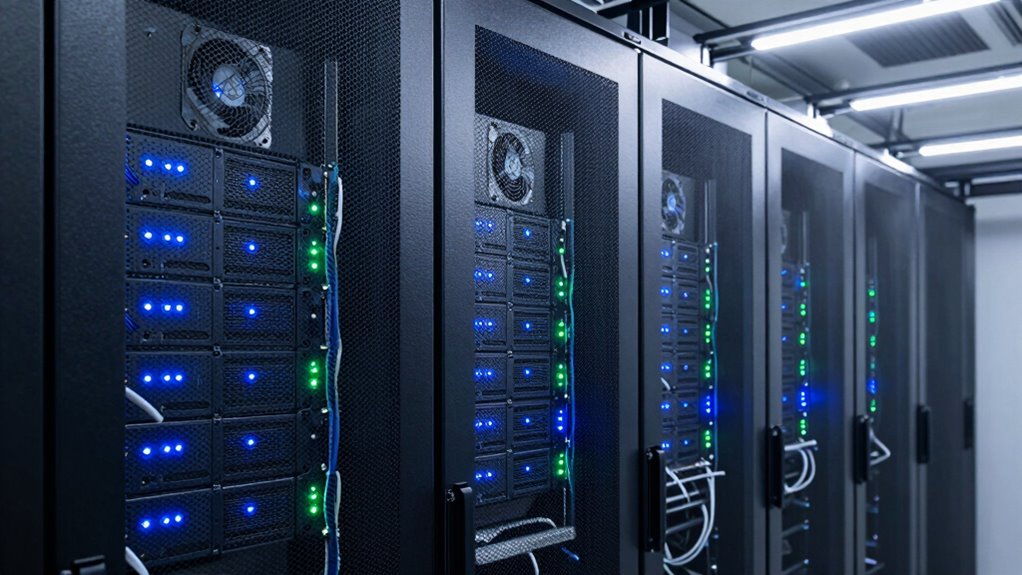

Server closets teach you that proper airflow management, such as organizing cables and using blanking panels, is key to preventing hotspots and ensuring even cooling. Prioritizing energy-efficient equipment and targeted cooling tools helps reduce power waste while extending hardware lifespan. Regular monitoring with sensors and alarms keeps everything running smoothly, saving costs long-term. If you want to learn more about how these principles can help your small space stay cool and efficient, keep exploring.

Get backup power and energy gear delivered free — and shop member deals
- Fast, free delivery on millions of items
- Access to Prime Big Deal Days deals on October 6–7
- Prime Video, Amazon Music and more included
Key Takeaways
- Effective airflow management prevents hotspots, ensuring even cooling in small server closets.
- Using energy-efficient equipment and targeted cooling reduces power consumption and costs.
- Proper cable organization and strategic placement improve airflow and prevent obstructions.
- Continuous monitoring and regular maintenance sustain optimal cooling performance.
- Implementing smart controls and sensors proactively detects issues and enhances energy efficiency.

Managing server closets in small spaces can be challenging, especially when it comes to keeping equipment cool and preventing overheating. In tight environments, ideal cooling becomes a priority, and the lessons learned from server closet management can teach you a lot about small-space cooling in general. One of the key aspects is energy efficiency. When you’re limited on space, you can’t afford to waste energy on inefficient cooling methods. You need solutions that maximize cooling performance while minimizing power consumption. This often means investing in energy-efficient equipment and cooling strategies that reduce waste, like variable speed fans or targeted cooling units that only operate when necessary. These strategies not only save energy but also help extend the lifespan of your hardware, saving you money in the long run.
Effective small-space cooling relies on energy-efficient strategies like targeted cooling and variable speed fans to optimize performance and reduce costs.
Another essential factor is airflow management. Proper airflow is necessary to prevent hotspots and ensure even cooling throughout the closet. You must create a clear path for cool air to reach all your equipment and a smooth route for hot air to escape. This involves organizing cables neatly, positioning equipment strategically, and using blanking panels to fill gaps that could disrupt airflow patterns. By controlling airflow, you prevent hot spots that can cause overheating and hardware failure. Small spaces demand a meticulous approach—every inch counts, and even minor obstructions can greatly impact cooling efficiency. Using raised flooring or wall-mounted cooling units can help direct air where it’s needed most, ensuring consistent temperature control. Additionally, understanding airflow management principles is fundamental to maintaining optimal cooling in confined spaces. Incorporating temperature sensors can further enhance your ability to monitor and respond to changing conditions proactively. Regularly reviewing cooling system performance data can also identify inefficiencies before they result in equipment failure, making ongoing monitoring a vital part of maintenance. Moreover, implementing smart controls can optimize cooling performance by adjusting settings based on real-time data, reducing waste and improving reliability.
You also learn that monitoring temperature and humidity levels is essential in small spaces. Installing sensors and alarms helps you stay aware of changes that could indicate cooling issues before they become critical. This proactive approach allows you to adjust airflow and cooling settings in real time, maintaining safe operating conditions. Additionally, you discover that regular maintenance plays an important role in small-space cooling. Filters, fans, and vents need routine checks and cleaning to keep airflow unimpeded and energy usage low. Neglecting maintenance can lead to dust build-up, reduced efficiency, and increased energy costs, all of which compromise your cooling effectiveness.
In essence, managing server closets teaches you to prioritize energy efficiency and airflow management. These principles are transferable to any small-space cooling challenge, helping you create a sustainable, cost-effective environment that keeps your equipment running smoothly. Small spaces require precision and attention to detail—less room for error means better planning and smarter solutions. By applying these insights, you’ll guarantee your equipment stays cool, reliable, and energy-efficient, even within tight confines.
As an affiliate, we earn on qualifying purchases.
Frequently Asked Questions
How Often Should Server Closet Temperatures Be Monitored?
You should monitor server closet temperatures at least every hour to guarantee ideal airflow and prevent overheating. Regular checks help you identify issues with server airflows early, maintaining efficient cooling and reducing energy costs. Keep an eye on power management systems, as they influence temperature stability. Consistent monitoring allows you to adjust cooling strategies proactively, ensuring your equipment stays within safe temperature ranges and operates smoothly.
What Are the Signs of Overheating in Small Server Spaces?
You’ll notice signs of overheating in your small server space through increased equipment temperatures, frequent shutdowns, or system errors. Poor airflow management and improper equipment placement can cause hotspots, so make certain vents aren’t blocked and devices are spaced correctly. Keep an eye on temperature readings and listen for unusual fan noises. Addressing airflow issues promptly helps prevent overheating, maintaining ideal performance and extending your equipment’s lifespan.
Can DIY Cooling Solutions Be Effective for Small Server Closets?
Yes, DIY cooling solutions can be effective for small server closets if you carefully plan and implement them. Think of it like building a custom air filter—when tailored to your space, it works efficiently. Using small server solutions like fans, venting, or portable AC units can help manage heat, but guarantee proper placement and maintenance. With proper attention, DIY cooling can keep your equipment safe and running smoothly.
How Does Humidity Impact Small-Space Server Cooling?
Humidity impacts small-space server cooling by affecting equipment performance and preventing moisture-related damage. If humidity gets too high, it can cause condensation, leading to corrosion or shorts. Humidity control is essential, so you should implement dehumidification strategies like desiccant dehumidifiers or HVAC systems with humidity regulation. Maintaining ideal humidity levels helps guarantee your server closet stays cool, dry, and safe, ultimately extending the lifespan of your equipment.
What Are the Cost Implications of Upgrading Cooling Systems?
Upgrading cooling systems might seem costly upfront, but the long-term savings outweigh the expense. You’ll benefit from improved efficiency, reduced energy bills, and fewer maintenance costs. A thorough cost analysis shows that investment in advanced cooling can prevent hardware failures and downtime. While initial investments are higher, the upgrade benefits include better temperature control, extended equipment lifespan, and overall operational savings that make the cost worthwhile.
energy-efficient server cooling units
As an affiliate, we earn on qualifying purchases.
As an affiliate, we earn on qualifying purchases.
Conclusion
By understanding what server closets teach us about small-space cooling, you realize the importance of strategic planning, efficient airflow, and proactive management. You learn to anticipate heat, optimize energy use, and prioritize sustainability. You see that success isn’t just about equipment but about the environment you create around it. Ultimately, small-space cooling is about more than technology—it’s about creating a space that works, adapts, and endures. In embracing these lessons, you set your space up for lasting efficiency.
cable management blanking panels
As an affiliate, we earn on qualifying purchases.
As an affiliate, we earn on qualifying purchases.
temperature sensors for server rooms
As an affiliate, we earn on qualifying purchases.
As an affiliate, we earn on qualifying purchases.
Fall Picks
fall essentials
As an affiliate, we earn on qualifying purchases.