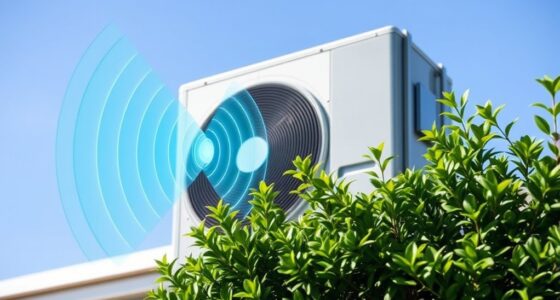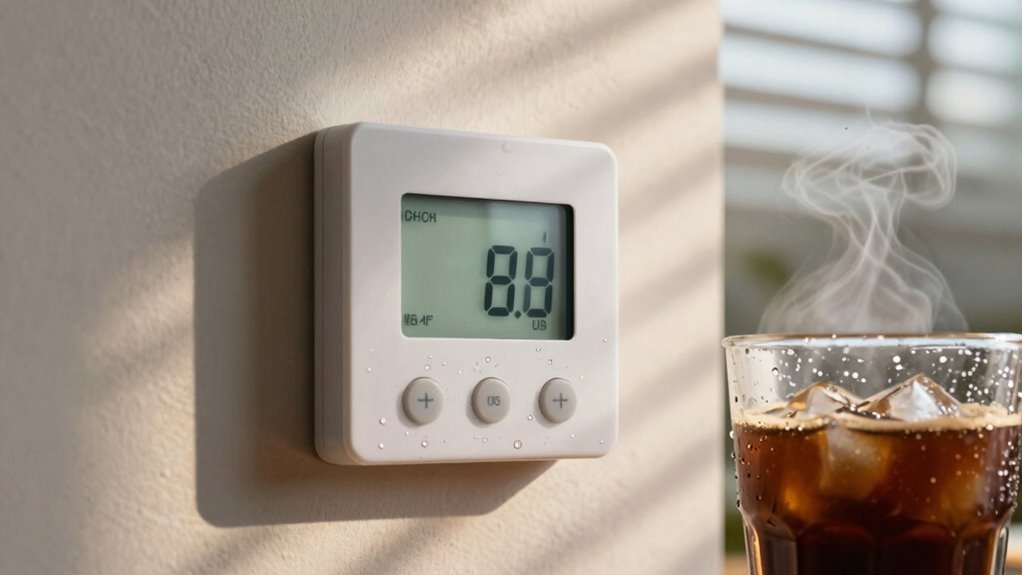

If your indoor humidity exceeds 50%, your summer energy bills can spike considerably. High humidity makes your AC work harder to cool the air, which increases energy use and reduces system efficiency. Keeping humidity above this level causes your cooling system to run longer and more often, raising costs. Staying below 50% helps your system operate smoothly and conserves energy. Curious about balancing humidity for lower bills? Keep going for essential tips.
Open a free Amazon Business account
Business pricing, bulk buying and tax-exempt orders.
As an affiliate, we earn on qualifying purchases.
Key Takeaways
- High indoor humidity levels (above 50%) increase the workload on air conditioning, raising energy bills.
- Excess humidity makes the air feel warmer, prompting higher thermostat settings and increased cooling costs.
- Maintaining humidity above recommended levels (over 50%) reduces cooling system efficiency and drives up energy consumption.
- Using dehumidifiers to keep humidity within 30-50% helps prevent spikes in summer energy bills.
- Poor ventilation and moisture control during summer lead to higher humidity, causing air conditioners to work harder and cost more.
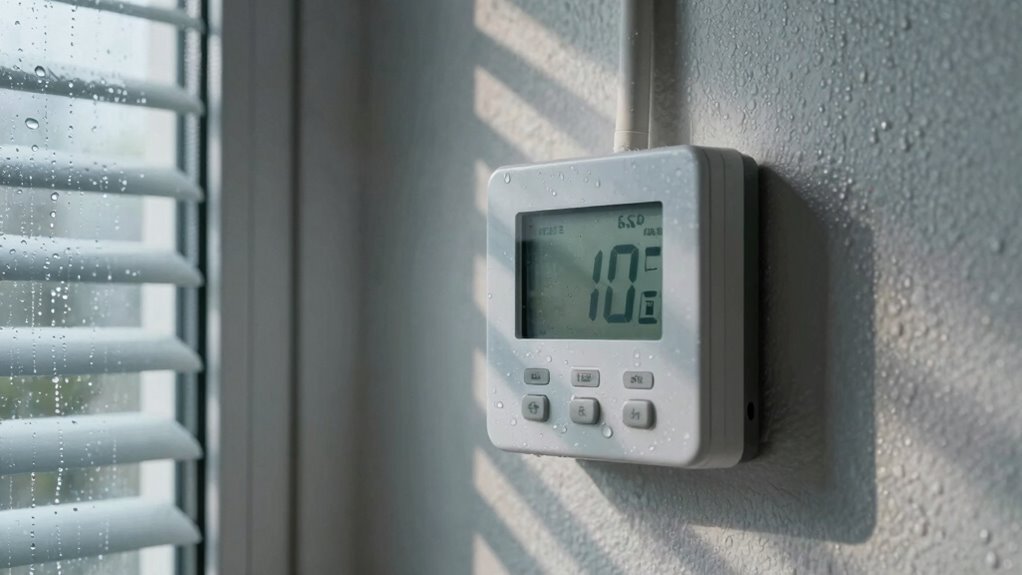
As summer temperatures climb, many homeowners unknowingly drive up their energy bills by setting their home humidity levels too high. When you leave your humidity too elevated, your air conditioner has to work harder to maintain comfort levels, which leads to increased energy consumption. This inefficiency not only raises your utility bills but also puts unnecessary strain on your cooling system. To avoid this, focusing on energy efficient cooling and humidity control strategies becomes essential.
High humidity in summer causes your AC to work harder, increasing energy bills and system strain. Manage humidity for efficiency.
The key is to find the right balance in your home’s humidity levels. Experts recommend keeping indoor humidity between 30% and 50%. When the humidity is too high, it makes the air feel warmer and more uncomfortable, prompting you to lower your thermostat or run the AC longer. However, lowering the thermostat isn’t always the most energy-efficient solution. Instead, managing humidity effectively allows your cooling system to operate more efficiently, providing comfort without excessive energy use.
Humid conditions cause your air conditioner to run longer because moist air holds heat more effectively, making it harder to cool the space. When you implement humidity control strategies—such as using dehumidifiers or ensuring your HVAC system has proper ventilation—you make your cooling system’s job easier. These strategies help remove excess moisture from the air, allowing your AC to reach the desired temperature faster and maintain it more efficiently. You’ll also notice your home feels cooler at higher thermostat settings, which saves energy and reduces bills. Proper humidity management is crucial for optimizing your cooling system’s performance during hot months. Additionally, understanding the impact of moisture levels on energy efficiency can help you make more informed choices about your home environment. Incorporating proper ventilation can further enhance airflow and moisture control, boosting overall comfort and efficiency. Being aware of indoor air quality factors, such as moisture and pollutant levels, can also contribute to a healthier and more comfortable living space.
Investing in energy efficient cooling solutions is another way to manage humidity without sky-high bills. Modern systems often come with features designed to optimize humidity control, like variable-speed fans and smart thermostats that adjust fan speeds based on humidity levels. Additionally, sealing leaks and insulating your home reduces the influx of moist outside air, which can contain microplastics in dust, helping your cooling system work smarter rather than harder.
You should also be mindful of everyday habits. Avoid opening windows during the hottest parts of the day, as this introduces humidity from outside. Use exhaust fans in kitchens and bathrooms to remove excess moisture. These small steps, combined with proper humidity control strategies and energy efficient cooling, can substantially cut down on your summer energy bills. Remember, the goal isn’t just to cool your home but to do so in a way that’s smart, efficient, and comfortable. Managing humidity effectively is the secret to keeping your summer bills in check while enjoying a cool, comfortable home.
energy efficient dehumidifier for home
As an affiliate, we earn on qualifying purchases.
As an affiliate, we earn on qualifying purchases.
Frequently Asked Questions
How Does Humidity Directly Impact Air Conditioning Efficiency?
Humidity directly impacts your air conditioning efficiency because high humidity levels make your AC work harder to remove moisture from the air. This can lead to increased energy consumption and higher bills. Don’t fall for humidity myths that suggest running the AC constantly is best; instead, use effective ventilation strategies to control moisture. Proper humidity levels improve comfort and reduce strain on your system, saving you money and energy.
What Is the Ideal Humidity Level for Energy Savings?
You should aim for an indoor humidity level around 45%, which balances comfort and energy savings. To maintain this, regularly check your dehumidifier and guarantee proper maintenance. Also, verify your humidity sensor accuracy, as faulty sensors can lead to incorrect readings and inefficient cooling. Keeping humidity in this ideal range reduces the workload on your AC, lowering energy bills and preventing excessive cooling caused by overly high humidity.
Can Adjusting Humidity Settings Reduce Overall Cooling Costs?
Adjusting humidity settings can definitely cut cooling costs. Think of it like tuning a guitar—small tweaks make a big difference. Many believe humidity myths that lowering it too much saves money, but in reality, maintaining ideal levels reduces strain on your AC. Using a dehumidifier benefits your home by keeping humidity balanced, which helps your AC work less, ultimately lowering your energy bills and increasing comfort during hot summer months.
Does Humidity Control Affect Indoor Air Quality?
Yes, controlling humidity enhances indoor air quality by reducing mold growth and dust mites. When you set your humidity properly, it complements air purifiers by making the environment less hospitable for allergens and bacteria. This not only keeps the air cleaner but also prevents mold, which can damage health. Maintaining ideal humidity levels ensures your indoor air stays fresh, healthy, and comfortable, especially during hot summer months.
Are There Any Health Risks Associated With High Humidity Levels?
High humidity levels can pose health risks, such as promoting mold growth, which can worsen allergies or asthma. You might also experience respiratory issues, like coughing or throat irritation, especially if mold or dust mites thrive in moist environments. To protect your health, keep indoor humidity below 60%, use dehumidifiers, and guarantee proper ventilation. Maintaining balanced humidity helps prevent mold and keeps your air quality safe.
digital hygrometer for indoor humidity
As an affiliate, we earn on qualifying purchases.
As an affiliate, we earn on qualifying purchases.
Conclusion
So, next summer, as you step into your cool, crisp home, remember the invisible force of humidity. Adjusting that setting just right can turn your oasis into a money pit, with bills soaring like a kite caught in a gust. Keep the air balanced, and you’ll enjoy a invigorating escape without the financial storm. Your comfort shouldn’t come with a draining cost, so find that sweet spot and breathe easy all season long.
As an affiliate, we earn on qualifying purchases.
portable dehumidifier for living room
As an affiliate, we earn on qualifying purchases.
As an affiliate, we earn on qualifying purchases.
Flea & tick season Picks
flea and tick prevention
As an affiliate, we earn on qualifying purchases.