If your upstairs rooms overheat even with the AC on, poor insulation and inadequate ventilation are likely causes. Hot air leaks through uninsulated attic and walls, while sun heat transfers through the roof and walls into upper floors. Insufficient attic ventilation can trap hot air, making your AC work harder without cooling effectively. Addressing these issues can help reduce upstairs heat, and if you keep searching, you’ll find more ways to improve your home’s comfort and efficiency.

Get backup power and energy gear delivered free — and shop member deals
- Fast, free delivery on millions of items
- Access to Prime Big Deal Days deals on October 6–7
- Prime Video, Amazon Music and more included
Key Takeaways
- Insufficient attic insulation allows heat transfer from the roof, raising upstairs temperatures despite AC use.
- Poor attic ventilation traps hot air, preventing effective heat escape and causing upstairs overheating.
- Sun-exposed roofs and walls transfer heat indoors, making upstairs rooms warmer even when the AC is on.
- Gaps around windows and doors let in external heat, reducing AC efficiency in upstairs rooms.
- Uneven insulation distribution or unsealed areas increase heat ingress, making upstairs spaces harder to cool effectively.
Ever wondered why the upstairs rooms in your home tend to overheat while the lower levels stay cooler? It’s frustrating, especially when you’re already running the AC, yet the upper floors stubbornly remain warm. The problem often boils down to a mix of insulation issues and ventilation problems that trap heat where it shouldn’t be. When your attic or upper walls aren’t properly insulated, hot air easily seeps through, making the space warmer during the day. Without enough insulation, the heat from the sun transfers through the roof and walls into your upstairs rooms, overwhelming your cooling efforts. You might notice that the attic feels like an oven, which directly influences the temperature of the rooms below. Proper home insulation plays a crucial role in maintaining consistent indoor temperatures and preventing heat transfer. Additionally, ensuring your home’s ventilation system is effective helps to reduce heat buildup by allowing hot air to escape efficiently. Improving your home’s airflow can significantly lessen the burden on your AC and keep upstairs rooms cooler. Properly managing these elements can prevent hot spots and improve overall comfort during the warmer months.
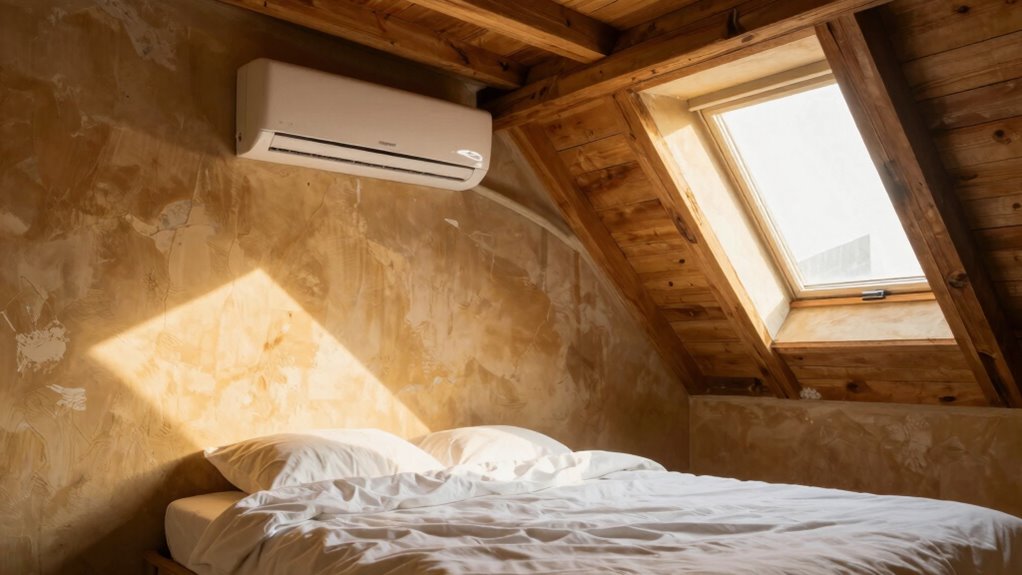
Hot air leaks through uninsulated attic and walls, making upstairs rooms uncomfortably warm.
Addressing these issues requires a closer look at how your home is built and maintained. Start by inspecting your attic insulation—adding more or upgrading to higher R-value materials can notably reduce heat transfer. Ensuring your insulation is evenly distributed and covers all necessary areas helps keep the heat out. Simultaneously, check your vents and attic fans to ensure they’re functioning properly. Installing or upgrading attic ventilation systems, like soffit vents, ridge vents, or attic fans, can markedly improve airflow. When hot air can escape efficiently, your upper floors stay cooler, even on the hottest days. It’s also important to consider the proper placement of vents, as strategic positioning can maximize airflow and heat removal. When hot air can escape efficiently, your upper floors stay cooler, even on the hottest days.
It’s also worth considering other factors such as sealing gaps around windows and doors, which can let in additional heat. Overall, the key to preventing those overheated upstairs rooms lies in balancing insulation and ventilation. When both are optimized, your home becomes a more comfortable space, and your AC doesn’t have to work overtime just to keep you cool upstairs. Taking these steps can make a noticeable difference in how your home handles heat, providing relief from the summer heat without constantly cranking your air conditioner.
As an affiliate, we earn on qualifying purchases.
Frequently Asked Questions
How Can I Improve Insulation in Upstairs Rooms?
To improve insulation in upstairs rooms, start by upgrading attic insulation to prevent heat transfer from above. Add or replace wall insulation to reduce heat gain through exterior walls. Seal gaps around windows and doors to block drafts, and consider installing reflective or radiant barriers. These steps keep cool air in and hot air out, helping your AC work more efficiently and keeping upstairs rooms cooler even during hot days.
Does Ceiling Height Affect Room Temperature?
Yes, ceiling height can influence room temperature because taller ceilings allow hot air to rise and linger, making the room feel warmer. To combat this, guarantee proper roof ventilation and improve attic insulation, which help regulate temperature and reduce heat buildup. Adequate roof ventilation allows hot air to escape, while good attic insulation keeps cool air in and prevents heat from penetrating the upstairs rooms, keeping them more comfortable.
Are There Specific Window Treatments That Reduce Heat?
Yes, specific window treatments like solar shades and reflective blinds can help reduce heat in upstairs rooms. Solar shades block out a significant amount of sunlight and UV rays, keeping the room cooler. Reflective blinds bounce sunlight away and prevent heat transfer through windows. Installing these options can lower indoor temperatures, making your space more comfortable and easing the workload on your AC.
Can Ceiling Fans Help Cool Upstairs Rooms?
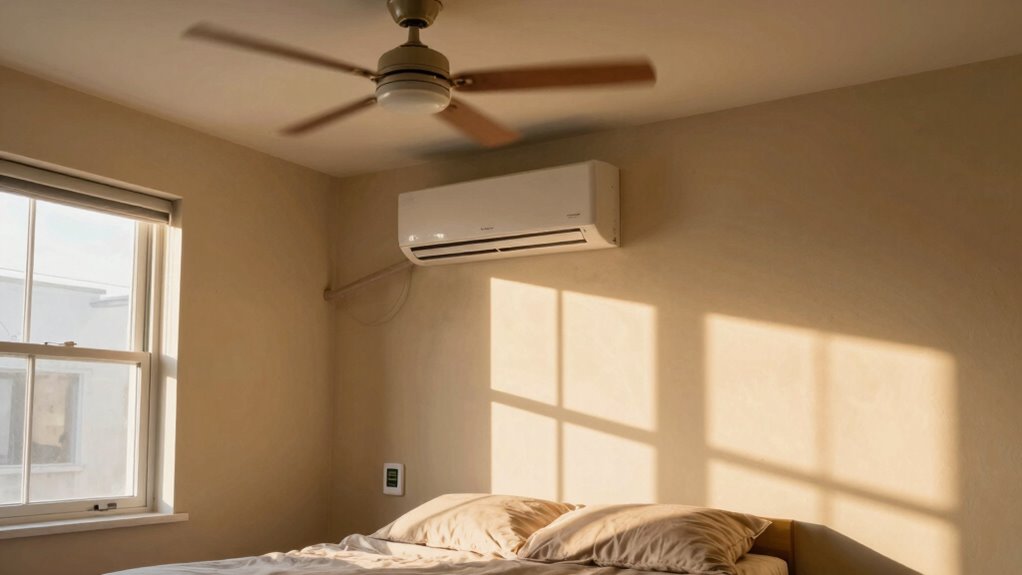
Think of your ceiling fan as a gentle breeze guiding heat away from your upstairs room. Yes, ceiling fans help cool upstairs rooms by circulating air effectively. Proper ceiling fan placement guarantees ideal airflow, while adjusting fan speed settings can keep the air moving at just the right pace. When used alongside your AC, they create a cooling synergy, making the space feel cooler and more comfortable.
How Often Should HVAC Filters Be Replaced?
You should replace your HVAC filters every 1 to 3 months, depending on your air filter lifespan and household factors. Regularly changing filters is key to maintaining an effective HVAC maintenance schedule. If you have pets or allergies, consider replacing filters more frequently. Keeping filters clean helps your system run efficiently, prevents overheating upstairs, and improves indoor air quality. Check your filter’s recommended lifespan for the best results.
As an affiliate, we earn on qualifying purchases.
Conclusion
Imagine you’re trying to cool your upstairs bedrooms, but they stay uncomfortably hot despite running the AC all day. It’s like trying to fill a bucket with a small cup—you’re fighting a losing battle against heat rising from the lower levels, poor insulation, and inadequate vents. To fix this, consider sealing leaks, upgrading insulation, or installing a zoning system. With these tweaks, your upstairs will cool down, and you’ll finally enjoy a comfortable, restful night.
As an affiliate, we earn on qualifying purchases.
As an affiliate, we earn on qualifying purchases.
Fall Picks
fall essentials
As an affiliate, we earn on qualifying purchases.