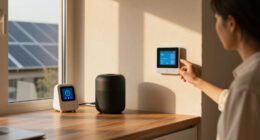
Proper climate control is key to boosting your home office productivity. Guarantee good airflow by opening windows, using fans, and installing exhaust vents or air purifiers. Keep humidity between 40-60% with humidifiers or dehumidifiers to prevent discomfort and health issues. Maintaining a stable temperature and fresh air reduces indoor pollutants and revives focus. Pay attention to air quality for mental clarity and overall well-being—stay with us to discover more tips for an ideal workspace.

Get backup power and energy gear delivered free — and shop member deals
- Fast, free delivery on millions of items
- Access to Prime Big Deal Days deals on October 6–7
- Prime Video, Amazon Music and more included
Key Takeaways
- Proper ventilation ensures fresh air flow, reducing indoor pollutants and boosting focus in the home office.
- Maintaining indoor humidity between 40-60% prevents discomfort and health issues that hinder productivity.
- Strategically positioning vents, windows, and fans improves air circulation and creates a comfortable workspace.
- Using air purifiers with HEPA filters helps eliminate pollutants, enhancing mental clarity and well-being.
- Consistent climate control supports overall health, reduces distractions, and promotes sustained work efficiency.

Creating the right climate in your home office is vital for maintaining focus and boosting productivity. When your workspace feels comfortable, you’re more likely to stay engaged and complete tasks efficiently. One of the key factors in achieving this comfort is implementing effective ventilation strategies. Proper airflow ensures fresh air circulates throughout your space, preventing stuffiness and reducing indoor pollutants that can impair concentration. You can enhance ventilation by opening windows regularly, using exhaust fans, or investing in air purifiers with HEPA filters. These methods help maintain a steady flow of clean air, giving you a mental edge during long work sessions.
Effective ventilation keeps your home office fresh, boosting focus and productivity during long work sessions.
Alongside ventilation, humidity management plays a critical role in creating an ideal work environment. Too much humidity can make the air feel heavy and damp, leading to discomfort, sluggishness, and even mold growth over time. On the other hand, low humidity levels can cause dry skin, irritated eyes, and respiratory issues, all of which distract you from your tasks. To strike the right balance, consider using a humidifier or dehumidifier based on your home’s climate and current conditions. Maintaining indoor humidity between 40-60% helps keep the air comfortable and prevents the negative effects of excessive dryness or dampness.
You should also pay attention to the placement of vents and windows to optimize air circulation. Positioning your desk near a window or a vent can improve airflow and help regulate temperature and humidity levels more effectively. Regularly checking and adjusting your home’s humidity levels ensures that your environment stays comfortable throughout the day, especially during seasonal changes when outdoor conditions fluctuate. Additionally, using fans strategically can help distribute air evenly across the room, reducing hot spots or cold drafts that might disrupt your focus.
Incorporating these ventilation strategies and humidity management techniques into your daily routine creates a more stable and inviting home office environment. It’s not just about comfort but also about safeguarding your health and cognitive function. When you control the air quality and moisture levels, you minimize distractions caused by discomfort and health issues, allowing your mind to stay sharp and focused. Proper ventilation strategies and humidity control are essential for creating an optimal workspace that enhances productivity and well-being. Ultimately, investing in proper climate control isn’t just a matter of comfort; it’s a smart move to maximize your productivity and maintain a healthy, sustainable workspace at home.
HEPA air purifier for home office
As an affiliate, we earn on qualifying purchases.
As an affiliate, we earn on qualifying purchases.
Frequently Asked Questions
How Does Humidity Affect Indoor Air Quality?
High humidity levels can make indoor air quality feel stuffy and uncomfortable, leading to increased dust mites and mold growth, which can worsen allergies and asthma. Conversely, low humidity causes dry air, irritating your respiratory system and causing static electricity. Maintaining balanced humidity levels improves air quality, making your home office more comfortable and healthier. You should use a humidifier or dehumidifier to keep humidity levels just right for ideal air quality.
What Are the Best Energy-Efficient Climate Control Options?
Think of your home office as a delicate garden needing just the right balance of warmth and coolness. You should opt for energy-efficient heating that gently warms without wasting power, and smart cooling systems that adapt to your schedule. These options act like savvy gardeners, optimizing comfort and conserving energy. By choosing these, you keep your workspace cozy and eco-friendly, ensuring productivity blooms without draining your resources.
How Can I Reduce Noise From Climate Systems?
You can reduce noise from climate systems by implementing soundproofing techniques like installing acoustic panels or sealing gaps around vents. Additionally, using noise-canceling devices such as white noise machines or fans with quiet modes helps mask system sounds. Regular maintenance also keeps systems running smoothly and quietly. Combining these methods creates a more peaceful workspace, allowing you to focus without the distraction of noisy climate controls.
What Safety Precautions Are Needed for Smart Climate Devices?
To guarantee smart climate device safety, you should regularly check smart device safety features, keep firmware updated, and avoid overloading circuits. Proper climate device calibration guarantees accurate control, preventing malfunctions. Always follow manufacturer instructions, secure devices from tampering, and use surge protectors. By prioritizing smart device safety and maintaining proper calibration, you protect your home, ensure efficient operation, and extend your device’s lifespan. Stay proactive for safe, reliable climate control.
How Does Climate Control Impact Long-Term Health?
Climate control substantially impacts your long-term health by maintaining ideal air quality and supporting mental health. Proper temperature and humidity levels reduce respiratory issues, allergies, and stress, helping you stay healthy and focused. When you regulate your environment effectively, you create a comfortable space that boosts your well-being, prevents illness, and minimizes fatigue. So, investing in good climate control is essential for your overall health and sustained productivity over time.
humidifier for indoor air quality
As an affiliate, we earn on qualifying purchases.
As an affiliate, we earn on qualifying purchases.
Conclusion
Maintaining the right climate in your home office can boost your productivity by up to 15%. When you control your environment—adjusting temperature, humidity, and airflow—you create a space that keeps you comfortable and focused. Don’t overlook these simple changes; they can make a huge difference in your daily work. Remember, a well-regulated climate isn’t just about comfort—it’s a smart investment in your efficiency. Stay mindful of your environment, and watch your productivity soar.
As an affiliate, we earn on qualifying purchases.
As an affiliate, we earn on qualifying purchases.
Halloween Picks
halloween
As an affiliate, we earn on qualifying purchases.