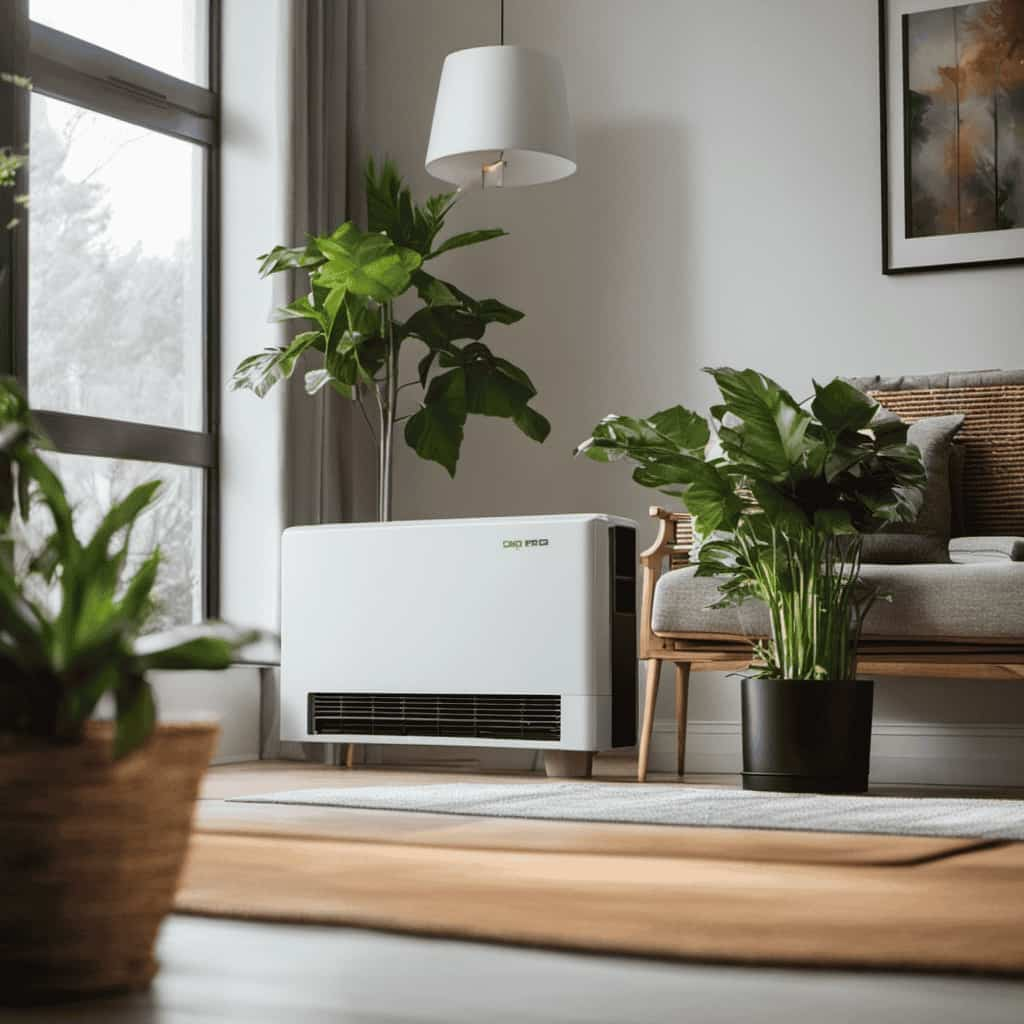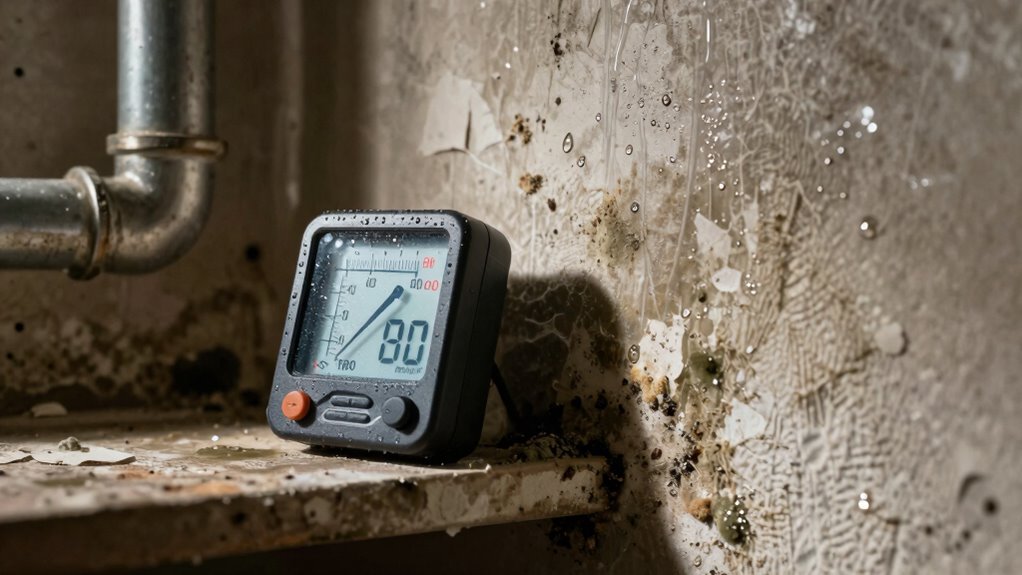

Properly timing humidity control during mold cleanup is essential because it prevents spores from settling and regrowing. You need to manage moisture levels consistently, ideally keeping indoor humidity below 60, and monitor changes closely. Addressing humidity early and using barriers or fans guarantees mold doesn’t return. If you keep control over moisture timing, you’ll improve cleanup results and create a healthier environment. Want to know more about effective strategies? Keep going to discover key tips.

Get backup power and energy gear delivered free — and shop member deals
- Fast, free delivery on millions of items
- Access to Prime Big Deal Days deals on October 6–7
- Prime Video, Amazon Music and more included
Key Takeaways
- Proper timing of humidity control prevents mold spores from settling and growing during cleanup.
- Monitoring humidity levels ensures moisture remains below the mold-friendly threshold of 60%.
- Immediate action during high humidity periods stops mold re-growth after initial cleanup.
- Coordinating moisture barriers and airflow at optimal times enhances long-term mold prevention.
- Seasonal and environmental awareness helps maintain effective humidity levels for sustained mold control.
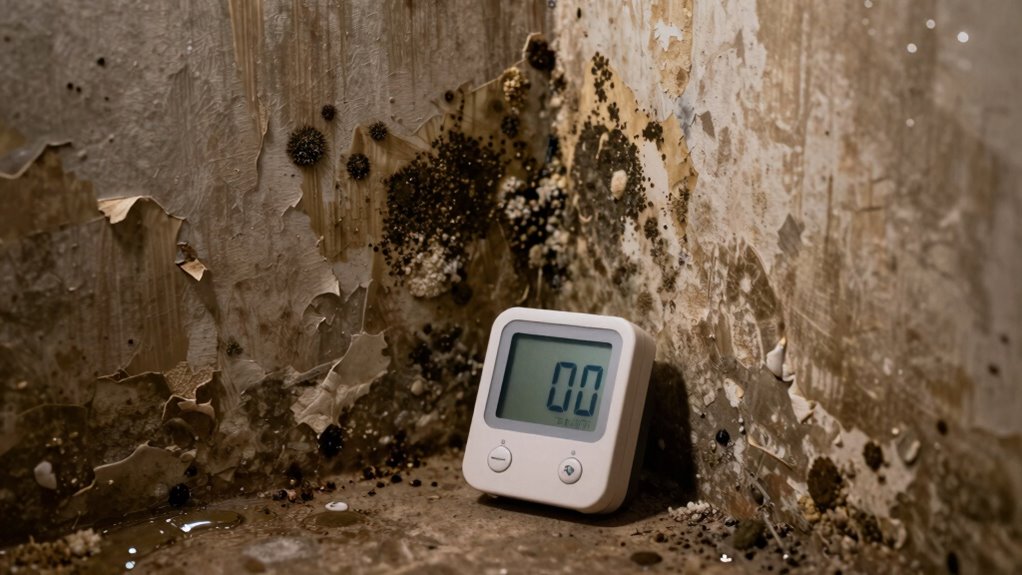
Have you ever noticed a musty smell or visible mold spots in your home? If so, you already know how disruptive mold can be to your living space and health. Cleaning up mold isn’t just about removing the visible growth; it’s about addressing the environment that allows it to thrive. One critical aspect often overlooked is humidity control. Proper timing in controlling humidity levels is essential for effective mold cleanup and prevention.
Controlling humidity is key to effective mold cleanup and preventing future growth.
When you start mold remediation, the goal is to eliminate existing mold and prevent its return. To do this effectively, you need to focus on managing moisture in your home. This starts with improving air circulation. Good air circulation helps to disperse moist air and prevent pockets of high humidity that mold loves. Using fans or vents can increase airflow, reducing the chances of moisture settling in corners, behind walls, or under floors. When air moves consistently, it inhibits mold spores from settling and growing, making cleanup more successful. Additionally, regular monitoring of indoor humidity levels can help you catch moisture problems early before they escalate. Incorporating humidity sensors can further enhance your ability to maintain optimal moisture levels.
However, air circulation alone isn’t enough. You also need to implement moisture barriers. Moisture barriers are essential in areas prone to dampness, such as basements, bathrooms, or around windows. These barriers, like plastic sheeting or specially designed paints, prevent water from seeping into walls, floors, or foundation. Applying moisture barriers at the right time—before or during mold cleanup—helps lock out excess moisture that fuels mold growth. Proper humidity management can also help to dry out affected areas more quickly, further reducing mold risk. Without these barriers, even after cleaning visible mold, damp conditions can quickly lead to its return.
Timing is everything when it comes to humidity control. You shouldn’t wait until mold becomes visible to start managing humidity. Instead, monitor humidity levels regularly and aim to keep indoor humidity below 60%, ideally around 30-50%. When you notice increased moisture, you should act immediately—using dehumidifiers, increasing ventilation, and installing or repairing moisture barriers. Doing so promptly reduces the risk of mold spores settling and growing again. If you delay, you risk creating a cycle where mold returns even after cleanup, because the environment remains conducive to growth. Proper humidity management is crucial in breaking this cycle and ensuring long-term mold prevention. Recognizing the importance of environmental conditions can also help you develop a more comprehensive approach to mold control, especially considering seasonal variations that influence indoor moisture levels.
In short, effective mold cleanup depends heavily on controlling humidity at the right moments. Improving air circulation and installing moisture barriers are vital steps that complement your cleaning efforts. Recognizing the importance of climate and impact investing principles—such as proactive management and sustainable practices—can help you create a healthier environment. By staying vigilant about humidity levels and acting quickly, you can break the cycle of mold growth, protect your home, and breathe easier. Proper timing ensures that your efforts aren’t wasted, making your mold cleanup more effective and sustainable in the long run.
As an affiliate, we earn on qualifying purchases.
Frequently Asked Questions
How Quickly Can Mold Reappear After Cleanup?
Mold can reappear within 24 to 48 hours after cleanup if conditions aren’t controlled. Mold spores are always present in the air, waiting for moisture and poor air circulation to settle and grow. You need to improve air circulation and reduce humidity promptly to prevent mold from returning. Keeping humidity below 60% and ensuring proper ventilation are key to stopping mold from reappearing quickly after cleanup.
What Is the Ideal Humidity Level to Prevent Mold?
You should keep your home’s humidity level between 30-50% to prevent mold growth. This range discourages mold spores from settling and thriving, especially during humidity fluctuations. When humidity rises above 60%, mold spores can activate and spread quickly, so maintaining steady, ideal levels is essential. Using dehumidifiers and air conditioners helps you control moisture, reducing mold risk and ensuring a healthier indoor environment.
Can Humidity Control Alone Eliminate Existing Mold?
Can humidity control alone eliminate existing mold? Not entirely. Mold growth is fueled by moisture, so managing humidity is essential, but it’s only part of the solution. If mold has already taken hold, you need thorough cleanup and moisture management alongside humidity control. Otherwise, mold spores can persist and reappear. Combining these strategies ensures you effectively stop mold in its tracks, preventing future growth and safeguarding your space.
How Often Should Humidity Levels Be Checked During Cleanup?
You should check humidity levels at least twice daily during mold cleanup. Keep air circulating with fans, and make sure dehumidifiers are properly placed—preferably in central locations with unobstructed airflow. Regular checks help you maintain ideal humidity, preventing mold regrowth. Adjust dehumidifier settings as needed, and monitor the environment closely to stay ahead of moisture issues. Consistent oversight ensures effective mold removal and safer indoor air quality.
Are There Specific Tools to Monitor Humidity for Mold Prevention?
You can use humidity sensors to accurately monitor moisture levels, which is essential for mold prevention. These devices give real-time readings and help you maintain ideal humidity. Additionally, proper dehumidifier maintenance ensures consistent performance, preventing excess moisture that fosters mold growth. By regularly checking your sensors and maintaining your dehumidifier, you stay ahead of mold issues and create a healthier environment.
As an affiliate, we earn on qualifying purchases.
Conclusion
Think of humidity control like tending to a delicate garden—you can’t just water it once and forget about it. I once saw a homeowner struggle with mold because they ignored the humidity levels after cleanup; within weeks, mold returned. Just like plants need consistent care, your home needs ongoing humidity management to stay mold-free. When you keep humidity in check, you’re nurturing a healthier, mold-resistant environment that lasts.
moisture barrier plastic sheeting
As an affiliate, we earn on qualifying purchases.
As an affiliate, we earn on qualifying purchases.
air circulation fan for mold prevention
As an affiliate, we earn on qualifying purchases.
As an affiliate, we earn on qualifying purchases.
Fall Picks
fall essentials
As an affiliate, we earn on qualifying purchases.