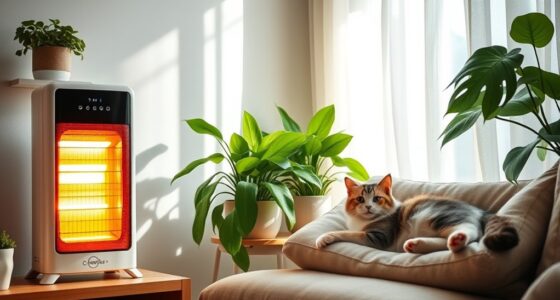
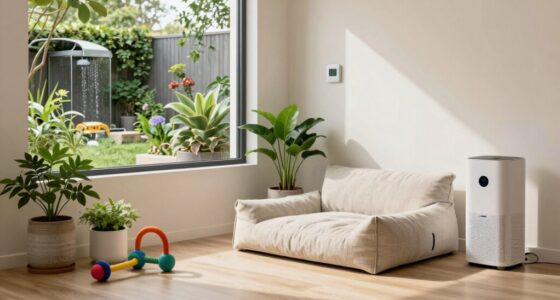
During a heat wave, keeping windows sealed and running your AC without managing humidity can trap moisture inside, making your house feel sticky and sauna-like. If you rely solely on air conditioning without using a dehumidifier or ensuring proper ventilation, excess moisture will linger, preventing sweat from evaporating and trapping heat. This mistake amplifies discomfort rather than alleviating it. Stay with us to discover simple ways to optimize your indoor climate and stay cool.
Key Takeaways
- Keeping windows closed during heat waves traps humid, warm air inside, increasing indoor stickiness.
- Using humidifiers or misting sprays indoors adds unnecessary moisture, worsening the sticky feeling.
- Running air conditioners without proper dehumidification can leave excess moisture in the air.
- Sealing vents or gaps prevents fresh, dry air from circulating and reducing indoor humidity.
- Relying solely on fans without ventilation or humidity control can circulate humid air, making the house feel sticky.

During a heat wave, many people make the common mistake of setting their makeup or skincare routines in ways that backfire under extreme temperatures. One of the biggest errors is ignoring indoor humidity levels. When the air inside your home becomes overly humid, it can make everything feel sticky and uncomfortable. High indoor humidity prevents sweat from evaporating efficiently, leaving your skin clammy and your space feeling warmer than it actually is. Instead of feeling refreshed, you end up trapped in a muggy environment that amplifies the heat. To avoid this, you need to manage indoor humidity carefully. Using a dehumidifier or air conditioner helps pull excess moisture out of the air, creating a more comfortable atmosphere. Ventilation techniques are equally essential. Proper airflow prevents stagnant, humid air from lingering in your home. If you keep windows closed during the hottest parts of the day, you trap warm, humid air inside. Instead, open windows strategically in the early mornings or evenings when outdoor temperatures are cooler, promoting cross-ventilation. Position fans across from open windows to draw cooler air in and push warm air out, effectively cooling your space naturally. This simple step can markedly reduce indoor humidity and make your house feel less sticky. It’s tempting to keep windows sealed tight to block out outdoor heat, but doing so can trap humidity and heat inside, worsening the discomfort. Ventilation techniques like creating a breeze with ceiling fans or portable fans also help circulate air and prevent humidity buildup. Remember, the goal is to keep fresh, drier air moving through your home, which helps sweat evaporate and cools your skin naturally. Additionally, avoid overusing humidifiers or misting sprays indoors during a heat wave, as they can increase moisture levels at precisely the wrong time. Proper humidity control is key to maintaining a comfortable indoor environment during extreme heat. Understanding the importance of indoor air quality can significantly improve your comfort and health in such conditions. Keeping your indoor environment properly ventilated and controlling humidity levels prevents your house from feeling like a sauna, especially during extreme heat. When you’re mindful of these factors, you’ll notice a markedly different level of comfort. Your home will feel cooler, less sticky, and much more bearable. Simple changes like adjusting ventilation techniques and managing indoor humidity can make all the difference. So, during the next heat wave, don’t overlook these easy steps—they’re key to avoiding that dreaded sticky, suffocating feeling inside your house. A focus on HVAC systems and proper humidity management can further enhance your indoor comfort during these hot periods. Proper air circulation can also help prevent humidity from accumulating in hidden corners and enclosed spaces.

BEDRED Dehumidifier, 95OZ Dehumidifier for Home 1000 sq ft – Quiet with Auto Shut Off & Relaxing 7 Color Ambient Light, Ideal for Livingroom, Bedroom, Basement (Black)
- Cooling Technology: Thermoelectric dehumidification for moisture removal
- Auto Shutoff: Automatically powers down when tank is full
- Ambient Lighting: 7-color soothing LED light for ambiance
As an affiliate, we earn on qualifying purchases.
As an affiliate, we earn on qualifying purchases.
Frequently Asked Questions
How Can I Tell if My Air Conditioner Is Cooling Effectively?
You’ll know your air conditioner is cooling effectively if the room temperature drops to your thermostat setting and stays consistent. Check if evaporative cooling feels noticeable and if the air feels comfortably cool without excess humidity. Also, verify your thermostat is properly calibrated; if it’s off, your AC might not be cooling properly. Regular maintenance and temperature checks help confirm your system’s efficiency and keep your home comfortable.
What Are the Signs of an Overused or Faulty Setting?
You might notice signs of an overused or faulty setting if your home feels unevenly cooled or overly humid, indicating poor ventilation efficiency. Check your thermostat calibration—if it’s off, your system may run inefficiently or excessively, causing discomfort. Also, listen for frequent cycling or strange noises, which suggest your thermostat or system could be overworking. Addressing these issues guarantees proper cooling and energy efficiency.
Can Window Fans Help During a Heat Wave?
Yes, window fans can help during a heat wave. Proper window placement is key; position fans to draw in cool air at night and push out hot air during the day. Keep in mind, fan noise might be noticeable, so choose quieter models if you’re sensitive. Using window fans strategically can improve airflow, reduce indoor temperatures, and make your home more comfortable without running your AC nonstop.
Should I Adjust Humidity Levels During a Heat Wave?
Yes, you should adjust humidity levels during a heat wave. Keep indoor plant hydration in mind, as plants need proper moisture to thrive, and high humidity can cause stress. Using a dehumidifier benefits your home by reducing excess moisture, making the environment more comfortable and less sticky. Maintaining ideal humidity helps prevent mold growth and keeps your space feeling cooler, ensuring a more pleasant indoor atmosphere during hot weather.
How Often Should I Clean or Replace Air Filters?
Imagine your home’s air as a garden needing regular tending. You should clean or replace your air filters every 30 to 60 days, depending on use and conditions. Following a consistent filter replacement schedule prevents dust buildup and keeps air fresh. During a heat wave, increased use may require more frequent changes. Proper air filter maintenance guarantees your indoor air stays clean, comfortable, and healthy.
As an affiliate, we earn on qualifying purchases.
Conclusion
Remember, using the wrong heat-wave setting is like trying to run a marathon in flip-flops — it might seem fine at first, but it’ll cause discomfort and exhaustion in the long run. I once ignored my thermostat’s recommendation and ended up feeling sticky and drained all afternoon. Don’t let a simple mistake turn your home into a sauna; instead, find that sweet spot, like a well-tuned instrument, and enjoy a cool, comfortable space even during the hottest days.
As an affiliate, we earn on qualifying purchases.
As an affiliate, we earn on qualifying purchases.