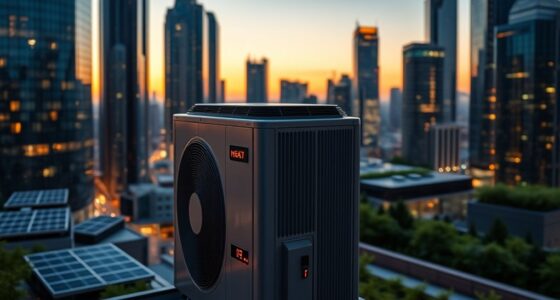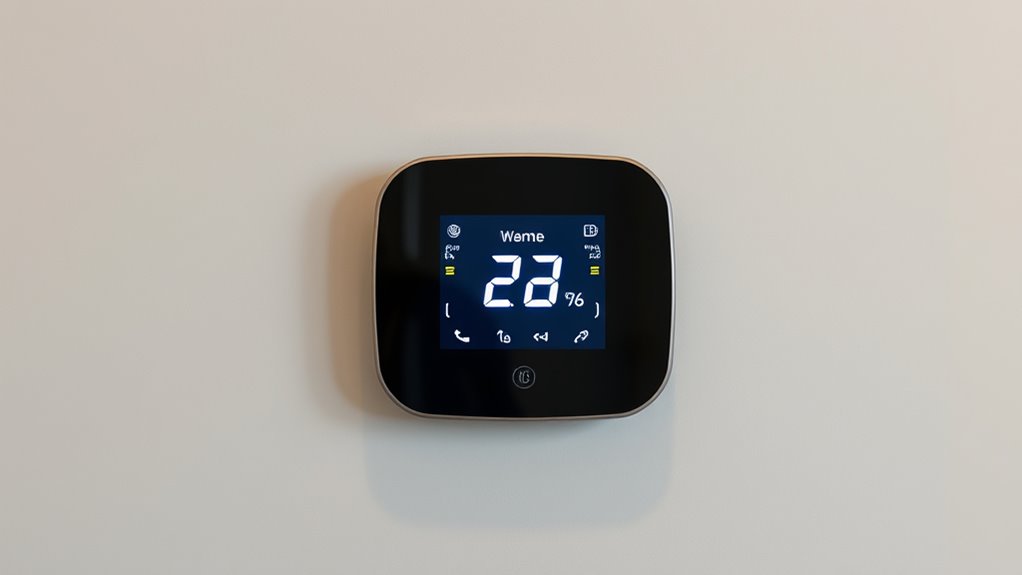

Smart sensors play a key role in automating climate control by continuously monitoring temperature, humidity, and air quality. They detect changes and automatically adjust heating, cooling, and ventilation systems for your comfort and energy savings. Ensuring sensors are well-calibrated and secure is vital for accuracy and privacy. By integrating these intelligent devices, your system becomes more reliable and efficient, helping you create a comfortable environment while protecting your data. Keep exploring to see how these innovations work together seamlessly.
Key Takeaways
- Smart sensors enable automatic climate adjustments by monitoring temperature, humidity, and air quality in real-time.
- Regular calibration ensures sensor accuracy, preventing energy waste and maintaining optimal system performance.
- Data privacy and security are vital, requiring encryption, strong access controls, and firmware updates.
- Proper system management involves selecting reliable sensors, implementing security measures, and staying updated on software patches.
- Integration of calibrated, secure sensors allows for seamless automation, enhancing comfort, energy efficiency, and environmental safety.

Smart sensors are transforming climate control by enabling systems to respond automatically to your environment. These sensors continuously monitor temperature, humidity, and air quality, adjusting your heating, cooling, or ventilation to maintain ideal comfort without manual input. By doing so, they not only enhance your living experience but also promote energy efficiency, saving you money on utility bills. As you rely more on these intelligent devices, understanding how they operate becomes vital. One key aspect is sensor calibration, which guarantees that sensors provide accurate readings over time. Proper calibration involves regular checks and adjustments so that data collected truly reflects your environment’s conditions. If sensors drift out of calibration, they might trigger unnecessary heating or cooling, wasting energy and possibly compromising comfort. That’s why manufacturers often include automatic calibration features or recommend periodic manual calibration. Another important consideration is data privacy. Since smart sensors collect detailed environmental data, it’s essential to guarantee your information remains secure. Many systems transmit data wirelessly to cloud servers for processing, which raises concerns about potential breaches or misuse. You should look for sensors with robust encryption and privacy policies that limit data access to authorized users only. Being proactive about data privacy helps protect your personal space and prevents unauthorized parties from monitoring your habits or environment. As you integrate smart sensors into your climate control system, it’s beneficial to stay informed about these aspects. Regularly update firmware and software to benefit from security patches and performance improvements. Guarantee that your network has strong security measures, such as strong passwords and firewalls, to prevent hacking attempts. When selecting sensors, prioritize those with transparent privacy policies and reliable calibration features to ensure both accuracy and security. The convenience of automatic adjustments often leads users to overlook the importance of these technical details, but neglecting them can result in inefficiencies or privacy risks. Additionally, considering how Honda Tuning modifications optimize vehicle performance can inspire confidence in applying precision and customization to your smart home systems. Ultimately, the goal is to enjoy a comfortable environment powered by intelligent technology that respects your privacy and provides precise, reliable data. By understanding how sensor calibration affects accuracy and how your data is protected, you can make more informed decisions when setting up or upgrading your climate control system. Embracing these smart sensor features allows you to maximize comfort while safeguarding your personal information, making your home not only smarter but also safer.
Frequently Asked Questions
How Do Smart Sensors Improve Energy Efficiency in Climate Control?
Smart sensors improve energy efficiency by using occupancy detection to identify when spaces are unoccupied, so you don’t waste energy cooling or heating empty rooms. They also enhance temperature regulation by continuously monitoring conditions and adjusting climate settings in real-time. This means you save energy by only using what’s necessary, ensuring peak comfort without excess energy consumption. Ultimately, smart sensors help you reduce costs and minimize environmental impact.
Are Smart Sensors Compatible With Existing Home Automation Systems?
You’ll be pleased to know that smart sensors often work seamlessly with existing home automation systems. When you guarantee proper sensor calibration and check device compatibility, integration becomes smooth. It’s like fitting the last piece of a puzzle—sensors just need to match your system’s specifications. So, if you’re upgrading, verify compatibility and calibrate sensors correctly, and you’ll enjoy a smarter, more efficient home climate control experience.
What Are the Installation Requirements for Smart Climate Sensors?
You need to guarantee proper sensor calibration and ideal installation placement for smart climate sensors. First, calibrate the sensors according to the manufacturer’s instructions to ensure accuracy. Then, choose locations away from direct sunlight, drafts, or heat sources, ideally at eye level for reliable readings. Secure the sensors firmly on walls or ceilings, avoiding obstructed areas, so they can effectively monitor your environment and improve climate control.
How Secure Are Data Transmissions From Smart Sensors?
Did you know that 85% of data breaches involve vulnerabilities in data transmission? Your smart sensors’ data transmissions are generally secure thanks to data encryption and robust wireless protocols like WPA2 or WPA3. These security measures protect your information from interception and hacking attempts. However, always guarantee your devices are updated regularly and use strong, unique passwords to further enhance the security of your data transmissions.
Can Smart Sensors Function During Power Outages?
Smart sensors typically can’t function during power outages unless you have a power backup like a battery or generator. Without backup, sensor reliability drops because they rely on continuous power to operate and communicate. To guarantee seamless operation during outages, you should install a reliable power backup system. This way, your sensors stay active, maintaining climate control and data accuracy, even when the main power supply is interrupted.
Conclusion
With smart sensors and climate control automation, you’re opening a future where your home adapts faster than you can blink, ensuring perfect comfort at all times. Say goodbye to temperature battles and hello to a world where your environment responds instantly to your needs—like magic, but real! Embrace this technology now, and watch your living space transform into a climate-controlled paradise that reacts so quickly, you’ll wonder how you ever lived without it.