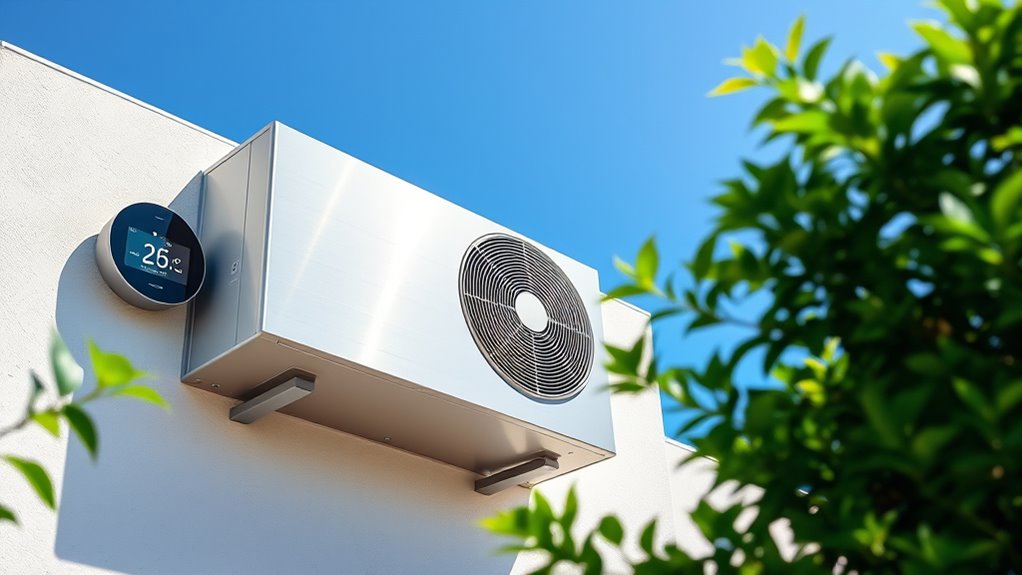

Using temperature setbacks with your heat pump can save energy and lower bills, especially when combined with good insulation. By setting your thermostat a bit lower in winter or higher in summer during times you’re away or sleeping, you minimize the work your heat pump has to do. Proper insulation helps retain those temperature changes longer, making setbacks more effective. Keep exploring ways to optimize your system for maximum savings and comfort over time.
Key Takeaways
- Proper temperature setbacks reduce heat pump workload, lowering energy consumption and costs.
- Insulation enhances setback effectiveness by maintaining indoor temperatures longer.
- Smart thermostats optimize setback timing and depth based on user habits.
- Combining insulation with setbacks prevents heat loss and minimizes heat pump cycling.
- Strategic setbacks contribute to environmental benefits by decreasing overall energy use.
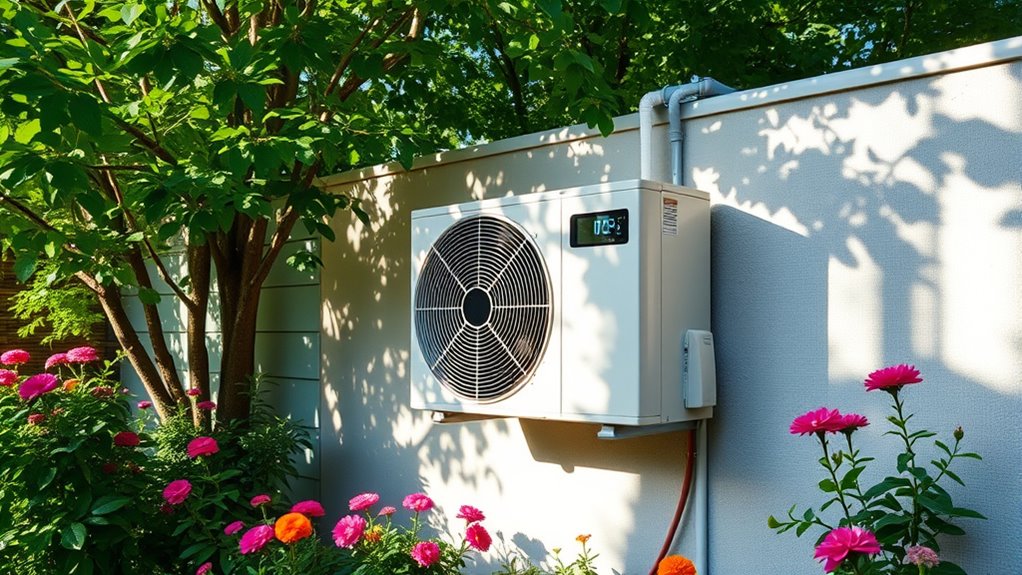
Heat pumps are an efficient way to heat and cool your home, but many homeowners overlook how adjusting the temperature settings can lead to noteworthy energy savings. One of the simplest ways to optimize your heat pump’s efficiency is by using smart thermostats. These devices allow you to set precise temperature schedules and remotely control your system, ensuring you’re not wasting energy when you’re away or asleep. With a smart thermostat, you can program your home to be cooler during the day when you’re not home and warmer just before you return, reducing unnecessary operation and lowering energy bills. Many models also learn your habits over time, automatically adjusting settings to maximize comfort and efficiency without you having to lift a finger. This level of control makes it easier to implement temperature setbacks without sacrificing comfort.
Alongside smart thermostats, upgrading your insulation plays a critical role in maintaining consistent indoor temperatures. Proper insulation minimizes heat loss in winter and keeps your home cooler in summer, reducing the workload on your heat pump. When your home is well-insulated, you can set back the thermostat more aggressively without risking discomfort or drastic temperature fluctuations. This means you can lower the temperature at night or during extended periods of absence and still enjoy a comfortable environment when you return. Insulation upgrades—such as adding attic insulation, sealing leaks around windows and doors, and insulating walls—are investments that pay off by reducing the energy required to heat or cool your home. When combined with temperature setbacks, these upgrades considerably improve your heat pump’s efficiency and reduce your overall energy consumption.
Using smart thermostats in conjunction with insulation upgrades creates a synergy that maximizes energy savings. You can set your thermostat to lower temperatures during the night or when away, confident that your home’s insulation will retain that temperature longer. This prevents your heat pump from working overtime to maintain comfort, which is especially important during colder months. Additionally, many smart thermostats provide energy usage reports and tips to help you refine your setback strategies further. The key is to find a balance where setbacks are deep enough to save energy but not so extreme that it causes discomfort or leads to increased heating or cooling loads when you return home. Implementing energy-saving techniques such as these can significantly enhance your home’s efficiency. By combining these two strategies—smart thermostats and insulation upgrades—you create a more energy-efficient home that saves money and reduces your carbon footprint, all while maintaining a comfortable living environment.
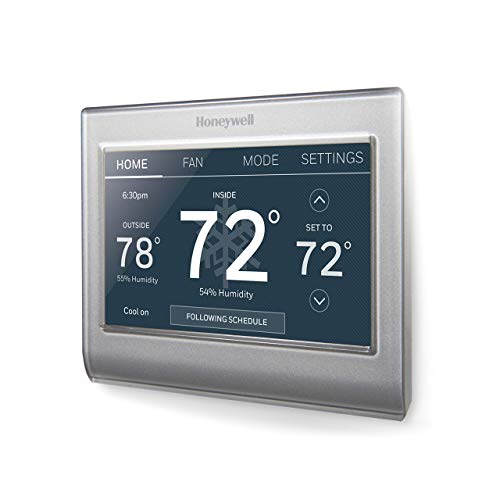
Honeywell Home RTH9585WF1004 Wi-Fi Smart Color Thermostat, 7 Day Programmable, Touch Screen, Energy Star, Alexa Ready, Gray
COMFORT COMES IN YOUR COLOR. Personalize your Wi-Fi Smart Color Programmable Thermostat to fit your décor.
As an affiliate, we earn on qualifying purchases.
As an affiliate, we earn on qualifying purchases.
Frequently Asked Questions
How Does Temperature Setback Impact Heat Pump Lifespan?
Temperature setback can impact your heat pump’s lifespan if not managed properly. When you frequently set back the thermostat, the unit works harder to reheat or cool your space, increasing wear and tear. Proper thermostat calibration helps maintain energy efficiency and reduces strain. To prolong your heat pump’s life, avoid drastic temperature changes and use setbacks moderately, ensuring your system runs smoothly and lasts longer without unnecessary stress.
Are There Specific Temperature Setback Guidelines for Different Climates?
Imagine the gentle curve of a coastline shaping your climate. For different regions, climate-specific guidelines recommend adjusting your heat pump’s temperature setbacks based on regional temperature recommendations. In milder climates, you can set larger setbacks to save energy without sacrificing comfort. In colder areas, keep setbacks minimal to prevent strain on the system. Always tailor your settings to your local climate, ensuring ideal performance and longevity for your heat pump.
Can Temperature Setbacks Cause Comfort Issues During Cold Snaps?
Yes, temperature setbacks can cause comfort issues during cold snaps if you’re not cautious. When you program your smart thermostat to lower the temperature, your heat pump works harder to bring it back up, which may lead to inconsistent comfort. To maintain energy efficiency without sacrificing comfort, set moderate setbacks and monitor the climate. This way, you balance savings with a cozy home, even during chilly weather.
What Are the Best Practices for Programming Heat Pump Setbacks?
Did you know that properly programmed setbacks can save up to 10% on energy costs? You should use smart thermostats to set gradual temperature changes, avoiding large swings that strain your heat pump. Implement zoning strategies to target specific areas, ensuring comfort and efficiency. Program setbacks during unoccupied hours and cold snaps, but avoid extreme drops to prevent comfort issues. Regularly adjust settings based on your schedule for peak savings.
How Do Setbacks Affect Humidity Control With Heat Pumps?
Setbacks can affect humidity control with heat pumps by causing moisture levels to fluctuate. When you lower the temperature during setbacks, the heat pump may struggle to remove excess humidity, leading to increased moisture levels indoors. To maintain ideal humidity and moisture control, you should adjust your settings carefully and consider using a dehumidifier during setbacks. This helps guarantee consistent comfort and prevents issues like mold or musty odors.

BEEST FullStop Spray Foam Insulation Kit for Walls and Attic – 480 Board ft/sq.ft Perfect Heat & Acoustic Insulation for Reduced Energy Bills – 24x Spray Foam Can, 2X Cleaner, 1 Pro Gun & Safety Gear
Beest FullStop DIY Spray Foam Insulation Kit: Our spray foam insulation delivers exceptional thermal insulation and soundproofing, achieving…
As an affiliate, we earn on qualifying purchases.
As an affiliate, we earn on qualifying purchases.
Conclusion
By embracing temperature setbacks with your heat pump, you’re guiding your home through a gentle slumber, conserving energy like a wise gardener tending to their plants. Think of it as a dance where less movement saves more energy, keeping your wallet and the planet happy. With a simple shift in your routine, you turn your heating system into a silent guardian, quietly saving energy while you enjoy cozy comfort—your home’s secret weapon for efficiency.
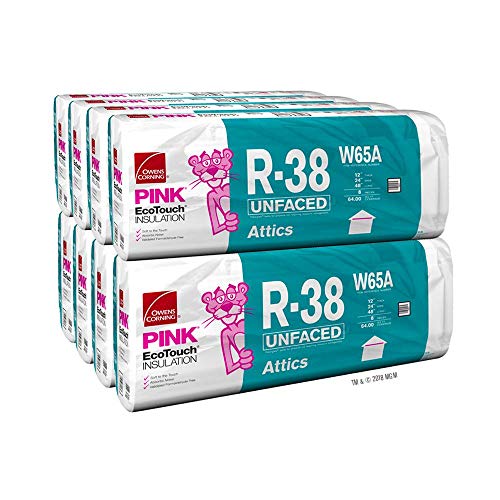
Owens Corning 512 SQFT 8 Bags of R-38 Unfaced 24 by 48 Fiberglass Batt Fits 2X12 attic
Attic This product is recommended for an attic application. Place this in between your trusses. For unfaced insulation…
As an affiliate, we earn on qualifying purchases.
As an affiliate, we earn on qualifying purchases.

ERINGOGO Fuel Pump Wire Harness Connector for Air Heater Multi Functional Connector for Car Heating Defrosting Easy Installation Lightweight Design Energy Saving Accessory
Wire harness connector–crafted from firm plastic materials, it ensures use and resistance to damage,car supply
As an affiliate, we earn on qualifying purchases.
As an affiliate, we earn on qualifying purchases.