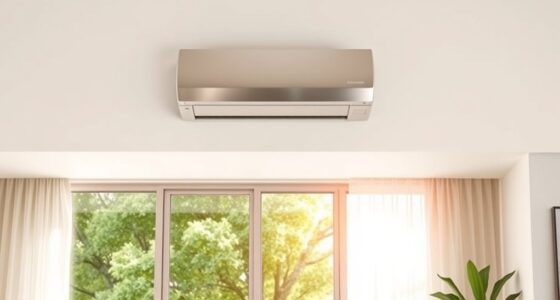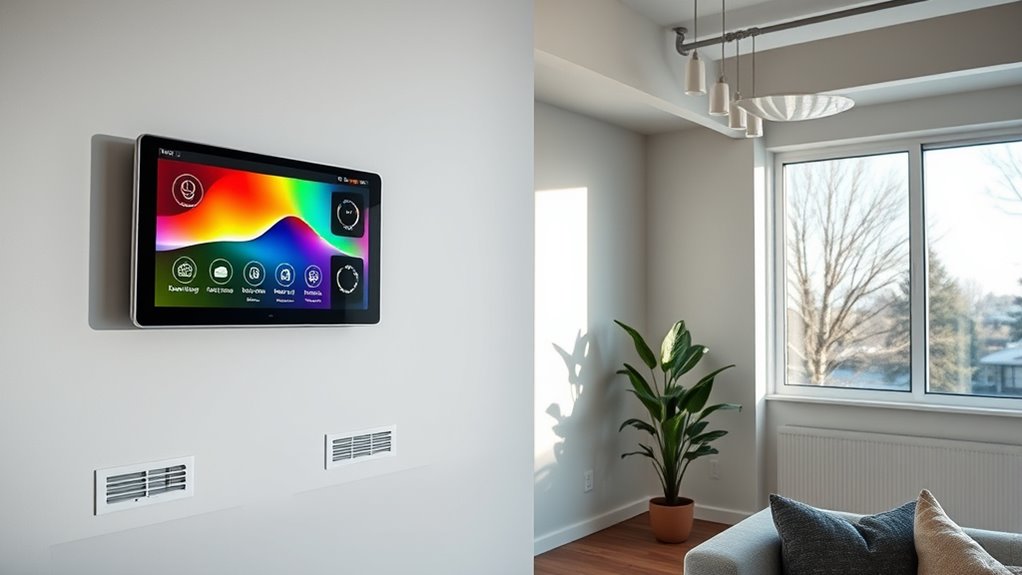

To personalize your climate control, start by dividing your home into zones based on room usage and preferences. Use smart thermostats and zoning systems to set specific temperatures for each area, which helps improve comfort and saves energy. Overcome common challenges like ductwork limitations with professional planning or structural adjustments. Implementing effective zoning strategies lets you enjoy precise temperature control and efficiency. Keep exploring to discover how to optimize your home’s climate even further.
Key Takeaways
- Assess your home’s layout and structural elements to design effective zoning zones.
- Use smart thermostats to program and automate individual zones for personalized comfort.
- Incorporate advanced ductwork or zoning valves to improve temperature distribution and control.
- Address compatibility and wiring issues with existing HVAC systems before implementing zoning solutions.
- Regularly monitor and adjust zones to optimize energy efficiency and maintain desired comfort levels.
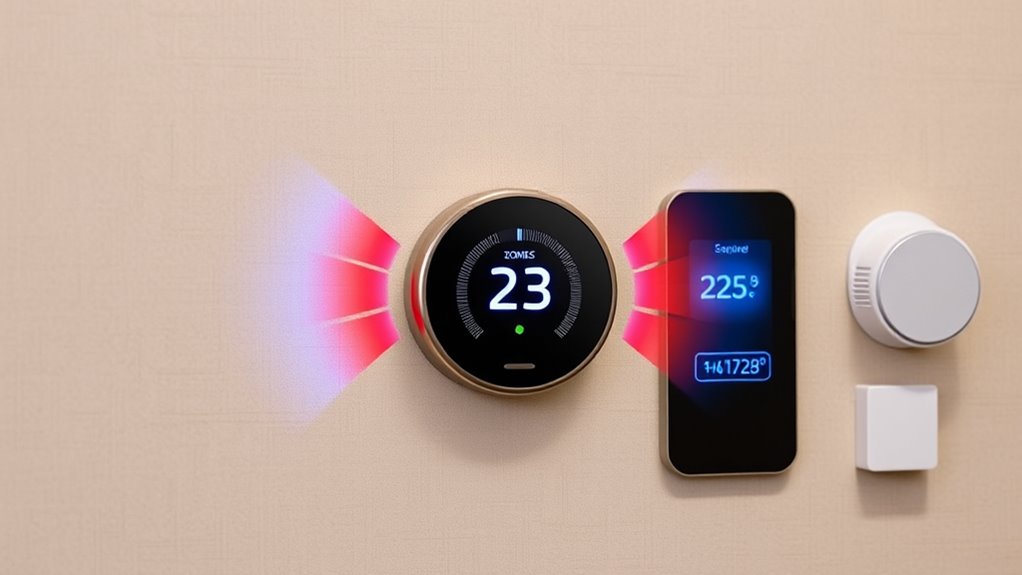
Have you ever wished you could customize your indoor climate to suit your preferences precisely? With the rise of smart thermostats and advanced zoning strategies, turning that wish into reality is more attainable than ever. Zoning your home allows you to control temperatures in different areas independently, providing comfort where you need it and saving energy in unused spaces. However, implementing these systems isn’t without its challenges. One common obstacle is zoning challenges, which can arise from the complexity of your home’s layout, existing HVAC infrastructure, or the compatibility of smart thermostats with your current setup.
Smart thermostats are the backbone of effective zoning. They enable you to program different zones with specific temperature settings and schedules, often remotely via smartphone apps. These devices learn your preferences over time, optimizing comfort and efficiency. When you install smart thermostats in multiple zones, they communicate with each other and your HVAC system to maintain consistent temperatures tailored to each area. This setup ensures you’re not wasting energy heating or cooling unoccupied spaces, which can greatly reduce your utility bills.
Smart thermostats learn your preferences and communicate across zones to optimize comfort and save energy.
However, zoning challenges can complicate the process. For example, older homes may have ductwork that isn’t designed for multiple zones, making it difficult to install dampers or sensors effectively. Structural elements like thick walls, open floor plans, or irregular layouts may interfere with even temperature distribution, forcing you to reconsider your zoning design. Additionally, compatibility issues can arise if your existing HVAC system isn’t compatible with modern smart thermostats or if you lack the necessary wiring. These technical hurdles require careful planning and sometimes professional assistance to overcome.
Furthermore, advancements in automation technology are helping to address some of these complexities by providing more sophisticated tools for managing multiple zones efficiently. Despite these challenges, the benefits of zoning are well worth the effort. You gain precise control over each part of your home, creating personalized comfort zones that adapt to your lifestyle. For example, you can set the living room to a cozy temperature during movie nights while keeping bedrooms cooler at night. This level of control not only enhances comfort but also improves energy efficiency, reducing unnecessary heating or cooling in unoccupied zones. Over time, you’ll likely notice a decrease in your energy bills and a more comfortable living environment.

Lennox S40 (22V24) Smart Thermostat, Touchscreen, WiFi, Communicating System Control, Programmable, High Efficiency, Geo-Fencing, Remote Access, Wi-Fi and Alexa Enabled, Easy Installation
To provide worry-free 10 year warranty against manufacturing defects or defects. To maintain warranty validity, it is necessary…
As an affiliate, we earn on qualifying purchases.
As an affiliate, we earn on qualifying purchases.
Frequently Asked Questions
How Does Zoning Impact Overall Energy Efficiency?
Zoning notably boosts your overall energy efficiency by allowing better temperature regulation in different areas of your home. When you zone your space, you target heating and cooling only where needed, reducing energy waste. This leads to energy savings because you’re not over-conditioning unused rooms. By customizing climate control for each zone, you optimize comfort and cut down on unnecessary energy consumption, making your home more efficient and eco-friendly.
Can Zoning Strategies Be Integrated With Smart Home Systems?
Yes, zoning strategies can be integrated with smart home systems. You can use smart thermostat integration to control different zones effortlessly, ensuring compatibility with your existing zoning system. This allows you to customize climate settings for each area, optimize energy efficiency, and enhance comfort. By connecting your zoning system with smart home technology, you get seamless control and smarter automation that adapts to your lifestyle.
What Are the Maintenance Requirements for a Zoned HVAC System?
You need to regularly check your duct sealing to prevent leaks that can reduce efficiency, and replace or clean filters to keep airflow ideal. Schedule annual professional inspections to ensure dampers and thermostats function properly. Also, keep an eye on any unusual noises or temperature inconsistencies, as these may signal maintenance needs. Regular upkeep ensures your zoned HVAC system operates smoothly, saving you energy and maintaining comfort.
How Cost-Effective Are Zoning Solutions for Small Homes?
Zoning solutions can be quite cost-effective for small homes, especially when you conduct a thorough zoning cost analysis before installation. The initial zoning installation might seem pricey, but it often reduces energy bills by targeting specific areas for heating or cooling. You’ll enjoy increased comfort and lower utility costs over time. Just make certain you compare different zoning options and work with a professional to maximize your investment’s value.
Are Zoning Strategies Suitable for Extreme Climate Regions?
Are zoning strategies suitable for extreme climate regions? They can be, but you should consider zoning limitations and the need for extreme climate adaptation. In such areas, zoning helps target heating or cooling where needed most, improving comfort and efficiency. However, harsh conditions may require more advanced or integrated systems, making zoning complex or less effective without proper design. Always assess your home’s specific needs for ideal results.

SmartZone-3X : 3 Zone HVAC Controller KIT w/ Temp Sensor; Dual Climate Control to Replace Honeywell HZ322, EWC, Zonefirst, Zonex, Durozone & More
3 Zone HVAC zone control – Version 3.0 (Replaces SmartZone-2X)
As an affiliate, we earn on qualifying purchases.
As an affiliate, we earn on qualifying purchases.
Conclusion
Think of your home as a garden, where each zone is a different flowerbed. With smart zoning strategies, you’re the gardener who nurtures each area to thrive in its unique climate. By tailoring your climate control, you create a harmonious, comfortable space for everyone. When you master these zones, your home becomes a lush landscape of perfect temperatures, blooming with comfort and efficiency, all under your careful, personalized care.

HVAC Zoning Duct Damper w/Integrated Starting Collar (Take-Off) Low Profile Contractor Grade (08 inch)
PRO-Grade, Commercial Construction Quality
As an affiliate, we earn on qualifying purchases.
As an affiliate, we earn on qualifying purchases.
home climate control zoning solutions
As an affiliate, we earn on qualifying purchases.
As an affiliate, we earn on qualifying purchases.