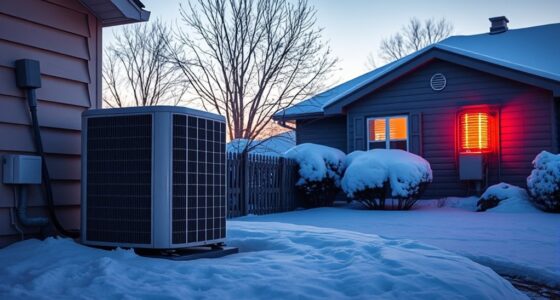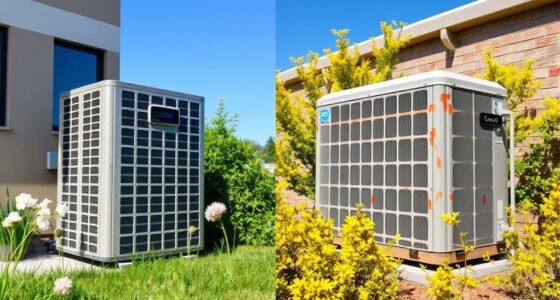
Installing a heat pump typically costs between $3,000 and $8,000, depending on your home size, the type of system you choose, and whether upgrades to your HVAC or electrical wiring are needed. Ducted systems tend to be more expensive than ductless mini-splits, and installation complexity can also impact the price. To get a clear picture of your total investment, consider all these factors—continuing will help you understand what influences the upfront cost and how to plan accordingly.
Key Takeaways
- Typical installation costs range from $3,000 to $8,000, depending on home size, system type, and location.
- Ducted systems usually have higher upfront costs compared to ductless mini-splits.
- Upfront expenses may increase with necessary upgrades to HVAC or electrical wiring.
- Financing options and utility rebates can help reduce initial costs.
- Considering installation and auxiliary expenses provides a complete view of the total upfront investment.
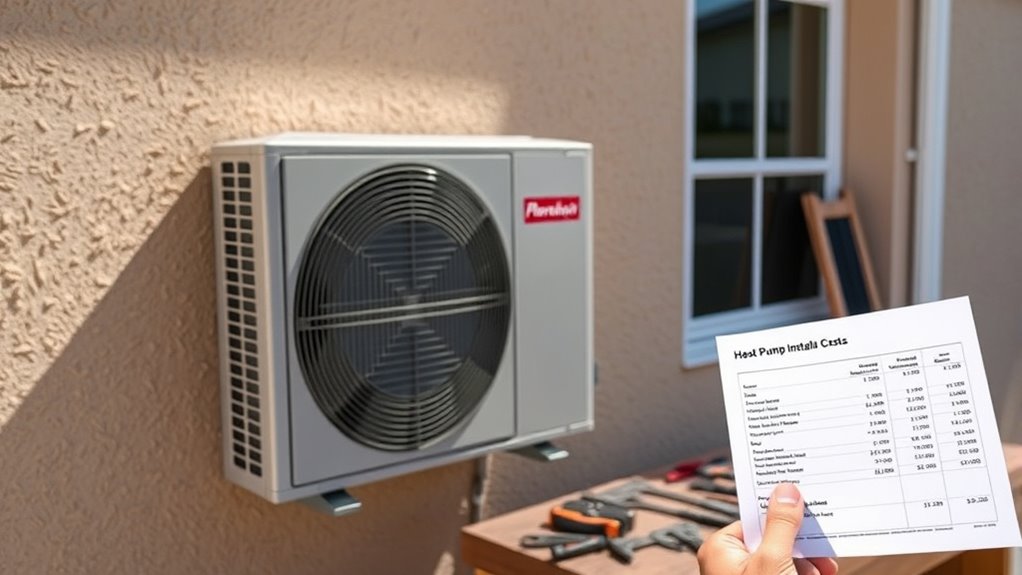
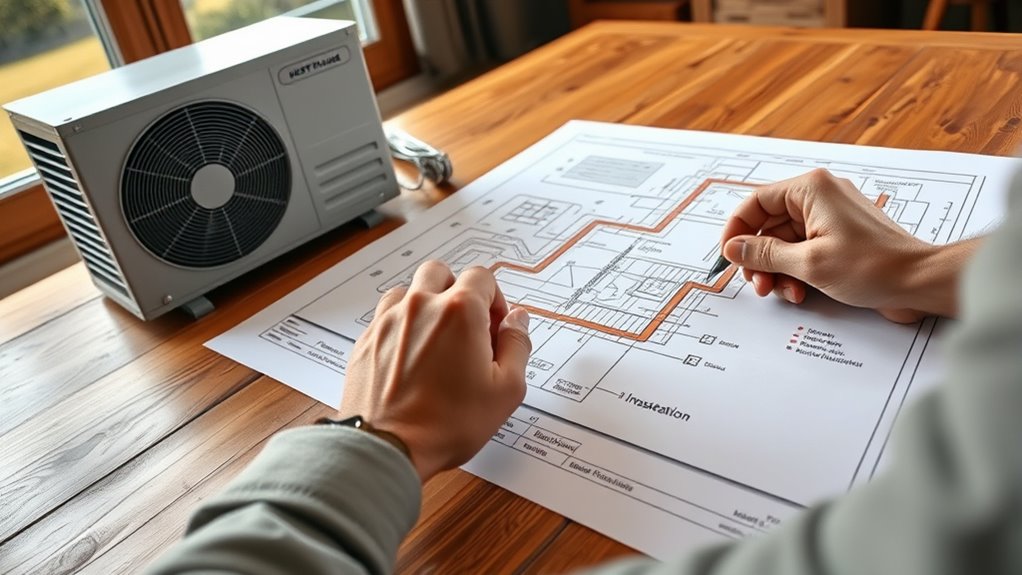
Installing a heat pump can be a smart move for your home’s energy efficiency, but understanding its upfront cost is essential before making a decision. When you start exploring options, it’s helpful to conduct a thorough cost comparison. The initial investment for a heat pump varies considerably depending on factors like the size of your home, the type of system you choose, and your location. Typically, prices range from $3,000 to $8,000, including equipment and installation. Ducted systems tend to be more expensive than ductless mini-splits, so you’ll want to compare these options carefully. Don’t forget to consider additional costs such as necessary upgrades to your existing HVAC system or electrical wiring, which can add to the total expense.
As you evaluate the upfront costs, it’s also wise to look into financing options. Many manufacturers and local contractors offer financing plans designed to make the purchase more manageable. These plans often come with low-interest rates or flexible payment terms, allowing you to spread out payments over several years. This can make the initial investment easier to handle without straining your budget. Some utility companies also provide rebates or incentives for installing energy-efficient systems like heat pumps, which can greatly reduce your out-of-pocket expenses. Be sure to research these options early, so you can incorporate any potential savings into your overall cost comparison.
It’s tempting to focus solely on the sticker price, but you should also consider the long-term savings that a heat pump can offer. Although the upfront cost might seem steep, heat pumps are highly efficient, which means you’ll save on energy bills over time. These savings can help offset the initial investment and make the system more affordable in the long run. When comparing costs, factor in maintenance expenses and potential energy savings to get a clearer picture of your investment’s value. Additionally, understanding the efficiency of heat pumps can help you better gauge their long-term benefits and environmental impact.
If you’re worried about the initial expenditure, exploring financing options could be your best approach. Many financial plans are tailored to help homeowners afford upgrades that improve comfort and efficiency. Just be sure to read the fine print, compare interest rates, and understand the terms before committing. Ultimately, investing in a heat pump can be a cost-effective decision, especially when you weigh the upfront costs against the ongoing savings and benefits. By doing a careful cost comparison and exploring financing options, you’ll be in a strong position to make an informed choice that suits your budget and energy goals.

Mountman 12000 BTU Mini Split AC/Heating System,19 SEER2 110/120V Energy Efficient Ductless Inverter System,Cools Up to 750 Sq.Ft with Pre-Charged Condenser,Heat Pump & Installation Kits
4 Flexible Modes for Year-Round Comfort :Choose from Cool, Heat, Dry, Fan modes to adapt to any season….
As an affiliate, we earn on qualifying purchases.
As an affiliate, we earn on qualifying purchases.
Frequently Asked Questions
How Long Does a Typical Heat Pump Installation Take?
Ever wonder how long it takes to install a heat pump? Typically, the installation timeline ranges from one to three days, depending on your home’s complexity. You’ll want to coordinate with your contractor’s scheduling to ensure a smooth process. Are they prepared for any unforeseen issues? By planning ahead and choosing experienced professionals, you can minimize delays and get your heat pump up and running quickly.
Are There Any Government Rebates for Heat Pump Installation?
Yes, you can take advantage of government incentives and rebate programs for heat pump installation. Many local, state, and federal programs offer rebates to help offset costs, making it more affordable for you to upgrade your heating and cooling system. To find the available rebates in your area, check with government websites or energy agencies. These incentives are designed to encourage eco-friendly upgrades and reduce your overall expenses.
What Maintenance Costs Are Involved After Installation?
Maintaining your heat pump is like tending a garden—you’ll need regular care. Expect to spend on routine maintenance costs such as filter replacements, which help keep it efficient. Occasionally, repair expenses may arise if components wear out or malfunction, but these are typically infrequent. Staying on top of maintenance guarantees your system runs smoothly, saving you money in the long run and preventing costly repairs down the line.
How Does Climate Affect Heat Pump Efficiency?
Climate zones substantially impact your heat pump’s efficiency, with efficiency variations occurring across different regions. In milder climates, your heat pump works more effectively because it doesn’t have to work as hard to heat or cool your space. However, in colder zones, efficiency drops as the system struggles to operate in low temperatures. To maximize performance, choose a model suited for your specific climate zone, ensuring peak efficiency year-round.
Can Existing HVAC Systems Be Integrated With a Heat Pump?
Integrating your existing HVAC system with a heat pump is like fitting a new piece into a puzzle. You’ll want to check ductwork compatibility and system compatibility first. If your ducts are in good shape and match the heat pump’s requirements, installation becomes smoother. Sometimes, minor adjustments or upgrades are needed for seamless operation, but with proper evaluation, your current system can work well with a heat pump.

MrCool VersaPro 2.5 Ton 17 SEER2 Central Ducted Heat Pump Split System – Multiposition – R454B – 35ft Pre-Charged DIY Line Set Included
Cooling Power: 2.5 Ton, providing efficient cooling for medium-sized spaces
As an affiliate, we earn on qualifying purchases.
As an affiliate, we earn on qualifying purchases.
Conclusion
While the initial investment in a heat pump might seem like planting a small seed, remember it’s like nurturing a tree that promises shade and comfort for years to come. Though the upfront cost can feel like a steep hill, think of it as laying a solid foundation for quieter, more efficient heating. With patience and care, you’ll soon enjoy the gentle warmth, like a sunrise, brightening your home without the heavy toll of ongoing expenses.

Nouscan 3" 13Ft Mini Split Line Set Cover with Flexible Duct, Upgrade PP Decorative Minisplit Lineset Cover Kit, Paintable for Mini Split, Air Conditioner, Central AC, HVAC and Heat Pumps, White
PLEASE NOTE THE SIZE before ordering, the length of straight duct part is 1.35ft, suitable for indoors and…
As an affiliate, we earn on qualifying purchases.
As an affiliate, we earn on qualifying purchases.
heat pump financing options
As an affiliate, we earn on qualifying purchases.
As an affiliate, we earn on qualifying purchases.