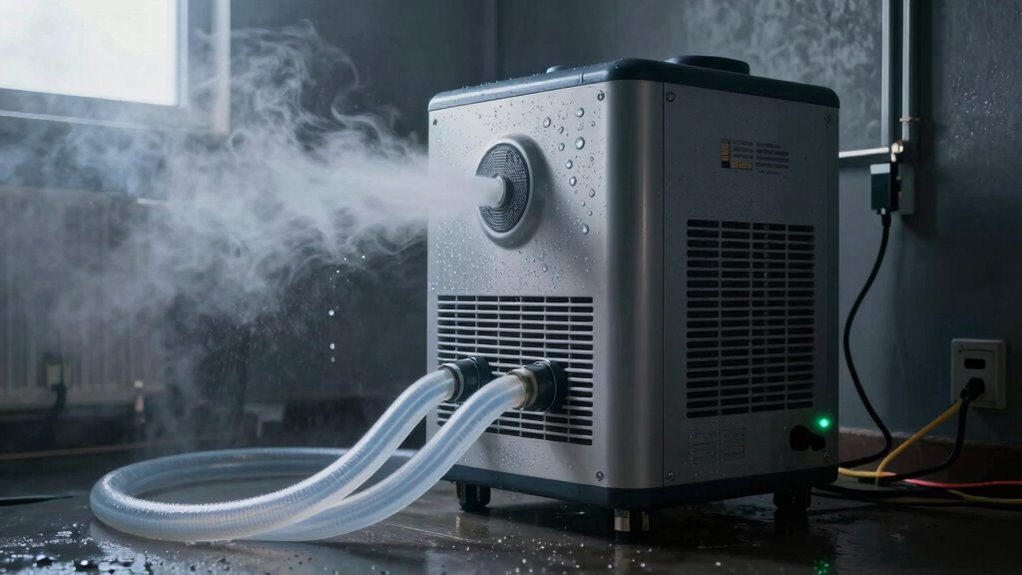

Running large dehumidifiers for days can cause your energy bills to skyrocket because these units consume a lot of power to operate continuously. If they’re too big for your space or aren’t set properly, they’ll cycle often or run longer, leading to extra energy use. Proper placement, maintenance, and adjusting settings can improve efficiency. Want to discover how to optimize your dehumidifier’s energy use and save more? Keep exploring to learn more.

Get backup power and energy gear delivered free with Prime
- Fast, free delivery on millions of items
- Prime Video, Amazon Music and more included
- Member-only deals all year
Key Takeaways
- Larger dehumidifiers consume more energy due to increased capacity and longer operation times needed for effective moisture removal.
- Running units continuously for days leads to higher electricity costs and potential energy inefficiency.
- Proper sizing and optimal settings can reduce unnecessary energy use during extended operation.
- Regular maintenance ensures efficient performance, minimizing energy waste over prolonged use.
- Strategic placement and monitoring help balance humidity control with energy consumption, avoiding excess power draw.
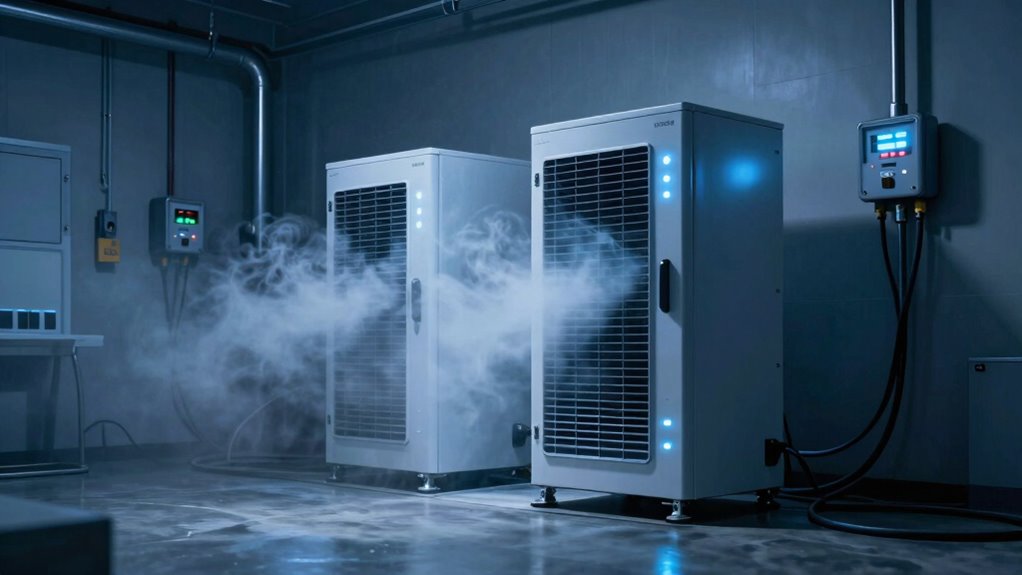
Dehumidifiers are crucial tools for maintaining comfortable and healthy indoor air, but they can also consume a significant amount of energy if not used efficiently. When you run large dehumidifiers for days on end, energy consumption becomes a major concern. It’s easy to overlook how much power these machines draw, especially if they operate constantly to manage high humidity levels. To avoid unnecessary energy waste, you need to focus on efficiency optimization. This means understanding how your dehumidifier works and how to make it run smarter, not harder.
First, pay attention to the size and capacity of your dehumidifier. Using an oversized unit for a small space wastes energy because it cycles on and off more frequently, consuming more power than necessary. On the flip side, an undersized dehumidifier struggles to keep humidity in check, forcing you to run it longer, which also increases energy use. Selecting a unit that matches your room size ensures better energy efficiency and reduces unnecessary power draw. Understanding how dehumidifiers operate can help you identify opportunities to further reduce energy consumption.
Next, consider the settings you use. Many dehumidifiers come with adjustable humidity levels. Setting your device to maintain a humidity level around 50-60% is usually sufficient for comfort and health. Lowering the humidity unnecessarily causes the dehumidifier to run longer and consume more energy. Using a hygrometer to monitor humidity levels helps you fine-tune the settings and avoid overworking the unit. Additionally, some modern dehumidifiers include energy-saving modes or smart features that optimize operation based on real-time humidity measurements, further enhancing efficiency. Energy efficiency can be improved by understanding how dehumidifiers operate and their energy profiles. Recognizing the energy profiles of your device allows for better management and scheduling to minimize power consumption.
Placement also plays an important role in energy consumption. Position your dehumidifier in a central location where it can circulate air effectively. If the unit is placed near heat sources or in a poorly ventilated corner, it has to work harder to achieve the desired humidity level, leading to increased energy use. Proper placement reduces workload and improves efficiency optimization. Furthermore, proper placement and maintenance can significantly influence energy consumption by reducing the workload on your dehumidifier.
Regular maintenance extends the life of your dehumidifier and keeps it running efficiently. Clean filters, check for leaks, and ensure vents are unobstructed. A well-maintained device operates more efficiently, consuming less energy over time. Understanding the importance of proper placement and maintenance helps ensure your dehumidifier functions optimally and conserves energy. By taking these steps, you minimize the energy costs associated with running large dehumidifiers for extended periods.
In the end, understanding your dehumidifier’s energy consumption and actively managing its operation allows you to maintain a comfortable indoor environment while keeping energy use in check. Efficiency optimization isn’t just about saving money; it’s about making sustainable choices that benefit both your household and the planet.
As an affiliate, we earn on qualifying purchases.
Frequently Asked Questions
How Does Dehumidifier Size Affect Energy Consumption?
Dehumidifier capacity directly impacts your power consumption, as larger units with higher capacity typically use more energy to operate. When you choose a bigger dehumidifier, it runs more frequently or at higher settings to handle increased moisture, consuming more power. Conversely, a smaller unit uses less energy, but may struggle with larger spaces. Selecting the right size guarantees efficient operation without wasting energy or sacrificing performance.
Are There Eco-Friendly Dehumidifier Options Available?
Did you know eco-friendly dehumidifiers can cut energy use by up to 30%? Yes, options made from eco-friendly materials and powered by renewable energy sources are available. These models often feature energy-efficient compressors and eco-conscious manufacturing processes, reducing environmental impact. Choosing such dehumidifiers helps you lower your carbon footprint while maintaining a comfortable, healthy home. So, you can stay dry and green at the same time.
What Maintenance Reduces Energy Use in Dehumidifiers?
To reduce energy use, regularly clean or replace dehumidifier filters to guarantee ideal airflow and efficiency. Also, maintain refrigerant efficiency by checking for leaks and professional servicing if needed. Keep the device in a well-ventilated, cool space, and avoid overworking it by setting the humidity level appropriately. These steps help your dehumidifier run smoothly, consume less energy, and last longer.
How Does Room Insulation Impact Dehumidifier Energy Efficiency?
Imagine a cozy room wrapped in thermal performance, where insulation barriers trap warm air inside. Your dehumidifier works less hard because the room stays dry and temperature-stable, reducing energy consumption. Good insulation minimizes heat exchange with the outside, making your dehumidifier’s job easier. So, enhancing thermal performance through proper insulation directly boosts energy efficiency, saving you money and decreasing environmental impact.
Can Smart Technology Optimize Dehumidifier Energy Use?
Yes, smart technology can optimize your dehumidifier’s energy use. Smart sensors detect humidity levels and relay data to AI systems, which then adjust the dehumidifier’s operation for maximum efficiency. This prevents unnecessary energy consumption, saving you money and reducing environmental impact. By integrating smart sensors and AI optimization, you guarantee your dehumidifier runs only when needed, maintaining ideal humidity without wasting power.
large capacity dehumidifier for home
As an affiliate, we earn on qualifying purchases.
As an affiliate, we earn on qualifying purchases.
Conclusion
As you consider running those large dehumidifiers for days, it’s almost as if the energy demand quietly mirrors the very moisture you’re trying to eliminate. Coincidentally, the effort to dry out your space highlights a broader balance—between comfort and consumption. So, while you aim for a dry environment, remember that every watt used reflects a silent, intricate dance of energy and necessity, reminding you that even small choices ripple into bigger questions about sustainability.
dehumidifier with humidity control
As an affiliate, we earn on qualifying purchases.
As an affiliate, we earn on qualifying purchases.
smart dehumidifier with energy saving mode
As an affiliate, we earn on qualifying purchases.
As an affiliate, we earn on qualifying purchases.
Halloween Picks
halloween
As an affiliate, we earn on qualifying purchases.