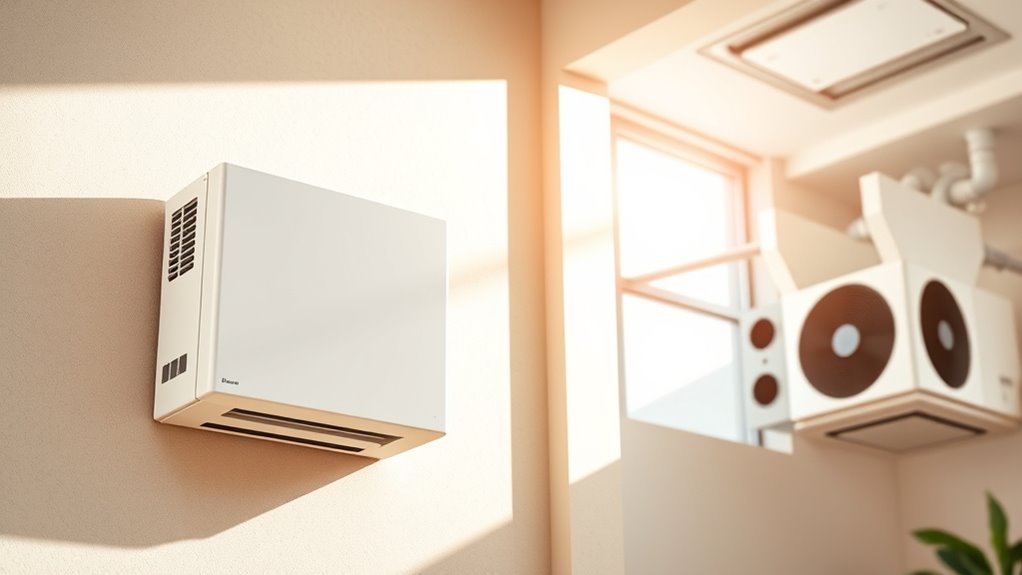
Ductless heat pumps generally use less energy than ducted systems because they eliminate duct losses and allow you to target specific zones. Ductwork can leak, be poorly insulated, and cause conditioned air to escape, forcing the system to work harder and consume more power. With a ductless system, you get more efficient heating and cooling without wasting energy. To learn how other factors influence energy use, keep exploring the details behind these systems.

Get backup power and energy gear delivered free with Prime
- Fast, free delivery on millions of items
- Prime Video, Amazon Music and more included
- Member-only deals all year
Key Takeaways
- Ductless heat pumps generally consume less energy due to elimination of duct losses and targeted zone heating.
- Ducted systems can have higher energy use if ductwork leaks or is poorly insulated, causing conditioned air loss.
- Proper maintenance of duct systems reduces energy consumption by preventing leaks and ensuring efficient airflow.
- Ductless units operate independently, allowing precise heating or cooling, which can lower overall energy use.
- Initial higher costs of ductless systems may be offset over time through lower operational energy expenses.
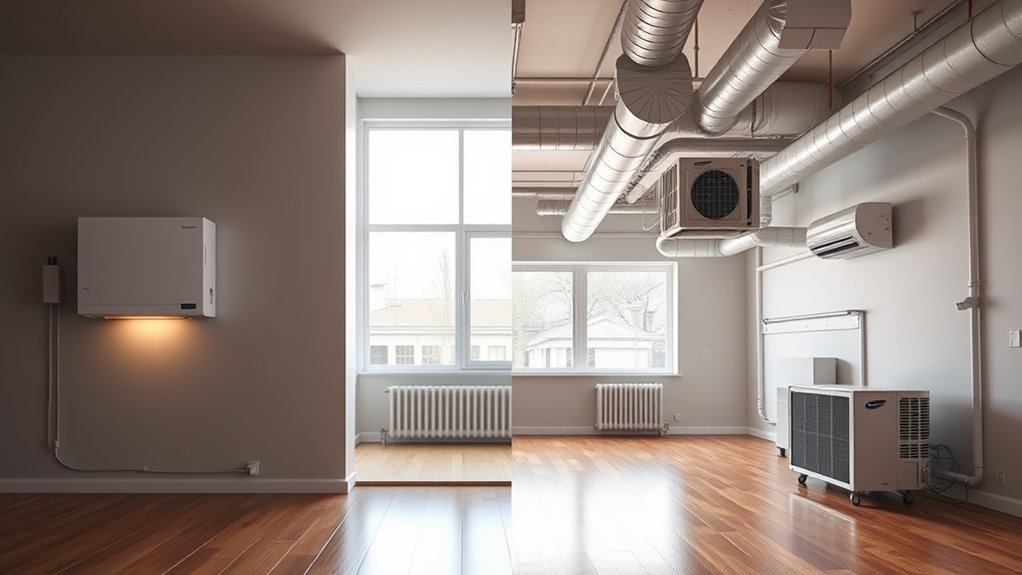
Are ductless and ducted heat pumps truly different when it comes to energy consumption? The answer depends on several factors, including how you install and maintain these systems. Ductless heat pumps, also known as mini-split systems, typically have higher upfront installation costs because each indoor unit needs to be mounted separately, and the refrigerant lines have to be run to multiple zones. However, these costs can be offset over time by their efficiency. Ducted heat pumps, on the other hand, usually come with lower installation costs if your existing ductwork is in good shape, making them a budget-friendly option initially. But, if ducts are old or leaky, you might end up spending more on energy bills due to heat loss, which can negate the savings on installation.
When it comes to energy consumption, ductless systems tend to be more efficient because they avoid the energy losses associated with ductwork. Ducts can leak or become poorly insulated, causing conditioned air to escape and forcing the system to work harder, which increases energy use. With ductless systems, each indoor unit operates independently, allowing you to cool or heat only the rooms you’re using. This targeted approach can considerably reduce your overall energy consumption, especially if you have a smaller or multi-zone home. Conversely, ducted systems condition the entire space uniformly, which might be more energy-intensive if you only need to heat or cool specific areas.
Maintenance requirements also play a role in energy efficiency over time. Ductless systems require regular cleaning of filters and occasional refrigerant checks but generally have fewer components that can develop issues. Ducted systems, however, need regular duct cleaning and sealing to prevent leaks and mold growth, which can affect airflow and efficiency. If ducts are neglected, your system might consume more energy because it has to compensate for airflow losses. Proper maintenance ensures both types operate efficiently, but ductless systems often demand less routine upkeep, helping you save on energy and maintenance costs in the long run.
As an affiliate, we earn on qualifying purchases.
Frequently Asked Questions
How Do Installation Costs Compare Between Ductless and Ducted Heat Pumps?
The cost comparison shows ductless heat pumps typically have lower installation expenses compared to ducted systems. You avoid extensive ductwork, which reduces labor and material costs. Ducted systems require more work and planning, making their installation expense higher. If you’re looking for a budget-friendly option with simpler installation, ductless heat pumps are usually the more economical choice. Keep in mind, long-term savings might also influence your decision.
What Maintenance Requirements Are Unique to Each System Type?
You need to regularly replace filters in both systems to guarantee efficiency. Ductless heat pumps require less refrigerant management since they don’t have extensive ductwork, reducing leak risks. Ducted systems may need more frequent refrigerant checks and repairs due to potential leaks in ducts. Overall, ductless units are simpler to maintain, but both systems benefit from routine filter replacements for peak performance.
How Do Climate Variations Affect Energy Efficiency?
Climate variations considerably impact your heat pump’s efficiency fluctuations and climate adaptability. In colder weather, ducted systems often perform better because they distribute warm air more evenly, maintaining efficiency. Ductless systems, however, may struggle in extreme cold, reducing efficiency. Conversely, in mild climates, both systems adapt well, providing consistent energy use. Understanding these climate effects helps you choose the right system for the most favorable energy efficiency year-round.
Are There Specific Room Sizes Best Suited for Each System?
You’ll find that smaller rooms, typically under 300 square feet, are best suited for ductless heat pumps because of their system compatibility and efficiency. Larger spaces or open-concept areas may require ducted systems to guarantee even heating and cooling. Consider your room size carefully, as choosing the right system helps optimize energy use, comfort, and overall performance. Always match the system to your space for the best results.
What Is the Typical Lifespan of Ductless Versus Ducted Heat Pumps?
You might think ductless and ducted heat pumps last the same, but system durability varies. Ductless units typically have a lifespan of 10-15 years, thanks to fewer moving parts, while ducted systems can last 15-20 years with proper maintenance. Component longevity plays a key role, and regular upkeep guarantees both systems stay efficient longer. Keep in mind, quality installation also impacts how long your heat pump remains effective.
ductless heating and cooling system
As an affiliate, we earn on qualifying purchases.
As an affiliate, we earn on qualifying purchases.
Conclusion
Just like Icarus flying too close to the sun, choosing between ductless and ducted heat pumps requires careful consideration. Ductless systems often save energy by avoiding duct losses, making them ideal for quick efficiency gains. Ducted units can be more suited for whole-home comfort but may consume more energy if not properly maintained. Weigh your needs wisely, and remember, the right choice can help you soar toward comfort without burning unnecessary fuel.
energy efficient ductless heat pump
As an affiliate, we earn on qualifying purchases.
As an affiliate, we earn on qualifying purchases.
As an affiliate, we earn on qualifying purchases.
Fall Picks
fall essentials
As an affiliate, we earn on qualifying purchases.