The main difference between condensing and non-condensing models is how they handle heat and efficiency. Condensing units recover more heat by cooling gases to condense water vapor, which makes them more energy-efficient and cost-effective over time. They use less fuel or electricity, saving you money and reducing environmental impact. However, they require more complex installation and maintenance. Want to know more? Keep exploring to understand which system fits your needs best.

Get backup power and energy gear delivered free — and shop member deals
- Fast, free delivery on millions of items
- Access to Prime Big Deal Days deals on October 6–7
- Prime Video, Amazon Music and more included
Key Takeaways
- Condensing models extract more heat by cooling gases to condense water vapor, increasing efficiency.
- They require specialized venting and drainage systems to handle condensate safely.
- Non-condensing units are simpler, cheaper to install, but less energy-efficient.
- Condensing models offer long-term savings through reduced energy consumption and environmental benefits.
- Maintenance for condensing units is more complex, needing regular upkeep and compliance with regional standards.
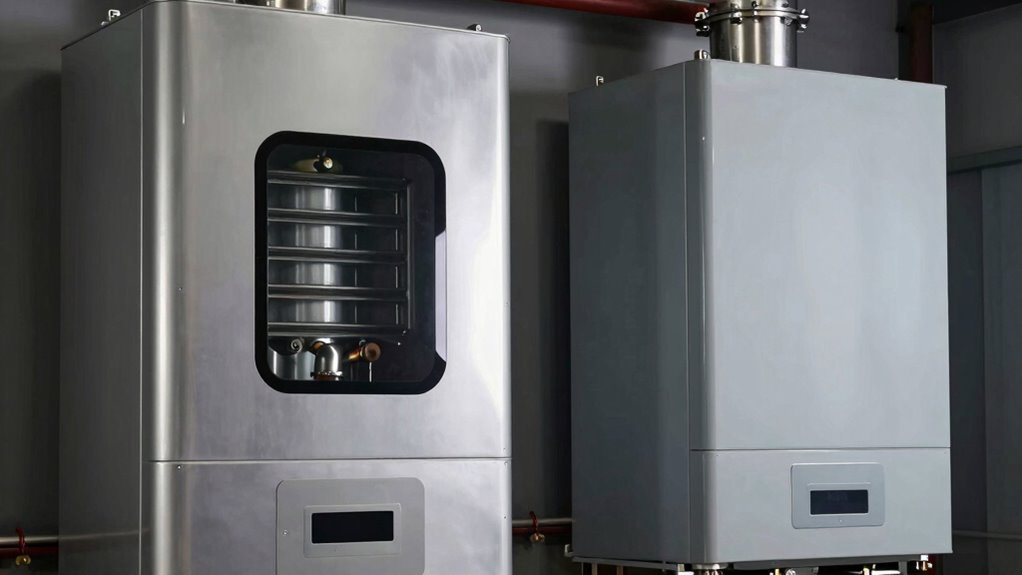
Understanding the difference between condensing and non-condensing models is essential when selecting heating or cooling equipment, as it directly impacts efficiency and long-term costs. As you weigh your options, consider how each type handles energy efficiency and the installation considerations involved. Condensing models are designed to extract more heat from combustion gases by cooling them to a point where water vapor condenses. This process captures additional heat that non-condensing units typically lose, making condensing models considerably more efficient. When you opt for a condensing system, you’re likely to see lower energy bills over time, thanks to their ability to maximize heat recovery.
However, the higher efficiency of condensing models comes with specific installation considerations. These units often require upgraded venting systems to handle the condensation safely, which can increase initial installation costs. You need to guarantee proper drainage for the condensate, and that the venting materials are compatible with acidic condensate. If your space isn’t suitable for these modifications, installing a condensing model could become more complicated and expensive. On the other hand, non-condensing units are generally simpler to install because they don’t produce condensate and don’t require special venting or drainage systems. This makes them a more straightforward choice if you’re working within tighter budget constraints or limited space. Still, keep in mind that non-condensing models tend to be less energy-efficient, which could result in higher operational costs over the equipment’s lifespan. Additionally, understanding the requirements for compliance in your region can influence which model is more suitable, as some standards may favor one type over the other. When considering long-term savings, energy efficiency is a major advantage of condensing models, especially in regions where energy prices are high. They use less fuel or electricity to deliver the same amount of heating or cooling, which benefits both your wallet and the environment. Furthermore, these models are often built with modern technology that allows for better control and optimization, further enhancing energy savings. Proper maintenance also plays a crucial role in ensuring these systems operate efficiently and reliably over time. Regular upkeep can prevent issues related to condensate buildup and ensure the venting systems remain free of blockages, maintaining optimal performance. A proper maintenance schedule can help optimize the performance and lifespan of both condensing and non-condensing units, ensuring they operate at peak efficiency. Conversely, non-condensing models, while more affordable upfront and easier to install, may lead to higher energy consumption and increased operating costs over time. It is also important to consider the cost of maintenance for each type, as condensing units may require more specialized servicing to handle the condensate and venting systems. Consequently, your decision should balance upfront installation considerations with the ongoing benefits of energy efficiency.
As an affiliate, we earn on qualifying purchases.
Frequently Asked Questions
Are Condensing Models More Environmentally Friendly Than Non-Condensing Ones?
Yes, condensing models are generally more environmentally friendly because they offer higher energy efficiency, which reduces fuel use and emissions. While their installation costs might be higher upfront, you save on energy bills over time. By choosing a condensing system, you’re lowering your carbon footprint and promoting sustainability, making it a smarter, greener choice despite the initial investment.
How Long Do Condensing and Non-Condensing Units Typically Last?
Condensing units usually last 15 to 20 years, while non-condensing models last around 10 to 15 years. When considering efficiency comparison, condensing units tend to be more durable due to their advanced technology, but they can cost more upfront. Your choice depends on balancing initial costs with long-term reliability and savings. Proper maintenance also plays a key role in maximizing your unit’s lifespan.
Can Non-Condensing Models Be Upgraded to Condensing?
You can’t upgrade a non-condensing model to a condensing one directly. Doing so involves significant efficiency improvements, often requiring entirely new units, because of the different designs and components involved. Plus, installation challenges arise since condensing units need specialized venting and drainage systems. Instead, consider replacing your non-condensing system with an upgraded condensing model to guarantee maximum efficiency and compliance with modern standards.
Do Condensing Models Require More Maintenance Than Non-Condensing?
Yes, condensing models often demand more maintenance because they’re like high-maintenance celebrities, requiring extra care to keep their efficiency in check. This means more frequent inspections and cleaning. The efficiency comparison shows they save more energy, but the cost implications include higher upkeep costs. If you want top performance, be prepared for the extra attention; otherwise, non-condensing models are the low-maintenance, budget-friendly option.
Which Model Is Better for Extreme Weather Conditions?
In extreme weather, condensing models are usually better because they offer higher energy efficiency, helping you save on heating costs during harsh conditions. Although installation costs might be higher upfront, their efficiency can offset expenses over time. Non-condensing models may struggle in severe cold or heat, making condensing options a smarter, more reliable choice for extreme climates. You’ll benefit from better performance and long-term savings.
As an affiliate, we earn on qualifying purchases.
Conclusion
Ultimately, choosing between condensing and non-condensing models depends on your specific needs. Consider the cost, efficiency, and climate to make an informed decision. By weighing the worth of warmth versus waste, you’ll walk away with a wiser, more efficient way to heat your home. So, don’t delay—decipher your demands, decide wisely, and enjoy a warm, worry-free winter with the perfect model tailored just for you.
As an affiliate, we earn on qualifying purchases.
venting system for condensing units
As an affiliate, we earn on qualifying purchases.
As an affiliate, we earn on qualifying purchases.
Fall Picks
fall essentials
As an affiliate, we earn on qualifying purchases.