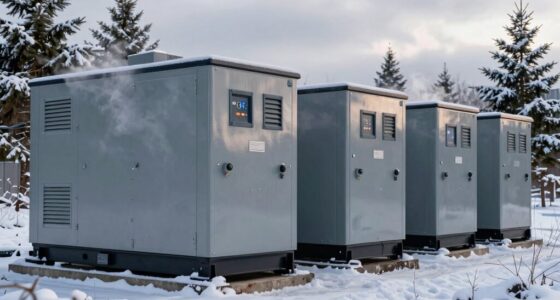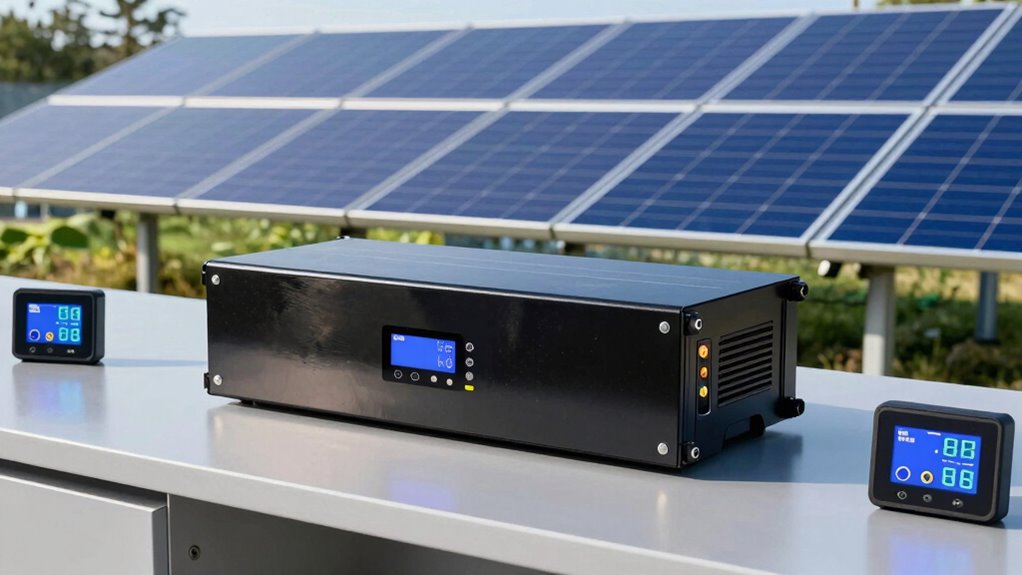

Searching for an expandable solar inverter charger means looking for a versatile system that can grow with your energy needs. The best models offer high power output, reliable battery management, and easy expansion options. The 4000W Hybrid Solar All-in-One Inverter Charger stands out as the top overall pick for its balance of power and ease of use, while the VEVOR Hybrid Solar Inverter 6000W appeals to those needing higher capacity and more scalability. On the tradeoff side, many options require careful planning around compatibility and expansion limits. Continue reading for a detailed breakdown of these models and how to choose the right one for your setup.

Get backup power and energy gear delivered free with Prime
- Fast, free delivery on millions of items
- Prime Video, Amazon Music and more included
- Member-only deals all year
Key Takeaways
- Most top models combine inverter, charger, and MPPT solar controllers in a single unit for simplified installation.
- Higher wattage options tend to be less affordable but offer more headroom for future expansion.
- Parallel support is common in premium models, enabling scaling without replacing existing hardware.
- Build quality and UL certifications are vital for safety and long-term reliability, especially with larger setups.
- Ease of integration with battery systems varies, making compatibility a key factor in choosing the right model.


| expandable solar inverter charger | Power | Input Voltage |
|---|---|---|
| 4000W Hybrid Solar All-in-One | 4000W continuous, 8000W surge | 24V DC |
| VEVOR Hybrid Solar Inverter 60 | 6000W | 500V |
| SUMRY Hybrid Solar Inverter Ch | 3600W | 24V DC |
| Ampinvt 5000 Watt 48V to 120V | 5000W | — |
| HumsiENK 12000W 48V Hybrid Sol | — | — |
| LiTime 3000W Solar Inverter Ch | — | — |
| LiTime 3500W Solar Inverter Ch | 3500W | — |
| Ampinvt 1200W Pure Sine Wave S | 1200W | 12V DC |
| SUNGOLDPOWER UL1741 5000W Hybr | 5000W | 48V DC |
More Details on Our Top Picks
4000W Hybrid Solar All-in-One Inverter Charger – 24V DC to 120V AC
This 4000W hybrid inverter stands out for its all-in-one design, combining inverter, solar charging, and utility input in a single unit, making it highly adaptable for off-grid setups, RVs, or backup systems. Compared to the VEVOR 6000W model, it offers slightly lower maximum power but excels in supporting a wide range of battery types and integrating multiple energy sources seamlessly. Its built-in protections and triple cooling fans contribute to reliable operation, though installation can be complex and the unit is heavy, which might challenge portability. For those seeking a comprehensive, ready-to-go off-grid solution, this model offers a balanced mix of capacity and flexibility, but it demands careful setup and ventilation.
Pros:- Combines inverter, solar charging, and utility input for streamlined setup
- Supports multiple battery types and high solar input capacity
- Built-in protections and cooling fans enhance reliability
Cons:- Installation may require proper ventilation and circuit breakers
- Complex configuration could be difficult for beginners
Best for: Homeowners or RV users wanting a flexible, all-in-one power system with broad battery compatibility.
Not ideal for: Portable users or those with limited technical experience, as installation and configuration can be challenging.
- Power:4000W continuous, 8000W surge
- Input Voltage:24V DC
- Output Voltage:120V AC
- Solar Input:Up to 5600W PV, 350VDC max
- Battery Compatibility:AGM, Gel, lead-acid, lithium-ion, LiFePO4
- Cooling:Triple cooling fans
Our verdict“This inverter is best suited for users needing a versatile, integrated off-grid power solution willing to handle initial setup complexity.”
VEVOR Hybrid Solar Inverter 6000W All-in-One Pure Sine Wave Power Inverter Charger, 48V DC to 220/230V AC, with 120A MPPT Controller for Off-Grid Systems
The VEVOR 6000W inverter provides substantial power for demanding off-grid or backup needs, supported by its integrated MPPT controller and WiFi monitoring. Compared with the HumsiENK 12000W model, it offers less peak power but is easier to handle and install for medium-sized systems. Its support for multiple battery types and remote management features make it versatile, though it requires an additional transformer for US 110/120V outlets and involves a more complex setup process. Perfect for users who prioritize high power and system integration, but those seeking simplicity or ready-to-use plug-and-play units may find it less user-friendly.
Pros:- High power output suitable for demanding applications
- Supports various battery types including lithium and lead-acid
- Remote WiFi monitoring enhances system management
Cons:- Requires an additional transformer for US outlets
- Setup complexity may deter non-technical users
Best for: Off-grid enthusiasts needing reliable, high-capacity power with remote monitoring capabilities.
Not ideal for: Casual users or those with limited technical skills, due to complex installation and additional component requirements.
- Power:6000W
- Battery Capacity:120 amp-hours
- Input Voltage:500V
- Output Power:6000W
- Efficiency:94%
- Weight:19.8 pounds
Our verdict“Ideal for users needing high power and remote management, provided they can handle a more involved installation process.”
SUMRY Hybrid Solar Inverter Charger 3600W DC24V to AC110V Voltage Converter
The SUMRY 3600W inverter combines inverter, MPPT controller, and battery charger into a compact and user-friendly package, making it a solid choice for home energy storage and backup. Compared to the Ampinvt 5000W model, it offers less maximum power but includes an LCD display for easy monitoring, which the Ampinvt lacks at this size. Its support for multiple battery types and pure sine wave output ensures safe operation of sensitive electronics, though its setup requires some technical knowledge, and remote monitoring options are limited unless additional modules are purchased. This makes it suitable for homeowners who want an integrated, manageable system without excessive size or complexity.
Pros:- Integrated inverter, MPPT, and battery charger in a compact form
- Supports a wide range of battery types including lithium and lead-acid
- LCD display simplifies monitoring and configuration
Cons:- Relatively heavy at 8.5 kg, requiring sturdy mounting
- Setup can be complex for non-technical users
Best for: Homeowners seeking an integrated, easy-to-monitor backup solution for household electronics.
Not ideal for: Users with high power demands or those planning large off-grid systems, due to its moderate capacity and limited remote features.
- Power:3600W
- Battery Capacity:200 amp-hours
- Input Voltage:24V DC
- Output Voltage:120V
- Peak Output Power:7200W
- Display Type:LCD
Our verdict“This pick makes the most sense for homeowners wanting a straightforward, integrated backup with easy monitoring, but not for large-scale or high-demand applications.”
Ampinvt 5000 Watt 48V to 120V Solar Inverter with MPPT Charger and Parallel Support
The Ampinvt 5000W inverter offers a robust solution with its parallel support, high transfer efficiency, and multiple operation modes, making it suitable for expanding off-grid systems. Compared with the HumsiENK 12000W, it supports parallel operation to scale up power, but it has a lower maximum output and lacks some remote management features. Its support for multiple battery types and modes like solar priority or hybrid operation provides flexibility, though the initial setup can involve driver installation and some technical know-how. This system is suited for those who need scalable power and are comfortable with more complex configuration processes.
Pros:- Supports multiple battery types and parallel operation
- High transfer efficiency above 92%
- Multiple modes for customized operation
Cons:- Setup requires driver installation and technical know-how
- Limited info on remote monitoring features
Best for: Off-grid system builders needing scalable power with flexible operation modes.
Not ideal for: Beginners or users seeking quick, plug-and-play solutions without setup effort.
- Power:5000W
- Voltage:48V to 120V
- Max PV Input:5500W
- Max PV Charging Current:100A
- Protection Features:Low/High Voltage Alarm, Over Temp, Overload
- Communication Ports:RS485, WIFI, USB
Our verdict“Best for experienced users wanting a modular, scalable off-grid inverter with flexible control options, accepting a more involved setup.”
HumsiENK 12000W 48V Hybrid Solar Inverter 120/240V Split Phase, UL1741 Certified, Pure Sine Wave, UPS Backup, Parallel Up to 6 Units
The HumsiENK 12000W inverter provides massive power output and fast UPS switchover, making it ideal for whole-home backup, large off-grid setups, or commercial applications. Its split-phase output and UL1741 certification underscore its robustness, while the ability to parallel up to six units dramatically increases system capacity—up to 60kW. Compared to smaller models like the SUMRY 3600W, it offers much higher scalability and resilience, though its size and weight demand professional installation and significant space. This inverter is best suited for those with substantial power needs and a dedicated installation environment, accepting the complexity that comes with such scale.
Pros:- High power capacity suitable for whole-home backup
- Fast UPS switchover for critical electronics
- Supports parallel operation for massive scalability
Cons:- Large size and weight make installation challenging
- Setup complexity may require professional assistance
Best for: Large households, small businesses, or commercial setups requiring high power and scalability.
Not ideal for: Small homes or users with limited space and no access to professional installation services.
- Power Output:12000W surge / 10000W continuous
- Voltage:120/240V split phase
- Battery Compatibility:GEL, SLD, FLD, LFP, NCM
- Dimensions:24.41×17.72×5.20 inches
- Weight:51.81 lbs
- Parallel Units:Up to 6
Our verdict“This inverter suits users with significant power demands and space for professional installation who need scalability and reliable backup power.”
LiTime 3000W Solar Inverter Charger with Built-in 60A MPPT, 24V DC to 120V AC
This model stands out for its all-in-one design, combining an MPPT solar controller, inverter, and charger into a single unit, making it ideal for those who want a streamlined setup. Compared with the LiTime 3500W model, this unit offers slightly less power but excels in integration, reducing complexity and potential points of failure. Its pure sine wave output ensures clean power for sensitive electronics, while advanced communications support efficient energy management. The main tradeoff is its weight and size, which demand dedicated installation space, and the setup can be complex for those unfamiliar with electrical systems. It’s perfect for homeowners seeking a comprehensive and reliable off-grid or backup solution, especially when space and integration matter.
Pros:- Integrates inverter, charger, and MPPT solar controller in one unit
- Supports multiple battery types and configurations
- Provides reliable pure sine wave power with high peak output
Cons:- Heavy and large, requiring dedicated space
- Setup complexity may need professional assistance
Best for: Homeowners installing a permanent off-grid power system or backup with technical knowledge.
Not ideal for: People looking for portable or lightweight solutions, or beginners without electrical experience.
- Power Source:Grid/Solar/Battery
- Wattage:3000 watts
- Voltage:24 volts
- Output Power:3000 watts
- Waveform:Pure Sine Wave
- Item Dimensions:12.2″L x 5.31″W x 18.31″H
Our verdict“This is best suited for experienced users who want an all-in-one, high-capacity energy solution at home.”
LiTime 3500W Solar Inverter Charger, 48V DC to 120V AC, All-in-One MPPT
Compared with the 3000W LiTime model, the 3500W version offers higher power output and a more versatile set of charging and output modes, including UPS functionality which is crucial for maintaining power during outages. Its compact design makes it more suitable for smaller installations or those needing a space-efficient solution, although setup can be more involved without detailed compatibility info. The inclusion of multiple charging modes and protections makes it appealing for off-grid users seeking reliable, adaptable power management. The main tradeoff is that its technical complexity could be daunting for beginners, and detailed battery compatibility information is limited. This pick is ideal for users wanting high power, flexible operation modes, and backup power features in a smaller footprint.
Pros:- Supports multiple charging and output modes for flexibility
- Built-in UPS ensures power during outages
- Supports various battery types for versatile setups
Cons:- Setup may require technical knowledge
- Limited info on battery compatibility details
Best for: Off-grid enthusiasts or homeowners needing flexible charging modes and backup power capabilities.
Not ideal for: Users seeking a plug-and-play, simple system without technical setup or detailed configuration needs.
- Power:3500W
- Peak Surge:6000W
- Voltage:48V DC to 120V AC
- Protection Features:Short-circuit, Over-temperature, Overload
- Monitoring:RS485, LCD display
- Item Dimensions:Not specified
Our verdict“This model is best for users who need high power with flexible operation and backup features in a compact form.”
Ampinvt 1200W Pure Sine Wave Solar Inverter 12V DC to 120V AC with Built-in 40A MPPT Solar Controller
This inverter prioritizes portability and affordability, making it suitable for small off-grid setups or backup power for limited appliances. Its 1200W capacity is less than the LiTime options, but its built-in 40A MPPT controller offers good efficiency for modest solar arrays. Compared to larger models like the SUNGOLDPOWER 5000W, this unit is more manageable for those with space constraints or who need a lightweight solution. However, the PV input limit of 100V DC restricts larger solar arrays, and its lower power output makes it unsuitable for high-demand applications. The simplicity and built-in features appeal to DIY enthusiasts or temporary setups, but it lacks scalability for bigger systems.
Pros:- High transfer efficiency above 85%
- Built-in MPPT controller with 98% tracking efficiency
- Multiple protections for safety
Cons:- Limited PV input voltage (100V max)
- Maximum power output of only 1200W
Best for: Individuals with small solar setups or portable backup needs who prefer an all-in-one unit.
Not ideal for: Users with larger power demands or expanding systems, due to its limited wattage and PV input capacity.
- Power:1200W
- Input Voltage:12V DC
- Output Voltage:120V AC
- MPPT Controller:40A
- Max PV Power:600W
- Protections:Various including overload and short circuit
Our verdict“This inverter is ideal for small-scale, portable off-grid applications or backup where space and simplicity matter most.”
SUNGOLDPOWER UL1741 5000W Hybrid Solar Inverter, 48V DC to 110V/120V AC, All-in-One with MPPT Solar Charger and Battery Charger
Compared with smaller models like the Ampinvt 1200W, this 5000W hybrid inverter offers extensive capacity suitable for large households or commercial off-grid setups. Its ability to support multiple battery types and high PV input capacity makes it a versatile choice for expanding systems that need robust power. The inclusion of an uninterruptible power supply (UPS) function adds reliability, especially for critical loads. However, its weight and size make it less portable, and the setup can be complex for new users. Unlike the LiTime units, which are more integrated, this inverter provides more raw power at the expense of simplicity. It makes the most sense for users with high power demands who can handle a more involved installation.
Pros:- High power output suitable for large appliances
- Supports multiple battery types and charging modes
- Includes UPS function for continuous power
Cons:- Heavy and large, less portable
- Complex setup requiring technical expertise
Best for: Large households or off-grid operations requiring high wattage and flexible battery options.
Not ideal for: Small or portable systems, or users seeking a simple plug-and-play setup with limited training.
- Power:5000W
- Peak Power:10000W
- Input Voltage:48V DC
- Waveform:Pure Sine Wave
- Max PV Array:5500W 500V
- Max Charging Current:80A
Our verdict“This inverter best serves users with significant power needs and the capacity to manage a more complex, large-scale installation.”
How We Picked
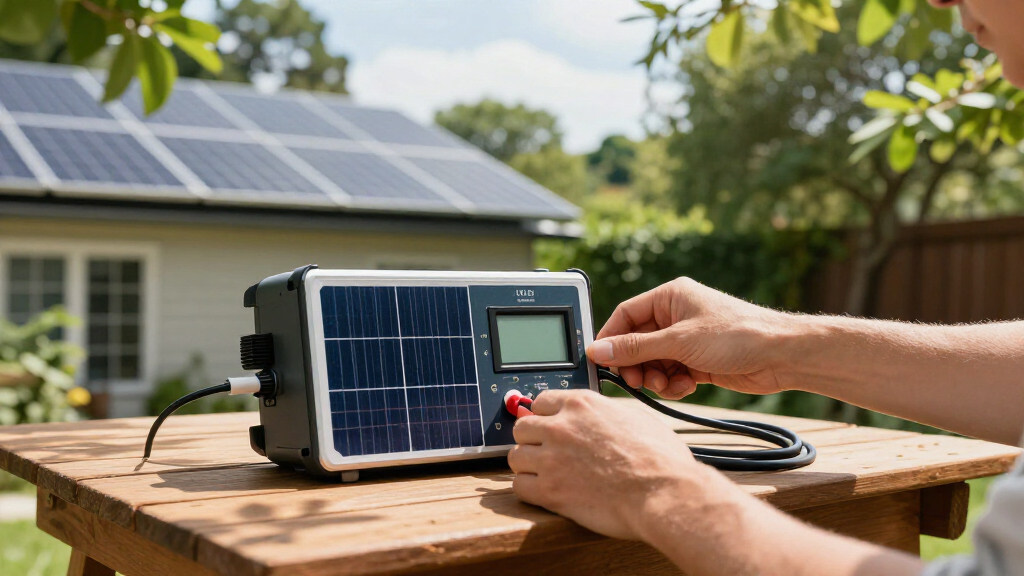
These products were evaluated based on their power capacity, expandability features, build quality, and overall versatility. Priority was given to models with robust MPPT controllers, support for parallel expansion, and UL certifications for safety. Ease of installation and user-friendly interfaces were also considered, as well as value for the price. The ranking reflects a balance between performance, expandability potential, and reliability, ensuring each pick serves a specific user need while remaining within realistic tradeoffs for cost and complexity.Factors to Consider When Choosing Expandable Solar Inverter Charger
Choosing the right expandable solar inverter charger involves balancing power needs, future growth potential, and system compatibility. It’s important to understand how each feature impacts your overall setup, from initial installation to long-term scalability. By considering key factors carefully, you can avoid common pitfalls like overpaying for unused capacity or picking a model that doesn’t support your battery or panel configurations.Power Capacity and Scalability
Assess your current power needs and plan for future expansion. Models with higher wattage ratings and parallel support enable you to grow your system without replacing the inverter. However, larger units often come with higher upfront costs and require more space and robust wiring. Balancing immediate requirements with potential growth helps avoid overspending or underperforming as your setup expands.
Compatibility with Batteries and Solar Panels
Ensure the inverter charger supports your existing or planned battery bank and solar panel configurations. Look for models with adjustable MPPT controllers and flexible voltage inputs to maximize energy harvest. Compatibility issues can lead to reduced efficiency or costly upgrades down the line, so verify specifications carefully before buying.
Expandability Features
Key features like parallel support, modular design, and multiple AC / DC ports determine how easily you can scale your system. Models with dedicated expansion ports or support for multiple units simplify future growth. Beware of models that advertise expandability but have strict limitations or complex wiring requirements, as these can complicate scaling efforts.
Build Quality and Certifications
Safety and long-term reliability depend heavily on build quality and certifications like UL1741. Cheaper units may cut corners, risking failures or safety hazards. Investing in certified, well-built units can save money and headaches later, especially in off-grid or backup power scenarios where system stability is critical.
Ease of Installation and User Interface
A user-friendly interface and straightforward installation process can significantly reduce setup time and errors. Look for models with detailed manuals, clear wiring diagrams, and accessible controls. Complex systems with obscure interfaces may require professional help, increasing overall costs and complication.
Frequently Asked Questions
Can I add more batteries to my inverter later?
Many expandable solar inverter chargers support adding batteries, but compatibility depends on the model and its battery management system. It’s essential to verify that the inverter can handle additional capacity and that the batteries are compatible in terms of voltage and chemistry. Planning for future expansion at the initial setup can simplify this process and prevent costly upgrades or replacements later on.
Is it better to buy a larger inverter now or add modules later?
Deciding between a larger inverter upfront or incremental expansion depends on your budget and long-term goals. A larger inverter provides immediate capacity for future growth but can be more expensive initially. Modular or parallel systems allow for incremental expansion, which can be more cost-effective but may involve more complex wiring and setup. Consider your present needs and future plans carefully to choose the best approach.
How important are certifications like UL1741 for my inverter?
Certifications such as UL1741 are critical indicators of safety and compliance with industry standards. They ensure the inverter has been tested for electrical safety, electromagnetic compatibility, and reliable operation. Using a UL-certified inverter reduces risks of fire, electrical faults, and system failures, especially in larger or off-grid systems where safety is paramount.
What should I prioritize if I plan to expand my system significantly?
If future expansion is a primary goal, focus on models with parallel support, high wattage capacity, and flexible MPPT controllers. Check whether the inverter supports multiple units or modular expansion without requiring extensive rewiring. Investing in a system designed for scalability from the start helps avoid costly upgrades or replacements later on.
Are all hybrid inverters equally suitable for off-grid and grid-tied setups?
No, not all hybrid inverters support both off-grid and grid-tied configurations equally. Some are designed specifically for off-grid use with battery backups, while others are optimized for grid-tied systems that export excess power. Verify the inverter’s capabilities and limitations before purchasing to ensure it meets your intended application, especially if you plan to switch between modes or combine both in your setup.
Conclusion
For most users seeking a reliable, scalable solution, the 4000W Hybrid Solar All-in-One Inverter Charger offers a balanced mix of power, expandability, and ease of use, making it the best overall choice. Budget-conscious buyers or those just starting out may find the LiTime 3000W Solar Inverter Charger to be a smart value, offering essential features without unnecessary extras. For larger or more complex systems, the HumsiENK 12000W Hybrid Solar Inverter provides extensive capacity and support for multiple units, appealing to advanced users. Beginners should prioritize models with straightforward installation and clear controls, while experienced installers may prefer units with extensive expandability features and certifications. Each choice aligns with different priorities, ensuring you find a solution that fits your current and future energy needs.
Halloween Picks
halloween
As an affiliate, we earn on qualifying purchases.