Replacing your old HVAC with an energy-efficient heat pump can save you money on energy bills, boost comfort, and even increase your home value. Heat pumps use less energy to heat or cool your home, providing long-term savings despite the upfront cost. You may also qualify for tax credits or rebates. Plus, the improved air quality and consistent temperature control offer additional benefits. Keep exploring to understand how these advantages can make the investment worthwhile for your home.
Key Takeaways
- Heat pumps offer significant energy savings, often delivering up to three times more energy than they consume, reducing operational costs.
- Upfront costs are offset over time by lower energy bills and potential incentives like tax credits or rebates.
- Replacing old HVAC units can increase home value and attract eco-conscious buyers seeking energy-efficient systems.
- Additional benefits include improved indoor comfort, air quality, and reduced maintenance issues with modern heat pumps.
- Conducting a detailed cost-benefit analysis helps determine if the long-term savings and benefits justify the initial investment.
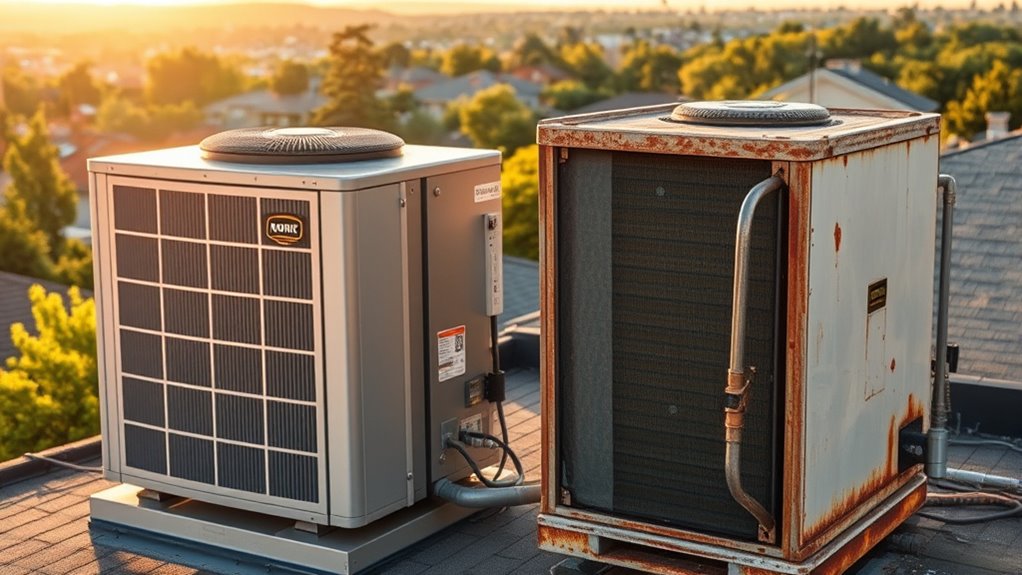
Replacing an HVAC unit is a significant investment that can impact your energy bills and comfort for years to come. Before making this decision, it’s essential to conduct a thorough cost benefit analysis to understand whether upgrading to an efficient heat pump makes economic sense. This analysis involves comparing the upfront costs of the new system against the long-term savings you can expect from reduced energy consumption. Heat pumps are known for their high energy savings potential because they transfer heat rather than generate it, making them more efficient than traditional furnaces or air conditioners. By evaluating your current energy usage and factoring in the improved efficiency of a heat pump, you can determine how quickly the investment might pay off.
Replacing your HVAC is a major investment; a cost benefit analysis helps determine if a heat pump saves money long-term.
When you consider replacing your old HVAC with a heat pump, you’re likely to notice a significant reduction in your monthly energy bills. Traditional systems often waste energy, especially if they’re outdated or poorly maintained. Heat pumps, on the other hand, can deliver up to three times more energy than they consume, translating directly into lower operational costs. This energy savings potential varies depending on your local climate, insulation, and usage patterns, but on average, homeowners see substantial decreases in cooling and heating expenses after switching. These savings can offset the initial purchase price over time, making the upgrade financially advantageous.
Another factor to weigh in your cost benefit analysis is the potential increase in home value. Modern, energy-efficient heat pumps are attractive to buyers looking for eco-friendly and cost-effective homes. Additionally, some regions offer tax credits or rebates for installing energy-efficient systems, further reducing your initial outlay. Keep in mind that the longevity of heat pumps—often 15 years or more—means you’ll enjoy years of savings and comfort before needing another upgrade. This durability enhances their overall cost-effectiveness and makes them a wise investment.
Finally, consider the intangible benefits. A new heat pump can provide more consistent temperature control and improved air quality, boosting your comfort and health. While these benefits are harder to quantify, they often tip the scales in favor of replacement, especially if your current system is aging, noisy, or frequently breaking down. When you perform a detailed analysis of costs versus benefits—factoring in energy savings, potential incentives, increased home value, and comfort—you’ll be better equipped to decide whether replacing your old HVAC with a modern heat pump is the right move for your budget and lifestyle.

Westinghouse Natural Gas Tankless Water Heater Indoor Installation Max 7.9 GPM 180,000 BTU, WIFI Enable Temp Self Modulating Non Condensing High Efficiency for House or Commercial, APOLO Performance
【On-Demand Efficiency】 Westinghouse tankless water heater works only needed, saving energy and costs. Compact yet powerful for whole-home...
As an affiliate, we earn on qualifying purchases.
Frequently Asked Questions
What Are the Long-Term Maintenance Costs of Heat Pumps?
Your long-term maintenance costs for heat pumps are generally lower than traditional HVAC systems. With a favorable cost comparison, you’ll find maintenance frequency is less, often requiring service only once a year. Regular filter changes and annual inspections keep your heat pump running efficiently, reducing unexpected costs. Overall, investing in a heat pump means fewer repairs and lower maintenance expenses over its lifespan, saving you money in the long run.
How Do Heat Pumps Perform in Extremely Cold Climates?
In a cold climate, heat pumps can still perform well, but they’re not invincible. Think of frost resistance as your best ally—modern units are designed to operate efficiently even when temperatures plummet. Some models adapt by defrosting themselves automatically, ensuring warmth isn’t a pipe dream. You’ll want to choose a heat pump specifically rated for cold climates to keep your home cozy without a hitch during the harshest winters.
Are There Government Incentives for Upgrading to Heat Pumps?
Yes, you can benefit from government incentives when upgrading to heat pumps. Many rebate programs and tax credits are available to help offset installation costs. These incentives aim to promote energy efficiency and reduce your carbon footprint. To maximize your savings, check with local and federal programs, as eligibility varies. Taking advantage of these financial incentives makes upgrading to a heat pump more affordable and environmentally friendly.
How Does Insulation Impact Heat Pump Efficiency?
Insulation effects substantially impact your heat pump‘s efficiency by increasing thermal resistance, which helps keep warm or cool air inside your home. When your insulation is proper, your heat pump doesn’t need to work as hard, reducing energy consumption and saving you money. Poor insulation causes heat loss in winter and heat gain in summer, making your heat pump less effective. Improving insulation boosts overall efficiency and comfort.
What Is the Typical Payback Period for Heat Pump Investments?
Think of your investment as planting a seed that grows into savings. Typically, you’ll see a payback period of 3 to 7 years, depending on your climate and energy costs. While installation costs might seem steep, the ongoing cost savings on utilities will steadily fill your pot. Over time, those reduced energy bills turn your heat pump into a fruitful investment that pays dividends for years to come.
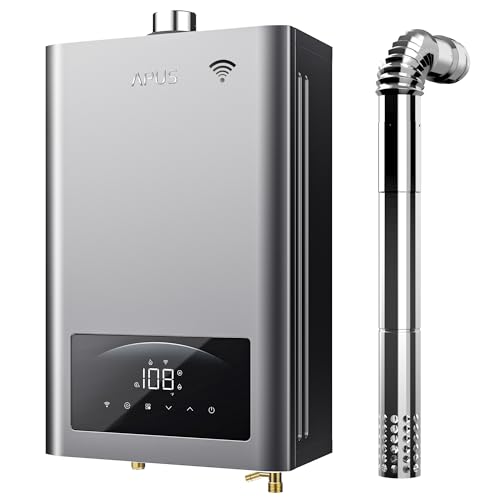
APUS Tankless Water Heater Propane, 140,000 BTU Indoor Installation Up to 6.8 GPM, Zero Cold Water Technology for Instant Hot Water on Demand, Smart Wi-Fi App Control
Instant Hot Water: This upgraded smart propane tankless water heater delivers consistent performance with its 140,000 BTU burner...
As an affiliate, we earn on qualifying purchases.
Conclusion
Replacing your old HVAC with a modern heat pump is like planting a tree—you may spend some time and effort upfront, but the shade and savings grow over time. Consider Sarah, who upgraded her system last year and now saves hundreds annually on energy bills. Just as a well-tended tree becomes a lasting refuge, investing in efficient technology offers long-term comfort and financial stability, proving that smart choices today can nurture a better tomorrow.

23000 BTU Mini Split AC & Heat Pump, 230v Energy Efficient Wall-Mounted Ductless Air Conditioner with WiFi Control, r32 Eco-Friendly Refrigerant, Cools/Heats Up to 1500 Sq.Ft, Quiet Operation
Powerful Cooling & Heating - This 23000 BTU mini split system delivers reliable cooling (63-90℉) and heating (32-80℉)...
As an affiliate, we earn on qualifying purchases.
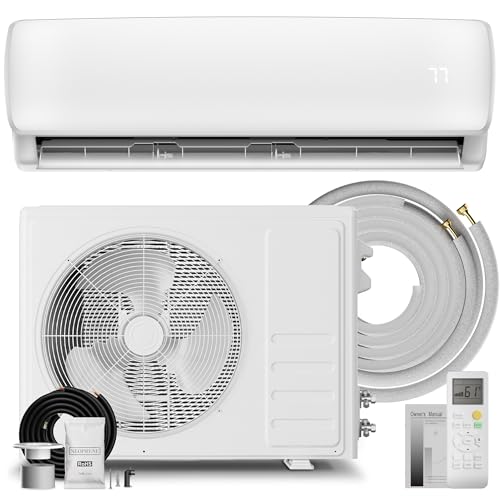
MEPTY 9000BTU Mini Split AC/Heating System, 19 SEER2 Energy Efficient Mini Split Air Conditioner with Heat Pump, 110V Cools Up to 450sq.ft, Ductless Inverter AC Unit with Pre-Charged Condenser
⭐Advanced Energy Saving: Advanced inverter technology with leading 19 SEER2 rating delivers superior performance through ensuring that the...
As an affiliate, we earn on qualifying purchases.