

Renewable-energy construction rarely fits inside a neat perimeter. Wind farms spread activity across dozens of turbine positions, crews rotate between locations, and acceptance walks take place in the field rather than behind a desk. Mobile coverage can disappear exactly when documentation still needs to happen. Yet meetings, evidence, defects and follow-up work must remain connected across the project.
Energie & Öko · Field documentation
The record must follow the turbine crew—not the network.
Wind-farm work is distributed across turbine positions, rotating teams and field acceptance walks. Gewerkton Field moves documentation to the moment and place where evidence is created.
Distributed site
Dozens
of turbine positions
Every meeting decision, defect and acceptance item must remain connected to work spread across separate locations—even as crews rotate.
Dead-zone workflow
Offline
capture first, sync later
Documentation continues without mobile coverage. Synchronisation follows when connectivity returns, so the process follows construction rather than the network.
One construction record
3
product lines connect field evidence to project coordination
Cross-border evidence
27
content languages
Teams across the EU, US and APAC can work in their own languages while the evidence original remains unambiguous.
Deployment scope
6
deployment fields
Wind farms and renewables make the core principle especially visible: field evidence must survive distance, handovers and changing crews.
“On site, what counts is what’s proven.”
That operating environment is familiar territory for Gewerkton, a voice-first construction documentation and defect management platform for global markets. Among its six deployment fields, wind farms and renewables provide a particularly clear case for its central idea: “On site, what counts is what’s proven.” The product is in beta now, with a public beta planned for fall 2026.
The practical emphasis is on Gewerkton Field, the voice-first construction site app. It turns dictation into evidence and supports defects, daywork reports, takt and a portal. For distributed renewable-energy sites, this brings documentation closer to the moment when an observation is made, a defect is identified or an acceptance item is recorded.

Field Notes | Expedition Edition 3-Pack | Waterproof Notebook
- Pocket-Sized Notebook: Fits in shirt, pants, or purse pocket
- Dot-Graph Paper: 48 pages of versatile dot-grid paper
- Waterproof and Tearproof: Made with durable Yupo synthetic material
As an affiliate, we earn on qualifying purchases.
As an affiliate, we earn on qualifying purchases.
Why wind farms make documentation difficult
A wind farm is not one compact work area. Its turbine positions form a distributed site, and the people responsible for construction, inspections and acceptance may move repeatedly between them. That movement creates a basic documentation challenge: every record needs to stay associated with the work taking place across many separate positions.
Rotating crews add another layer. Meetings may establish decisions and responsibilities, while field acceptance walks uncover items that need to be documented and followed. The record cannot depend on one person remembering what happened after returning from the site. Documentation discipline matters precisely because the project is distributed and the people on it may change.
Then there are dead zones. A construction documentation system designed around uninterrupted connectivity is a poor match for locations where a signal cannot be assumed. Gewerkton Field supports offline capture in those dead zones, with the material synced later. Documentation can therefore continue when the site lacks a working connection rather than being postponed until someone reaches coverage.
This is not a side issue for renewables. If evidence is captured only when a connection is available, the documentation process starts following the network rather than the construction work. Offline capture keeps the sequence the other way around: the site activity comes first, and synchronisation follows when connectivity returns.

Vividia Thermal Inspection Camera for Auto Mechanics Technician Home Inspector (Handheld 3.2" 320×240)
As an affiliate, we earn on qualifying purchases.
As an affiliate, we earn on qualifying purchases.
Voice-first capture at the turbine position
Field documentation competes with the physical reality of the site. The person recording an observation may be standing at a turbine position during an inspection or acceptance walk. A voice-first approach allows that person to dictate the record where the work is being reviewed.
Gewerkton Field is described as taking dictation to evidence. It also covers defects, daywork reports, takt and a portal within the same product line. For wind-farm projects, the value of that combination is its connection to field activity: observations can be captured during the walk rather than reconstructed later from memory.
The platform does not remove the need for disciplined documentation. It gives that discipline a field-oriented route. Meetings remain documented, defects remain documented, and the records can continue across dozens of turbine positions. When crews rotate, the project record is not limited to the recollection of whichever individuals happen to be present on a later day.
That distinction is important. Renewable-energy projects may carry a strong environmental purpose, but the construction phase still depends on ordinary, rigorous project records. Sustainable intent does not replace evidence. Documentation discipline is what makes sustainable building claims verifiable.

POS Software – All in One Retail Point of Sale Software – Credit Card Processing – Store Management Features, 90 Days Money Back, Free Updates/e-mail Support/video Tutorials
- Affordable POS Software: Cost-effective retail point of sale solution
- Non Returnable: Final sale, no returns accepted
As an affiliate, we earn on qualifying purchases.
As an affiliate, we earn on qualifying purchases.
Acceptance walks need a usable evidence trail
Field acceptance brings the documentation question into sharp focus. Teams move through the site, assess work and record defects or other acceptance items. On a distributed wind farm, those records must remain meaningful across separate turbine positions, not dissolve into disconnected notes.
Gewerkton’s approach is built around capturing evidence at the point of work. The Field app is the product line carrying that on-site story, while the wider branded house connects field activity with browser-based plans, models and operational coordination.
The original evidence also matters when teams work across borders. Gewerkton supports 27 content languages. On projects involving the EU, the US and APAC, each team can work in its own language while the evidence original remains unambiguous. For projects in Asia, the platform supports multilingual work from capture to report for Chinese, Korean and Vietnamese crews.
This multilingual capability is part of the platform’s broader global-market design. Gewerkton was born in the German market and has its deepest German commercial integration through GAEB, REB, XRechnung and DATEV. At the same time, its language coverage, provider choices and data-residency options are intended for projects operating across regions.
multi-language field reporting app
As an affiliate, we earn on qualifying purchases.
As an affiliate, we earn on qualifying purchases.
Three product lines, one construction record
Gewerkton is organised as one brand with three product lines: Field, Studio and Cloud. Each addresses a different part of construction documentation and coordination without turning the offering into a collection of unrelated brands.
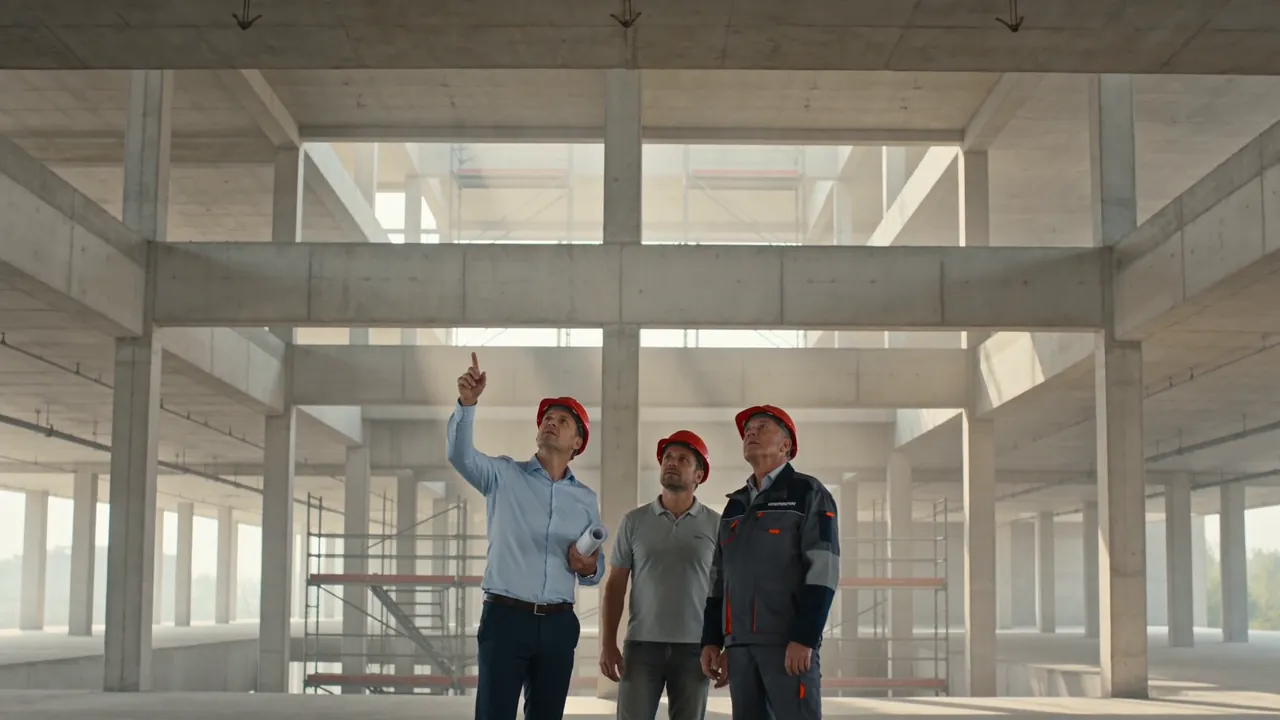
Gewerkton Field
Field is the voice-first construction site app. It covers dictation to evidence, defects, daywork reports, takt and a portal. For wind farms and other renewable-energy sites, it is the direct interface for distributed work, rotating crews, acceptance walks and offline capture in dead zones.
Its role is straightforward: help the site team document what is happening where it is happening. That includes continuing to capture material without connectivity and synchronising it later. Field is therefore the natural starting point for renewable-energy construction teams evaluating Gewerkton’s approach.
Gewerkton Studio
Gewerkton Studio is the browser workspace for plans and models. Where no model exists, the site team can create one in the browser. This matters because not every project begins with the same model environment, while site documentation still needs a workable project context.
Studio extends the record beyond capture in the field. Plans and models have a browser-based workspace, and the absence of an existing model does not prevent the site team from creating one there.
Gewerkton Cloud
Gewerkton Cloud handles operations and model or data coordination between Field, Studio and third parties. In the three-part structure, it provides the coordination layer connecting site capture, browser-based project work and outside participants.
For a distributed renewable-energy project, that division of responsibilities is easy to follow. Field serves activity on site, Studio provides the browser workspace for plans and models, and Cloud coordinates operations and data between them and third parties.
The same challenge appears at charging-infrastructure sites
The wind-farm scenario also applies to EV-adjacent construction. Charging-infrastructure sites can present the same underlying documentation problem: construction work takes place in the field, evidence needs to be captured there, and the record must remain useful after crews move on.
The relevant point is not that every renewable-energy or charging-infrastructure project looks identical. It is that distributed fieldwork puts pressure on the handoff between observation and documentation. Voice-first capture, offline operation and later synchronisation address that pressure at the place where it begins.
When documentation is delayed, the project relies more heavily on later reconstruction. When it is captured during the work, meetings, defects and acceptance items can remain part of the project record across the relevant locations. That is the same practical logic whether crews are moving among turbine positions or working across charging-infrastructure construction sites.
Beyond renewables: six deployment fields
Wind farms and renewables are one of six deployment fields identified for the platform. The others show how the same documentation principles carry into different construction settings.
- Data centres and industrial plants bring many trades together in parallel under tight deadlines. Meeting decisions become trade-sorted task lists.
- Housing and building construction uses defects with a photo and deadline, dictated daywork reports, and a signature on the device at handover.
- Infrastructure and tunnel projects run for long periods and involve many change orders. Instructions are backed by original audio.
- Cross-border teams can work across the EU, US and APAC on the same project, each in its own language, while the evidence original stays unambiguous.
- Projects in Asia can include Chinese, Korean and Vietnamese crews, with multilingual handling from capture to report and data residency by choice.
These settings differ in scale and working conditions, but they share a demand for records that survive movement between people, trades, locations and project phases. Wind farms bring that demand into view through distance, rotating crews and unreliable connectivity.
Regional AI choice without a single-provider commitment
Gewerkton’s BYO-AI approach supports 13 AI providers. Organisations can bring their own keys and select a region, with EU, US and Asian providers available, including providers in mainland China. The stated aim is to avoid vendor lock-in while allowing provider choice to reflect the region in which a project operates.

That regional choice aligns with the platform’s global-market focus. A project involving teams in several regions does not have to be framed around one AI provider. The available choices cover the EU, US and Asia, including mainland China.
Data residency is also presented as a choice: the EU cloud or the organisation’s own infrastructure. For teams assessing construction technology across international renewable-energy projects, those options belong in the same conversation as language coverage and regional AI-provider selection.
A beta built with an unusual development model
Gewerkton is currently in beta. Its public beta is planned for fall 2026. That status should be understood plainly by any team considering the platform: it is not being presented as a finished, generally released product today.
The platform is built by a solo founder directing a fleet of coding agents using Codex and Claude. In one night, that fleet shipped 21 software packages, verified with negative controls and mutation tests. This development model is part of Gewerkton’s story, but the relevant status for prospective users remains the same: beta now, with public beta planned for fall 2026.
The broader presentation around the product has also been built with a clear set of operating choices. The marketing site is available in 27 languages, uses zero trackers, has no cookie banner and runs on a fully egress-free architecture. A media bank contains more than 51 self-produced clips and posters.
Why documentation belongs in the sustainability conversation
Renewable-energy construction is often discussed through generation capacity, technology and environmental purpose. The field record deserves attention too. Claims connected to sustainable building become verifiable through documentation discipline: what happened, where it happened and what evidence was recorded.
On a wind farm, that discipline must work across turbine positions. It must accommodate rotating crews and acceptance walks. It must continue in dead zones through offline capture and sync when a connection becomes available. Meetings and defects must stay documented even as work moves across the site.
Gewerkton Field is designed around that operating reality. Its voice-first route from dictation to evidence places capture close to the work, while its coverage of defects, daywork reports, takt and a portal keeps the field workflow within one product line. Studio and Cloud extend the system into browser-based plans and models, operations, and coordination with third parties.
The result is a proposition grounded less in abstract digitisation than in a practical construction question: can the project document its work when crews are moving, locations are distributed and the network disappears? For wind farms, renewables and EV-adjacent charging-infrastructure construction, that is where the usefulness of a field system is tested.
Gewerkton’s answer is voice-first capture on site, offline documentation in dead zones, multilingual handling for cross-border teams, selectable AI providers and a choice between the EU cloud and an organisation’s own infrastructure. The platform is still in beta, with its public beta planned for fall 2026. Its guiding line fits the renewable-energy field especially well: “On site, what counts is what’s proven.”