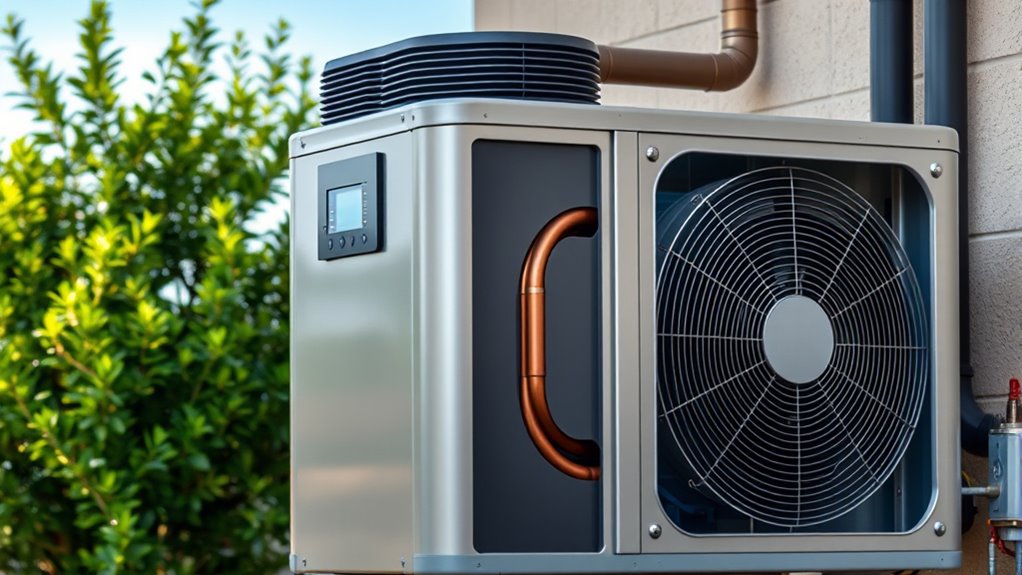

The latest heat pump technology boosts efficiency through variable speed compressors, inverter systems, and advanced refrigerants like R-454B and R-290, which improve performance while reducing environmental impact. Smart controls and IoT connectivity enable real-time adjustments, ensuring peak operation even in cold climates. Innovations in defrost methods and outdoor unit designs keep efficiency high during winter. If you keep exploring, you’ll find how these advancements can maximize your system’s savings and reliability.

Get backup power and energy gear delivered free with Prime
- Fast, free delivery on millions of items
- Prime Video, Amazon Music and more included
- Member-only deals all year
Key Takeaways
- Variable speed compressors with inverter technology adjust RPM in real-time for optimal performance across temperature ranges.
- Use of low-GWP refrigerants like R-454B and R-290 enhances efficiency while reducing environmental impact.
- Smart controls and IoT integration enable precise system monitoring, remote adjustments, and predictive maintenance.
- Advanced defrost algorithms and ice detection sensors improve cold climate operation and energy savings.
- System design innovations, including vapor/liquid injection and optimized refrigeration cycles, ensure high COP even in extreme cold conditions.
Advances in Variable Speed Compressors and Their Impact
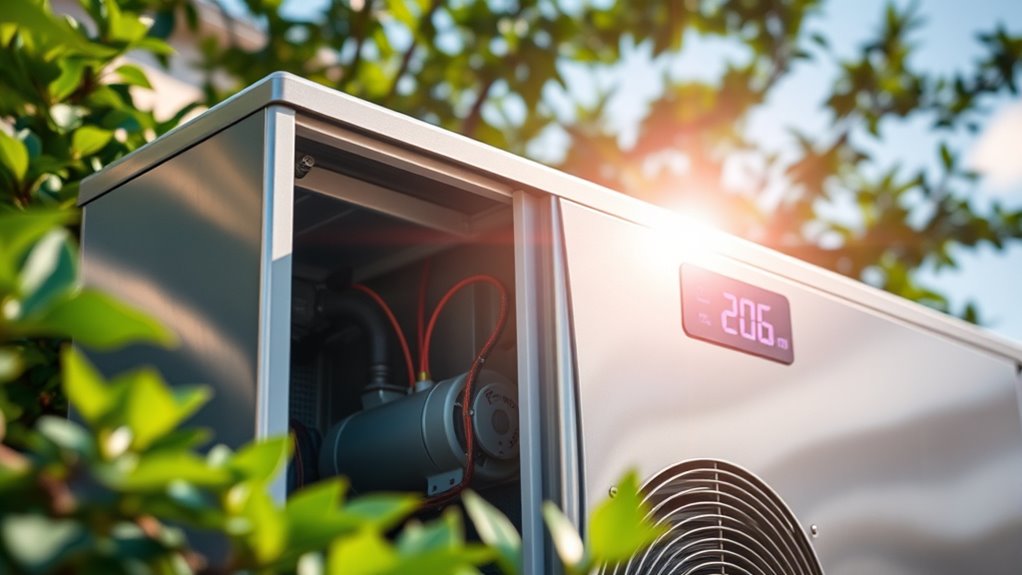
Advances in variable speed compressors have considerably improved heat pump performance by allowing continuous adjustment of RPMs to match real-time heating and cooling demands. These compressors, paired with inverter technology, enhance heat pump efficiency by modulating refrigerant flow rates based on outdoor temperature response. This system modulation helps maintain high COP levels even in cold climates, supporting cold climate operation down to -22°F. By precisely controlling refrigerant flow, variable speed compressors reduce energy consumption and improve system longevity. They respond dynamically to outdoor temperature fluctuations, ensuring ideal performance and reliable operation across diverse conditions. Additionally, energy efficiency ratings are improved with these technologies, helping units meet rigorous standards. The integration of Kia Tuning principles, such as precise control and performance optimization, further boosts system durability and responsiveness. Moreover, the ability of these compressors to adapt to varying conditions makes them particularly suitable for applications requiring consistent heating and cooling. These advancements also contribute to reducing overall carbon footprint by optimizing energy use. The result is a more efficient, quieter, and durable heat pump capable of meeting rigorous energy standards and providing reliable comfort year-round.
Innovations in Refrigerants for Enhanced Sustainability
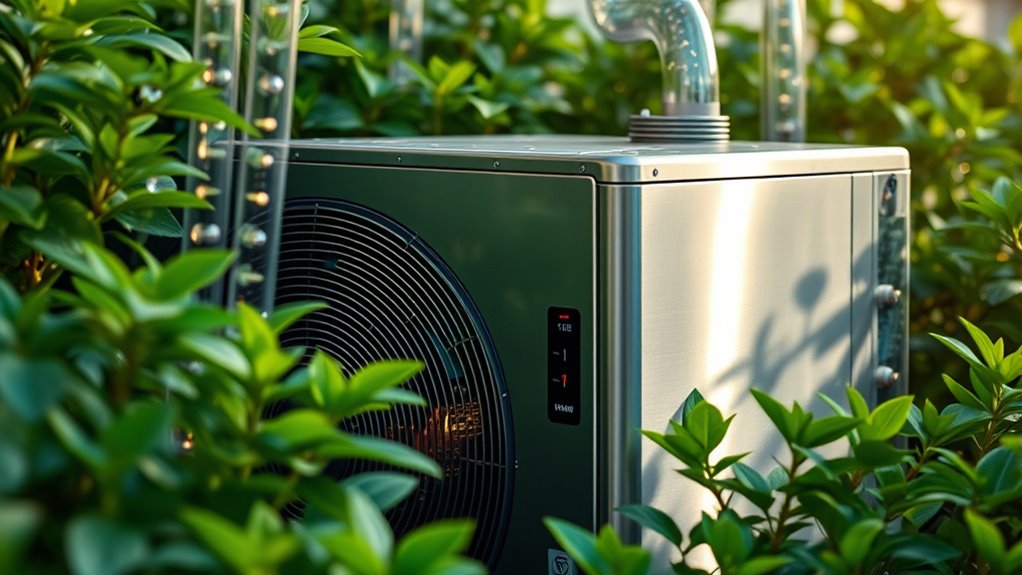
As heat pump technology evolves, so does the focus on making systems more environmentally friendly. Low-GWP refrigerants like R-454B and R-290 (propane) are at the forefront of refrigerant innovations, markedly lowering environmental impact. R-454B offers high performance with a GWP around 460, maintaining system efficiency while reducing global warming potential. R-290 enables higher temperature outputs and improved efficiency, with some units achieving SCOPs of 6, and operates at lower pressures for enhanced safety. Advances in refrigerant technology also include IoT-enabled diagnostics, which help optimize refrigerant levels and system performance in real-time. These refrigerant innovations support sustainability goals, meet evolving regulations, and contribute to reducing the carbon footprint of HVAC systems. Incorporating smart monitoring systems enhances the ability to track performance and refrigerant health more effectively. Cybersecurity measures are increasingly incorporated into HVAC controls to protect sensitive system data and ensure secure remote management. Additionally, ongoing research into refrigerant leakage prevention aims to minimize environmental risks associated with refrigerant handling and disposal. Innovations in refrigerant recovery techniques further contribute to environmental safety by reducing emissions during servicing and disposal. Moreover, advancements in refrigerant containment technologies are crucial for preventing leaks and ensuring long-term system integrity.
Overcoming Cold Climates With Improved Defrost and Heating Strategies

To guarantee heat pumps perform reliably in cold climates, modern systems incorporate sophisticated defrost and heating strategies. Advanced defrost systems use ice detection sensors and algorithms to identify ice buildup early, automatically activating defrost cycles to sustain efficiency. Cold climate heat pumps utilize vapor injection and liquid injection technologies, boosting refrigerant heat transfer and enabling operation down to -22°F. Variable-speed compressors and inverter-driven technology allow precise control of indoor temperatures while reducing energy use, maintaining a high COP even in extreme cold. Additionally, these systems often use low-GWP refrigerants like R-454B for eco-friendly performance. The outdoor unit‘s enhanced design ensures consistent heating efficiency, allowing these heat pumps to reliably deliver warmth despite harsh winter conditions. Incorporating refrigeration cycle advancements has further increased their effectiveness in frigid weather. Ongoing innovations in system optimization and defrost technology continue to improve cold weather performance, energy savings, and overall reliability.
Integration of Smart Technologies and Connectivity for Optimal Performance
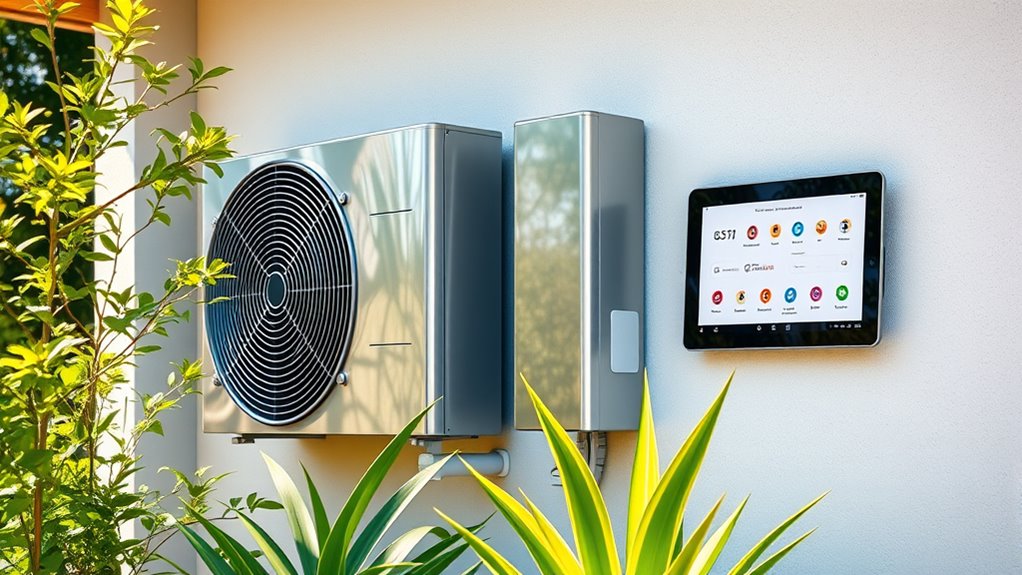
Integrating smart technologies and connectivity into heat pump systems enables you to optimize their performance effortlessly. With smart thermostats and connected control systems, you can monitor and adjust your system in real-time, based on occupancy and outdoor conditions. Connectivity allows for seamless integration with home automation platforms, making scheduling, remote operation, and maintenance alerts simple. Key benefits include:
Smart connectivity enhances heat pump efficiency, control, and maintenance for optimal home comfort.
- Precise adjustments using advanced algorithms that learn your preferences and weather patterns
- Improved system efficiency through continuous data collection on energy usage and performance
- Remote diagnostics and software updates that identify issues early and enhance reliability
- Support for predictive maintenance, extending system longevity and reducing unexpected downtime
- Understanding the benefits of smart technology can help maximize your heat pump’s efficiency and lifespan. Embracing technological advancements further enhances system capabilities, ensuring optimal operation in various conditions.
This integration guarantees your heat pump operates at peak efficiency, saving energy and enhancing comfort.
Cost Considerations and Long-Term Savings With Modern Heat Pumps
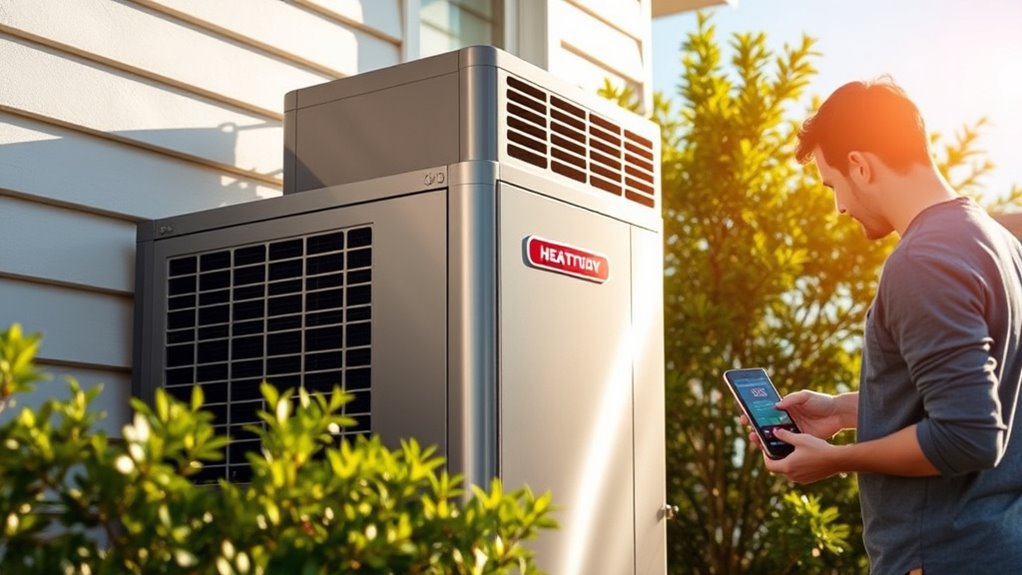
While modern high-efficiency heat pump systems may come with higher upfront costs, their long-term savings are worth it. Advanced heat pumps with high SCOPs and inverter-driven compressors deliver superior system efficiency, reducing operational expenses. Federal tax credits covering up to 30% of installation costs and utility rebates can shorten payback periods considerably. By integrating heat pumps with solar panels and enhanced insulation, you further decrease reliance on fossil fuels and cut energy bills. Incorporating market trends and industry insights into your choice can help maximize savings. Additionally, choosing systems with variable-speed compressors can optimize performance based on demand. Staying informed about energy efficiency standards ensures your system remains compliant and performs optimally. Proper installation and regular maintenance are essential for maintaining peak efficiency and extending the lifespan of your heat pump. An understanding of technological advancements in heat pump design can help you select the most efficient system for your needs. Here’s a quick comparison:
| Feature | Upfront Costs | Long-Term Savings | Key Benefits |
|---|---|---|---|
| Standard Heat Pumps | Lower | Moderate | Basic energy efficiency |
| Advanced Heat Pumps | Higher | Greater | Reduced operational expenses |
| Incentives & Rebates | N/A | Accelerate payback | Maximize savings |
| System Efficiency | Varies | Long-term benefit | Minimize fossil fuel use |
Investing in modern heat pumps pays off through lower utility bills and sustainability.
Frequently Asked Questions
What Is the Most Efficient Heat Pump on the Market?
You’re asking about the most efficient heat pump available. Right now, models like Lambda’s air-source heat pump with R290 refrigerant achieve SCOPs of up to 6, making them some of the top performers. Friedrich EVOX G3 series also offers impressive efficiency with up to 20 SEER and 9.5 HSPF ratings. High-tech features like vapor injection and inverter technology further boost efficiency, especially in cold climates.
What Are the Changes in Heat Pumps 2025?
You wonder what’s new with heat pumps in 2025, and the updates are impressive. Advanced inverter-driven compressors with enhanced vapor injection now operate reliably down to -22°F, boosting efficiency. Low-GWP refrigerants like R-454B and R-290 make them more eco-friendly. Modular “Block N Lock” designs simplify installation, while smart diagnostics and IoT connectivity provide real-time insights. These innovations deliver powerful, efficient performance even in the coldest climates, transforming your heating experience.
What Is the Maximum Efficiency of a Heat Pump?
You wonder about the maximum efficiency of a heat pump. Currently, modern cold climate heat pumps can achieve a Seasonal Coefficient of Performance (SCOP) of around 6, with some models reaching nearly 5.87 under ideal conditions. Technologies like vapor injection and inverter-driven compressors help boost efficiency. However, thermodynamics limit performance, and the Carnot efficiency remains the ultimate upper bound, influenced by outdoor temperature and system design.
Are Newer Heat Pumps More Efficient?
You’ll find that newer heat pumps are definitely more efficient. They use advanced inverter-driven compressors and vapor injection, which boost their performance, especially in cold weather. With ratings reaching up to 20 SEER and 10 HSPF, they outperform older models. Plus, innovations like low-GWP refrigerants and better defrost systems help you save energy and reduce environmental impact while maintaining reliable, efficient heating even at outdoor temperatures below freezing.
Conclusion
Imagine your heat pump as a finely tuned orchestra, each new technology adding harmony and efficiency. With advancements like variable speed compressors and eco-friendly refrigerants, you’re now playing in the big leagues of energy savings. As one homeowner discovered, upgrading their system cut winter bills by nearly 30%. Embracing these innovations is like upgrading from a bicycle to a sports car — smoother, faster, and more powerful, all while saving you money and reducing your environmental footprint.
Halloween Picks
halloween
As an affiliate, we earn on qualifying purchases.


