

TL;DR

Get backup power and energy gear delivered free — and shop member deals
- Fast, free delivery on millions of items
- Access to Prime Big Deal Days deals on October 6–7
- Prime Video, Amazon Music and more included
This article explains how you can process a video entirely on your own hardware to produce everything you need for publishing—thumbnails, metadata, clips—without relying on cloud services. It saves time, enhances privacy, and cuts costs.
Imagine turning a raw video into a full set of publish-ready assets—thumbnails, captions, social clips, blog drafts—without ever uploading to the cloud. It sounds like a dream, but recent tools are making it reality. The game changer? Local processing that keeps your footage private, speeds up your workflow, and slashes costs.
If you create videos regularly, you know the grind. After recording, you spend hours crafting titles, descriptions, social snippets, and more. Now, you can cut that down dramatically. This approach isn’t just about automation—it’s about reclaiming control over your content and your data. Stick around to see how one video can become a whole publishing kit, all on your own hardware.
Key Takeaways
- Processing videos locally on your own hardware keeps your data private and reduces reliance on cloud services.
- A single video can generate a full suite of assets—titles, descriptions, clips, transcripts, thumbnails—saving hours of manual work.
- Investing in a capable workstation or server pays off quickly by cutting ongoing cloud storage and processing costs.
- All assets are compatible with existing publishing tools, making integration seamless.
- Automation speeds up workflows, allowing you to publish more content faster with better control.
As an affiliate, we earn on qualifying purchases.
How local processing turns one video into dozens of assets
Local AI tools analyze your video on your machine, not in the cloud. They transcribe speech with speaker labels, detect scene changes, read on-screen text, and fuse this info into a detailed scene log. From this, they generate titles, tags, descriptions, and even social clips—all without sending footage to a server.
By processing data locally, these tools prioritize privacy and data security, which is especially critical for sensitive or proprietary content. Understanding how they analyze different layers—speech, scene changes, text—helps you appreciate their depth. For instance, speech transcription isn’t just about converting audio; it enables auto-generating accurate captions and searchable transcripts, which enhance accessibility and SEO. Scene detection isn’t just about splitting footage; it allows for precise clip creation and highlights key moments for social sharing. Reading on-screen text adds another layer of metadata, making your assets more contextually rich. All these layers work together, offering a comprehensive understanding of your video that facilitates automated asset creation, saving you hours of manual work and reducing human error. The tradeoff? These processes require a powerful local machine and some setup, but the payoff is greater control and privacy.
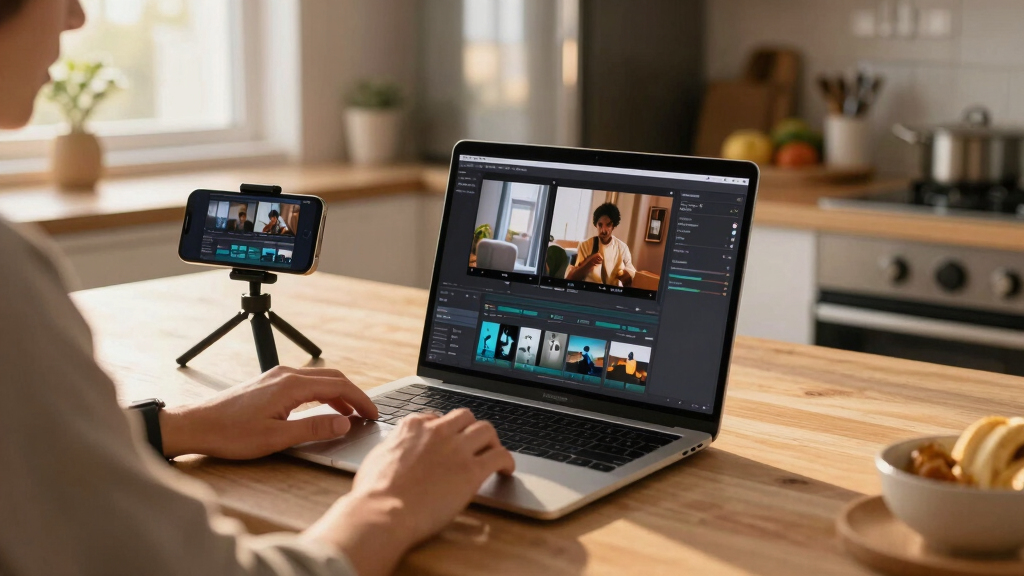
video transcription software for PC
As an affiliate, we earn on qualifying purchases.
As an affiliate, we earn on qualifying purchases.
Why offline-first beats cloud for privacy, speed, and control
Running all processing locally means your footage stays with you, and that’s a critical advantage in today’s data-sensitive landscape. When data isn’t uploaded to third-party servers, you eliminate risks related to leaks, breaches, or unauthorized access—especially important for confidential content like legal, medical, or corporate videos. Additionally, processing speeds are significantly faster because you’re not dependent on internet upload/download speeds or server queue times. This immediacy means you can review and refine assets on the fly, accelerating your workflow.
Consider the implications: with local processing, you’re not just maintaining privacy; you’re also gaining independence from vendor policies and service outages. If a cloud provider changes terms, raises prices, or experiences downtime, your workflow remains unaffected. However, this approach does require upfront investment in hardware and some technical know-how. The tradeoff is complete control over your data and assets, with the potential for a more resilient and cost-effective workflow over time. For creators handling sensitive or proprietary content, this model offers peace of mind that their data remains under their own security protocols—no surprises, no third-party access.
As an affiliate, we earn on qualifying purchases.
Frequently Asked Questions
What exactly comes out of a single video?
From one video, you get titles, descriptions, transcripts, social clips, thumbnails, and blog drafts—everything needed to publish across multiple platforms efficiently.
How is this different from cloud video platforms?
The main difference is processing happens entirely on your hardware—no uploading or third-party servers involved. This boosts privacy, speed, and cuts recurring costs.
What hardware do I need?
A high-end PC or dedicated server with a decent GPU (like Nvidia RTX 3060 or better), at least 16GB RAM, and a fast CPU. For security setups, small NVRs with AI capabilities work too.
Will my existing publishing tools still work?
Yes. Most assets are exported in standard formats compatible with popular CMSs and video players. You’ll still copy embed codes or upload assets as usual, but with more privacy and automation. Learn more about home automation tools that can integrate with your workflow.
Is my footage private?
Absolutely, if you process everything locally. No third-party servers get access unless you choose to upload assets. Your data stays under your control, ensuring maximum privacy.
video thumbnail creation software
As an affiliate, we earn on qualifying purchases.
As an affiliate, we earn on qualifying purchases.
Conclusion
Moving to a local-first, offline video workflow isn’t just a tech upgrade—it’s a mindset shift. You can explore related insights at America Opinions about smart home and tech solutions. It’s a smarter way to work in a noisy, cloud-driven world. For more tips on home tech, visit America Opinions.
Start small: pick a capable machine, install trusted tools like ChannelHelm, and see how much faster your publishing can get. Your future self will thank you for the time saved and the control gained. Discover more about innovative home solutions at America Opinions.

Fall Picks
fall essentials
As an affiliate, we earn on qualifying purchases.