

TL;DR
Researchers have uncovered a 1950s Japanese computer named Parametron, which uniquely used a technology that did not rely on transistors or vacuum tubes. This discovery sheds light on alternative early computing methods and challenges conventional histories.
A previously unknown 1950s Japanese computer, the Parametron, has been identified as utilizing a unique electronic switching technology that does not rely on transistors or vacuum tubes. This finding challenges the common understanding of early computing hardware and highlights alternative technological paths explored during that era.
The Parametron was developed in Japan during the 1950s, a period when most computers used vacuum tubes or, later, transistors. However, recent research and examination of surviving hardware and documentation reveal that this machine employed a parametron — an early magnetic logic device invented by Eiichi Goto in Japan. Unlike vacuum tubes or transistors, parametron devices used magnetic fields to switch states, enabling digital logic operations.
Experts involved in the discovery, including historian Dr. Yuki Tanaka, confirmed that the Parametron’s design was innovative for its time, offering a different approach to electronic switching. The machine reportedly was capable of performing basic computing tasks, but detailed specifications and operational history remain limited. The device was largely unknown outside Japan until recent archival research uncovered its existence and technology.
This discovery provides new insights into the diversity of early computing technologies and the extent of Japanese innovation during the post-war period. It also raises questions about other potentially overlooked or undocumented early computers that used alternative switching mechanisms.
Why the Parametron Changes Our Understanding of 1950s Computing
The identification of the Parametron as a magnetic logic device broadens the historical narrative of early computer development. It demonstrates that Japan was not only adopting Western technologies but also innovating independently with novel approaches. This challenges the assumption that vacuum tubes and transistors were the only pathways to digital computing in that era. For historians and technologists, the Parametron exemplifies the diversity of technological experimentation during the 1950s, which could influence modern magnetic and non-volatile logic research.
Furthermore, this discovery underscores the importance of revisiting and re-evaluating historical artifacts, as it may reveal overlooked innovations that could inspire future developments in low-power, magnetic-based computing technologies.
As an affiliate, we earn on qualifying purchases.
Background
During the 1950s, global computing was dominated by machines utilizing vacuum tubes, with transistors beginning to emerge in the late decade. In Japan, efforts to develop indigenous computing technology were underway, often influenced by American and European advancements. Eiichi Goto, a Japanese engineer, invented the parametron in 1954 as a magnetic logic device designed to replace vacuum tubes. Although the technology showed promise, it was largely overshadowed by the rapid adoption of transistors in the West.
Until now, most historical accounts have focused on vacuum tube and transistor-based computers, with little attention paid to magnetic logic devices like the parametron. The recent discovery of the 1950s Japanese computer employing parametrons suggests that Japan was exploring multiple avenues of digital logic, some of which remain undocumented or forgotten.
This context highlights the significance of the recent findings, which shed light on a previously underappreciated chapter of early computing history.
“Using magnetic logic devices like the parametron could have offered advantages in power consumption and reliability, which makes its development even more intriguing.”
— Professor Hiroshi Sato, electrical engineering expert

Tokyo Street Desk Pad Purple, Cute Retro Large Gaming Mouse Pad, Japanese Anime Laptop Keyboard Mouse Mat XXL, Aesthetic Neon Pixel Skyline/City Desk Mat, Desk Decor Pads for Women 31.5"x15.75"
- Large Size: 31.5 x 15.75 inches for ample space
- Anti-slip Base: Natural rubber bottom prevents shifting
- Durable Stitching: Edges resist wear and deformation
As an affiliate, we earn on qualifying purchases.
As an affiliate, we earn on qualifying purchases.
Unanswered Questions About the Parametron Computer’s Capabilities
Details about the operational status of the Parametron machine, including whether it was fully functional or just a prototype, remain unclear. The extent of its computational capabilities and how widely it was used or tested are also unknown. Additionally, the full scope of its influence on subsequent Japanese computing efforts has yet to be established.

Code: The Hidden Language of Computer Hardware and Software
- Condition: Used Book in Good Condition
As an affiliate, we earn on qualifying purchases.
As an affiliate, we earn on qualifying purchases.
Future Research and Potential Discoveries on Magnetic Logic Devices
Researchers plan to further investigate surviving hardware, archival documents, and related projects to better understand the scope and impact of the Parametron. There is also interest in exploring other magnetic logic devices from the same period, which could reveal additional alternative computing approaches. These efforts aim to integrate this knowledge into the broader history of digital technology and inspire new magnetic or low-power computing designs.
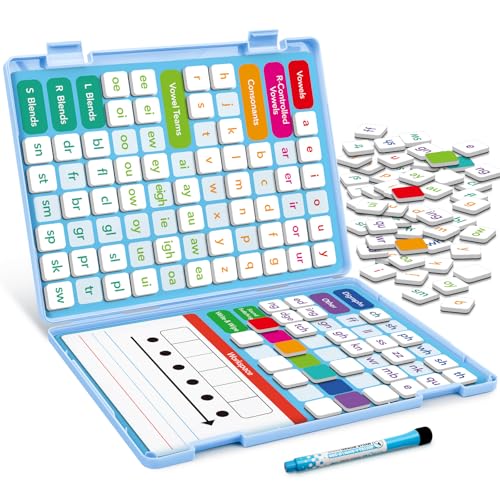
Aizweb Phonics Magnetic Letter Tiles,All-in-one Magnetic Phonics Kit,Reading Spelling & Word Building Games with Dry-Erase Boards,Phonics Games for Preschool & Kindergarten Classroom Learning
- Complete Phonics Kit: Includes 108 tiles, boards, marker, and storage
- Color-Coded for Speed: Vowels, consonants, and blends in different colors
- Safe and Durable: Rounded foam tiles for small hands
As an affiliate, we earn on qualifying purchases.
As an affiliate, we earn on qualifying purchases.
Key Questions
What exactly is a parametron?
A parametron is a magnetic logic device invented in Japan during the 1950s. It uses magnetic fields to switch states, serving as an early form of digital logic without relying on vacuum tubes or transistors.
How does the parametron differ from transistors and vacuum tubes?
Unlike vacuum tubes and transistors, which use electronic charge flow, parametrons operate based on magnetic fields to perform switching. This can potentially offer advantages in power efficiency and durability.
Why was the parametron largely unknown outside Japan?
Development and documentation of the parametron were mostly confined to Japan, and early histories of computing have focused on vacuum tube and transistor-based machines. The recent discovery has brought renewed attention to this alternative technology.
Could parametron technology influence future computing?
While primarily of historical interest, magnetic logic devices like the parametron could inspire modern low-power, magnetic-based computing research, especially in non-volatile memory and energy-efficient logic circuits.
Source: hn