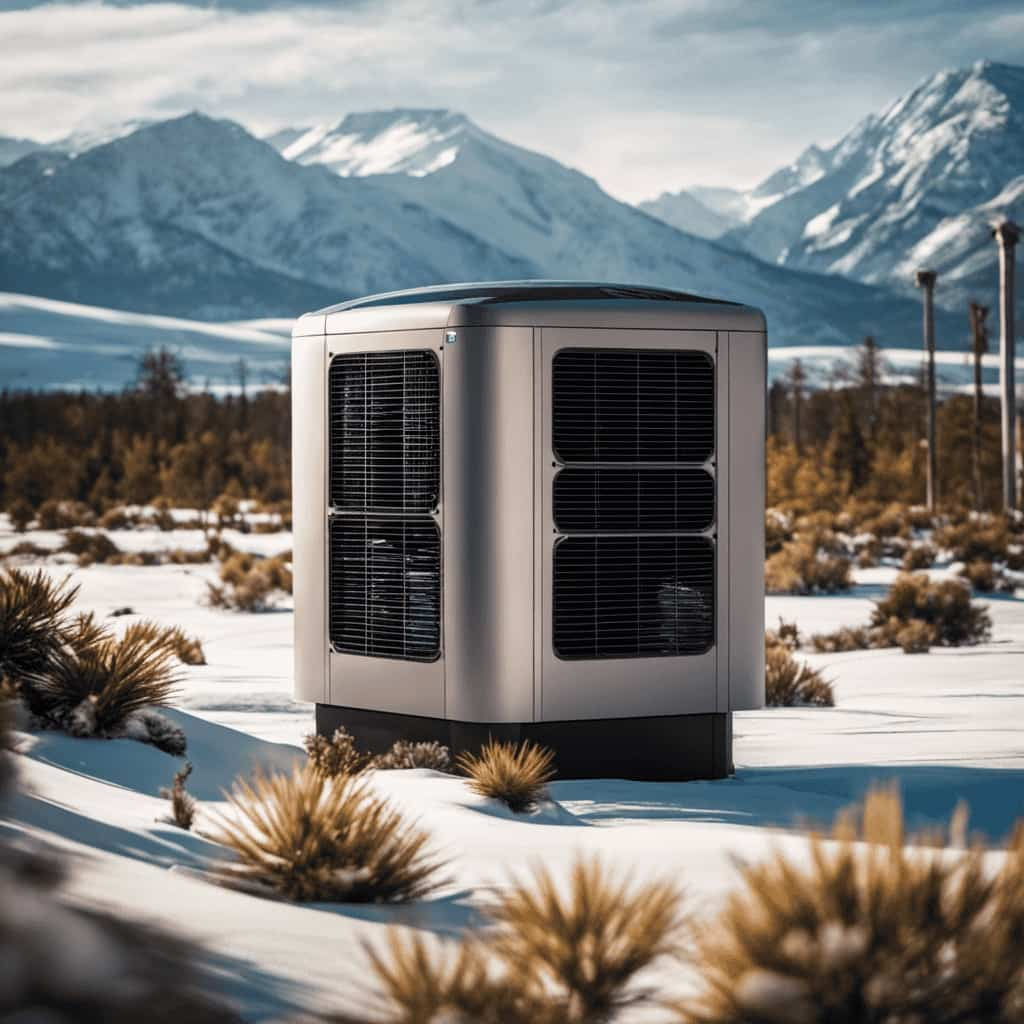

As we explore the realm of heat pump efficiency, we must consider the possibility of using renewable energy sources.

Get backup power and energy gear delivered free with Prime
- Fast, free delivery on millions of items
- Prime Video, Amazon Music and more included
- Member-only deals all year
By juxtaposing the concepts of traditional heat pumps and the power of renewable energy, we can redefine the boundaries of efficiency.
In this article, we will explore the role of solar power, geothermal energy, wind power, and biomass energy in optimizing heat pump performance.
Join us on this journey towards mastering the art of sustainable heating and cooling.
Key Takeaways
- Renewable energy enhances the energy efficiency of heat pump technology.
- Solar power enhances heat pump performance and reduces reliance on traditional energy sources.
- Geothermal energy provides a consistent and renewable heat source for heat pumps.
- Wind power can supplement or replace traditional electricity sources for heat pumps.
Understanding the Role of Renewable Energy in Heat Pump Efficiency
We will explore how renewable energy significantly improves the efficiency of heat pumps.
Renewable energy plays a crucial role in enhancing the energy efficiency of heat pump technology, paving the way for a sustainable future. By harnessing renewable sources such as solar, wind, and geothermal energy, heat pumps can operate with minimal reliance on traditional fossil fuels.
This shift towards renewable energy not only reduces greenhouse gas emissions but also lowers energy consumption and costs. The integration of renewable energy into heat pump systems allows for higher COP (Coefficient of Performance) values, resulting in improved heating and cooling efficiency.
Moreover, renewable energy can be stored and utilized during peak demand periods, ensuring continuous and reliable operation of heat pumps.

As the future of heat pump technology unfolds, the synergy between renewable energy and energy efficiency will undoubtedly drive innovation and pave the way for a more sustainable and efficient heating and cooling industry.
The Impact of Solar Power on Heat Pump Performance
By harnessing solar power, heat pump performance can be significantly enhanced, resulting in greater energy efficiency and reduced reliance on traditional energy sources.
Solar panel integration with heat pump systems allows for the direct utilization of solar energy to power the heat pump, reducing the need for electricity from the grid. This integration involves the installation of solar panels on the roof or nearby areas, which capture sunlight and convert it into electricity.
The generated electricity can then be used to operate the heat pump, thereby reducing the overall energy consumption of the system. Additionally, thermal energy storage can further optimize heat pump performance by storing excess solar energy as thermal energy, which can be used during periods of low sunlight or high energy demand.

This combination of solar power and thermal energy storage maximizes the utilization of renewable energy and improves the overall efficiency of heat pump systems.
Harnessing Geothermal Energy for Optimal Heat Pump Efficiency
When properly harnessed, geothermal energy can greatly enhance heat pump efficiency by providing a consistent and renewable heat source. Geothermal heat exchangers play a vital role in this process, facilitating the transfer of heat between the ground and the heat pump. Ground source heat pumps, also known as geothermal heat pumps, utilize this technology to extract heat from the earth and transfer it into the building.
Here are five key benefits of harnessing geothermal energy for optimal heat pump efficiency:
- Geothermal energy is a renewable and sustainable heat source.
- Geothermal heat exchangers allow for efficient heat transfer between the ground and the heat pump.
- Ground source heat pumps have a high coefficient of performance, meaning they can produce more heat output than the energy input required.
- Geothermal energy reduces reliance on fossil fuels, leading to lower greenhouse gas emissions.
- Geothermal systems can provide both heating and cooling, making them versatile and efficient for year-round use.
Exploring Wind Power as a Sustainable Energy Source for Heat Pumps
One potential solution to enhance heat pump efficiency is by harnessing the power of wind as a sustainable energy source.

Wind power is a renewable energy source that has the potential to supplement or even replace traditional electricity sources for heat pumps.
Wind turbines convert the kinetic energy of the wind into electrical energy, which can then be used to power heat pumps.
Improving wind turbine efficiency is crucial to maximize the energy output and ensure the cost-effectiveness of wind power.
By optimizing the design and operation of wind turbines, we can increase the amount of electricity generated, making wind power a viable and sustainable option for heat pumps.

Integrating wind energy into heat pump systems has the potential to significantly reduce carbon emissions and dependency on fossil fuels.
Transitioning to the next section, another renewable energy source that can be integrated with heat pumps for greater efficiency is biomass energy.
Integrating Biomass Energy With Heat Pumps for Greater Efficiency
We can enhance the efficiency of heat pumps by integrating biomass energy, which involves utilizing renewable organic materials such as wood pellets or agricultural waste as a fuel source. Biomass integration benefits heat pump optimization by providing several advantages:
-
Increased Energy Efficiency: Biomass energy can be used as a complementary heat source, allowing the heat pump to operate more efficiently by reducing the workload on the electric compressor.

-
Cost Savings: Utilizing biomass energy can lower heating costs by relying less on electricity and taking advantage of cheaper biomass fuel sources.
-
Environmental Sustainability: Biomass is a renewable energy source that reduces greenhouse gas emissions and dependence on fossil fuels, contributing to a cleaner and greener environment.
-
Versatility: Biomass energy can be easily integrated with different types of heat pumps, including air-source, ground-source, and water-source heat pumps.
-
Energy Independence: By utilizing locally sourced biomass materials, communities can reduce their reliance on imported energy sources and achieve greater energy self-sufficiency.

Integrating biomass energy with heat pumps offers a promising solution for optimizing heat pump efficiency while promoting sustainable energy practices.
Frequently Asked Questions
What Are the Different Types of Renewable Energy Sources That Can Be Used to Improve Heat Pump Efficiency?
We can improve heat pump efficiency by utilizing geothermal energy and solar power. These renewable energy sources offer a sustainable and eco-friendly solution to heat pump systems, maximizing their performance and reducing their environmental impact.
How Does the Integration of Renewable Energy Sources Affect the Overall Cost of Heat Pump Installation and Operation?
How does the integration of renewable energy sources impact the cost of heat pump installation and operation? We assess the environmental benefits and analyze the efficiency of renewable energy powered heat pumps, considering the overall costs involved.
Are There Any Limitations or Challenges Associated With Using Renewable Energy Sources in Conjunction With Heat Pumps?
There are limitations and challenges associated with using renewable energy sources in conjunction with heat pumps. These include variability in renewable energy availability, system integration complexities, and additional costs for equipment and installation.

Can Heat Pumps Powered by Renewable Energy Sources Be Used in All Climates and Regions?
Heat pumps powered by renewable energy sources have both advantages and disadvantages in different climates. The impact of these heat pumps on carbon emissions varies across regions.
Are There Any Government Incentives or Subsidies Available for Installing Heat Pumps That Utilize Renewable Energy Sources?
Yes, there are government incentives and subsidies available for installing heat pumps that utilize renewable energy sources. These programs provide financial support to encourage the adoption of sustainable heating technologies.
Conclusion
In conclusion, renewable energy sources such as solar power, geothermal energy, wind power, and biomass have the potential to greatly enhance the efficiency of heat pumps.
An interesting statistic to note is that heat pumps powered by solar energy can achieve a coefficient of performance (COP) of 4.5, meaning they can produce 4.5 units of heat for every unit of electricity consumed.

This highlights the significant impact renewable energy can have on redefining heat pump efficiency and promoting sustainable heating solutions.
Fall Picks
fall essentials
As an affiliate, we earn on qualifying purchases.