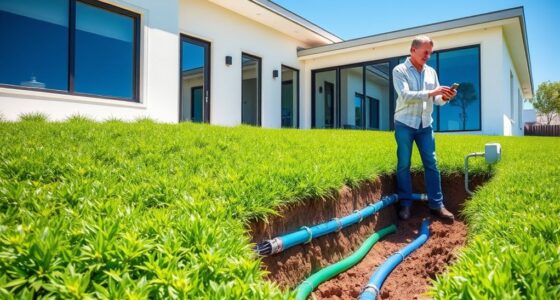
Your geothermal heat pump’s performance depends mainly on ground loop efficiency, soil thermal properties, system design, and maintenance. Poorly installed loops, or soils with low thermal conductivity, reduce heat transfer and increase energy use. Proper system planning and quality components improve reliability and efficiency. Regular maintenance prevents issues like leaks or debris buildup, helping your system run smoothly long-term. To optimize your system and understand these factors better, discover more details to maximize your geothermal’s performance.
Key Takeaways
- Ground loop efficiency, affected by installation quality and maintenance, directly impacts heat transfer performance.
- Soil thermal conductivity determines the rate of heat exchange between the ground and the system.
- Soil composition and geotechnical factors influence ground thermal properties and system design.
- System design quality and component durability affect overall efficiency and reliability.
- Regular maintenance prevents issues like leaks and debris buildup, maintaining optimal ground loop performance.
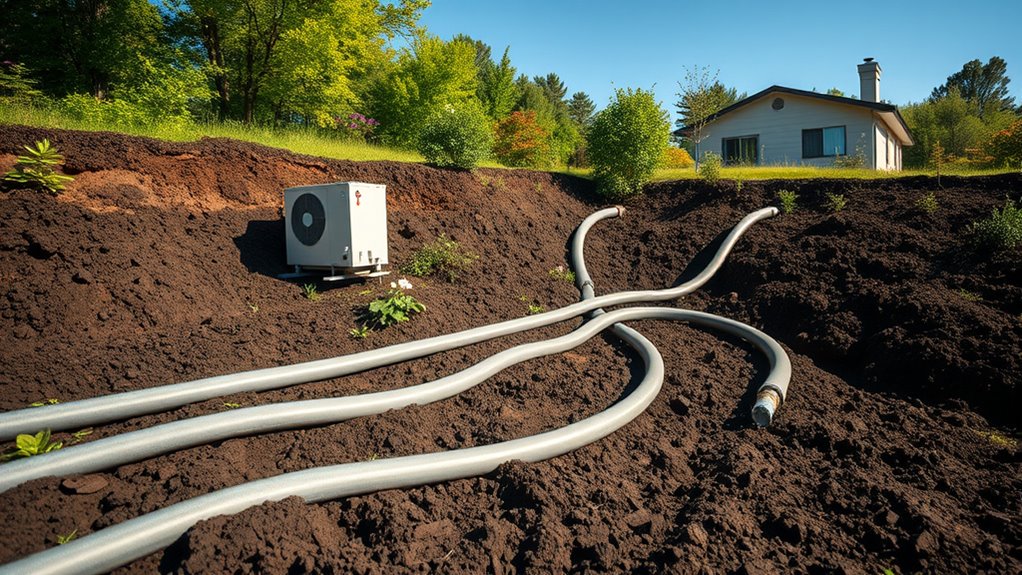
The performance of a geothermal heat pump depends on several key factors that can substantially influence its efficiency and lifespan. One of the most critical elements is the ground loop efficiency, which directly affects how well your system extracts and transfers heat. The ground loop, consisting of pipes buried underground, acts as the heat exchange medium. If this loop isn’t optimized, your system will struggle to maintain desired indoor temperatures, leading to increased energy consumption and wear over time. Ensuring the loop operates efficiently means paying close attention to installation quality, loop length, and the type of loop used—whether closed or open system. Proper installation minimizes issues like air leaks or poor ground contact, both of which diminish efficiency. Regular maintenance and inspections can help sustain this efficiency, preventing problems that can arise from soil movement or debris buildup.
Thermal conductivity also plays a pivotal role in geothermal heat pump performance. This property measures how well the ground conducts heat, influencing how quickly your system can either absorb or dissipate heat depending on the season. High thermal conductivity soils, such as sandy or gravelly soils, facilitate faster heat transfer, making your system more efficient. Conversely, soils like clay or silt with low thermal conductivity hinder heat flow, forcing the system to work harder to achieve the desired temperature regulation. When installing the ground loop, understanding the soil’s thermal properties helps determine ideal pipe depth and layout, maximizing heat exchange. If the ground has poor thermal conductivity, you might need a longer loop or enhanced insulation measures, which can increase initial costs but improve overall efficiency. Additionally, soil composition can influence the system’s ability to transfer heat effectively, emphasizing the importance of geotechnical assessments before installation.
Beyond the ground loop and soil properties, other factors influence performance, such as the system’s design, the quality of components, and how well the system is maintained. A properly designed system considers local geology, climate, and heating and cooling loads—factors that can profoundly impact efficiency. High-quality components, like durable heat exchangers and reliable pumps, reduce mechanical failures and energy waste. Regular maintenance, including flushing the system and checking for leaks, ensures consistent ground loop efficiency and prevents efficiency loss over time. Neglecting these aspects can lead to decreased thermal performance, increased energy bills, and a shorter lifespan for your geothermal heat pump. Ultimately, understanding and enhancing ground loop efficiency and thermal conductivity are foundational steps toward a system that delivers reliable, energy-efficient performance for years to come.
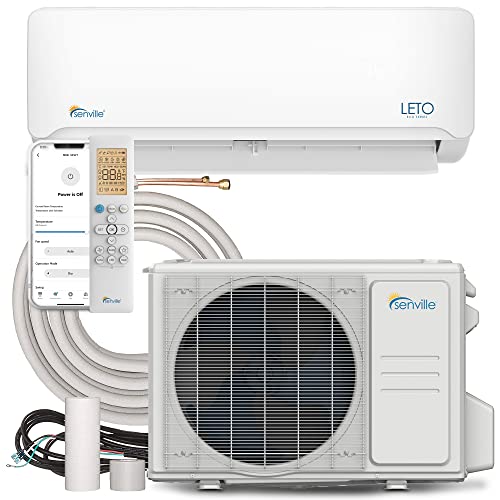
Senville LETO Series Mini Split Air Conditioner Heat Pump, 12000 BTU 110/120V, Inverter, Works with Alexa, SEER2 20.8, 1 Ton, White
Alexa Enabled Mini Split AC/Heating System: Integrate with voice control or app, allowing you to adjust your mini...
As an affiliate, we earn on qualifying purchases.
Frequently Asked Questions
How Does Local Climate Impact Geothermal Heat Pump Efficiency?
Your geothermal heat pump’s efficiency is affected by local climate, especially solar variability and wind patterns. In areas with high solar variability, the ground’s temperature may fluctuate, impacting heat transfer. Wind patterns influence outdoor temperatures, making it harder for your system to maintain consistent performance. These climate factors can cause your geothermal system to work harder or less efficiently, so understanding local conditions helps optimize its operation and energy savings.
What Role Does Soil Composition Play in System Performance?
Soil composition critically impacts your geothermal heat pump’s performance. Stable soil with good soil stability ensures efficient heat transfer, reducing system strain. High mineral content, however, can cause corrosion and scaling, decreasing efficiency and increasing maintenance needs. You should evaluate soil properties before installation, opting for stable, low-mineral soils or implementing protective measures to optimize system longevity and performance. Proper assessment ensures your system operates smoothly and efficiently.
Can Installation Errors Significantly Reduce Geothermal Heat Pump Lifespan?
Installation mistakes are like cracks in a foundation—they can weaken your system over time. Yes, poor installation can considerably reduce the lifespan of your geothermal heat pump, leading to frequent repairs and early failure. When errors occur during setup, they cause undue stress on components, accelerating wear and tear. To protect your investment, make sure professionals follow proper procedures, minimizing installation errors and extending your system’s durability.
How Does System Size Affect Operational Costs?
Your system sizing directly impacts operational costs; an improperly sized geothermal heat pump may run inefficiently, increasing energy use and expenses. Oversized units cycle on and off more frequently, leading to higher wear and tear, while undersized systems struggle to meet heating or cooling needs, consuming extra energy. Choosing the right system size helps optimize efficiency, reducing long-term operational costs and ensuring reliable performance. Proper sizing is essential for cost-effective, sustainable operation.
Are There Specific Maintenance Practices to Optimize Performance?
Think of your geothermal heat pump as a trusted garden, thriving with regular care. You should perform routine maintenance routines like checking fluid levels and cleaning filters, which keep it healthy. System inspections are vital—look for leaks or unusual noises. By actively maintaining and inspecting your system, you guarantee peak performance, prolong its lifespan, and maximize energy efficiency. Consistent care transforms your geothermal system into a well-tended, efficient powerhouse.

23000 BTU Mini Split AC & Heat Pump, 230v Energy Efficient Wall-Mounted Ductless Air Conditioner with WiFi Control, r32 Eco-Friendly Refrigerant, Cools/Heats Up to 1500 Sq.Ft, Quiet Operation
Powerful Cooling & Heating - This 23000 BTU mini split system delivers reliable cooling (63-90℉) and heating (32-80℉)...
As an affiliate, we earn on qualifying purchases.
Conclusion
Understanding these factors is like tending a delicate garden—you must nurture each element to guarantee your geothermal heat pump thrives. By paying attention to soil conditions, system design, and maintenance, you open the full potential of this eco-friendly energy source. When you optimize performance, you’re not just saving money; you’re planting seeds for a sustainable future. With care and knowledge, your geothermal system becomes a powerful force, quietly working like a loyal guardian for years to come.
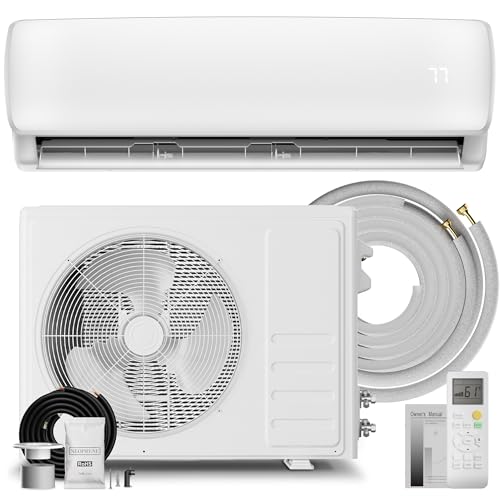
MEPTY 9000BTU Mini Split AC/Heating System, 19 SEER2 Energy Efficient Mini Split Air Conditioner with Heat Pump, 110V Cools Up to 450sq.ft, Ductless Inverter AC Unit with Pre-Charged Condenser
⭐Advanced Energy Saving: Advanced inverter technology with leading 19 SEER2 rating delivers superior performance through ensuring that the...
As an affiliate, we earn on qualifying purchases.

RIWORY 102000 BTU Tankless Water Heater Propane Indoor, Max 4.3 GPM Intelligent Constant Liquid Propane Whole House Instant Hot Water Heater with Freeze Protection, 3/4" NPT, for 3-4 Water Points
【4.3 GPM | 102,000 BTU】: Riwory tankless gas hot water heater can provide up to 4.3 GPM flow...
As an affiliate, we earn on qualifying purchases.