
When you use too much energy for pumping in a geothermal system, it can eat into your overall gains by using more power than the system produces. Excessive pump energy reduces net energy output, raising operational costs and decreasing efficiency. This also impacts the environment because more energy, especially from non-renewable sources, is consumed. By understanding how pump efficiency affects your system, you can find ways to optimize performance and maximize renewable benefits — there’s more to uncover.

Get backup power and energy gear delivered free with Prime
- Fast, free delivery on millions of items
- Prime Video, Amazon Music and more included
- Member-only deals all year
Key Takeaways
- Excessive pumping energy reduces net geothermal energy available for power generation.
- High pump power increases operational costs, diminishing overall system profitability.
- Inefficient pumps consume more energy, lowering the system’s renewable energy efficiency.
- Increased energy used for pumping can offset environmental benefits by raising carbon emissions.
- Optimizing pump efficiency and flow rates maximizes geothermal gains and sustainability.
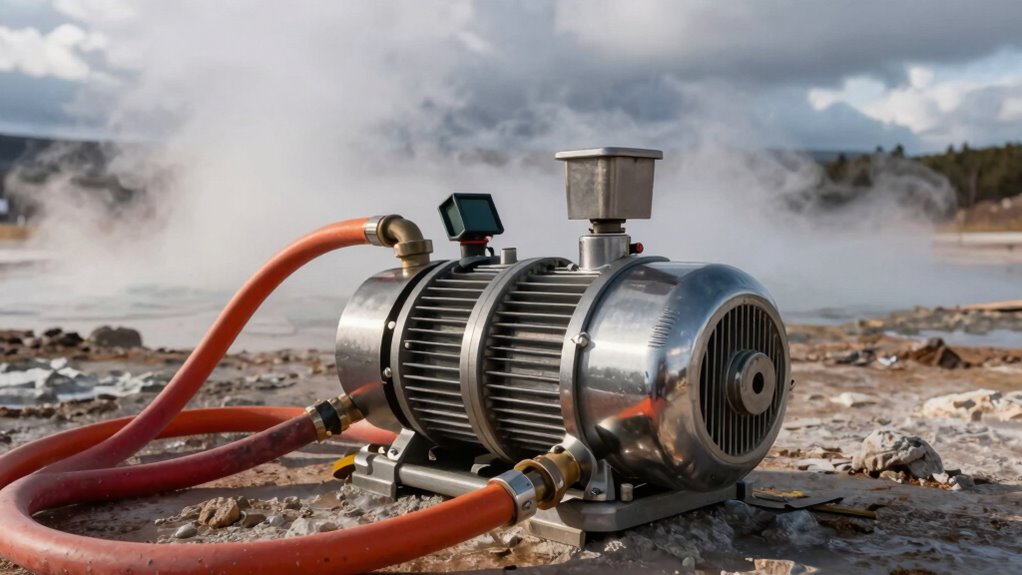
Have you ever wondered how energy-intensive pumping processes impact geothermal systems? When you consider geothermal energy as a sustainable and renewable resource, the efficiency of your system becomes a key factor. Pumping energy, which is necessary to circulate fluids through underground reservoirs, can considerably influence the overall renewable efficiency of your geothermal setup. If your pumps consume excessive power, it diminishes the net energy gains you can achieve, making the system less effective and potentially less sustainable in the long run. This is because every kilowatt used to move fluids is a kilowatt that isn’t contributing directly to energy production, reducing the system’s efficiency and its contribution to energy sustainability.
High energy consumption by pumps directly affects the balance between energy input and output in geothermal systems. When you use more energy than necessary for pumping, you undermine the very benefit of relying on a renewable source. The goal is to maximize energy efficiency, meaning you want the least amount of energy input to achieve maximum geothermal output. If your pumps are inefficient or overpowered, they drain your system of its potential to generate clean, sustainable power. This inefficiency can lead to higher operational costs and a reduced return on investment, which may discourage future expansion or adoption of geothermal solutions. Additionally, selecting the right pump technology can significantly impact overall performance and sustainability.
Efficient pumps maximize geothermal output and reduce costs, boosting sustainability and system performance.
Moreover, the energy used by pumps contributes to the overall carbon footprint of your geothermal system. While geothermal energy is considered environmentally friendly, the energy used in pumping can offset some of these benefits if it’s derived from non-renewable sources or if the pumps are particularly inefficient. To enhance energy sustainability, you should focus on selecting high-efficiency pumps, optimizing flow rates, and maintaining equipment to prevent energy waste. These steps help ensure that your geothermal system remains a truly renewable and sustainable energy source, minimizing its environmental impact. Improving pumping efficiency is essential for reducing unnecessary energy use and maximizing system sustainability.
In addition, understanding the role of pumping energy in geothermal systems can help you better optimize the entire setup for maximum efficiency. Improving pump selection and operational practices can significantly boost the sustainability of your geothermal energy system. In essence, pumping energy plays a pivotal role in determining how effectively your geothermal system delivers clean power. The less energy you need for pumping, the higher your renewable efficiency, and the more sustainable your energy production becomes. By investing in efficient pumping technologies and managing operational parameters carefully, you ensure that your geothermal system remains a reliable, renewable resource. Cutting down on unnecessary energy consumption not only improves system performance but also aligns with broader goals of energy sustainability, ensuring you get maximum gains while minimizing environmental impact.
As an affiliate, we earn on qualifying purchases.
Frequently Asked Questions
How Does Pumping Energy Impact Overall Geothermal System Efficiency?
Pumping energy impacts overall geothermal system efficiency by reducing net energy gains. When you don’t optimize pumping, excess energy is used to move fluids, leading to lower energy recovery. By focusing on pump efficiency and implementing pumping optimization strategies, you can minimize energy consumption. This guarantees more of the geothermal energy is retained for useful purposes, enhancing the system’s overall performance and making your geothermal project more sustainable and cost-effective.
What Are the Long-Term Effects of Increased Pumping Energy?
Imagine your geothermal system as a well-tended garden. Over time, increased pumping energy is like watering the garden more frequently, which can exhaust resources and hinder growth. Long-term, this may reduce efficiency, making renewable integration less effective and increasing environmental impact due to higher energy demands. You might notice higher operational costs and a greater strain on local resources, ultimately diminishing the sustainability and eco-friendliness of your geothermal setup.
Can Pumping Energy Requirements Vary With Different Geothermal Site Types?
Yes, pumping energy requirements can vary with different geothermal site types. In reservoir depletion scenarios, you’ll find higher energy needs as pressure drops, which complicates maintenance and reduces efficiency. Certain sites may demand more energy during initial development or for reinjection, impacting long-term sustainability. Understanding these variations helps you plan for maintenance challenges and optimize energy use, ensuring your geothermal system remains productive over time.
How Do Advancements in Pump Technology Reduce Energy Consumption?
Advancements in pump technology reduce energy consumption by optimizing fluid dynamics and improving pump design. These innovations allow you to achieve higher efficiency, lowering the power needed to circulate fluids in geothermal systems. Modern pumps feature better impeller designs, reduced friction, and smarter controls, making your system more energy-efficient. As a result, you minimize energy costs, enhance overall geothermal performance, and maximize renewable energy gains.
What Economic Factors Influence Pumping Energy Costs in Geothermal Projects?
You’ll find that economic factors like cost fluctuation greatly impact pumping energy costs in geothermal projects. When energy prices rise, operating costs increase, reducing overall profitability. Policy incentives, such as tax credits or subsidies, can offset these costs and make pumping more affordable. Staying aware of market trends and government programs helps you manage expenses effectively, ensuring your geothermal project remains economically viable despite changing energy prices.
energy-efficient circulation pump for geothermal system
As an affiliate, we earn on qualifying purchases.
As an affiliate, we earn on qualifying purchases.
Conclusion
Just like a well-tuned engine, your geothermal system works best when all parts are balanced. When pumping energy consumes too much, it’s like pouring fuel into a car only to find it sputters—your gains diminish. To maximize efficiency, keep an eye on your energy input versus output. Otherwise, you risk undermining the very benefits geothermal energy promises, leaving you with a system that’s as effective as a leaky faucet—annoying and wasteful.
As an affiliate, we earn on qualifying purchases.
geothermal pump flow rate controller
As an affiliate, we earn on qualifying purchases.
As an affiliate, we earn on qualifying purchases.
Halloween Picks
halloween
As an affiliate, we earn on qualifying purchases.