
Choosing between gas or electric tankless water heaters mainly depends on your home’s setup, water needs, and energy costs. If you have a larger household or already have gas lines, a gas unit might meet your demand better. But if your electric system can handle it, electric models are more efficient and easier to install. To make the best choice, consider your home’s infrastructure and energy prices—more helpful tips are just ahead.
Key Takeaways
- Household size and hot water demand determine whether a gas or electric tankless heater is more suitable.
- Existing infrastructure and electrical capacity influence installation complexity and potential upgrade costs.
- Gas units offer higher flow rates, ideal for large households with simultaneous hot water needs.
- Electric models are more energy-efficient and easier to install in homes with limited infrastructure.
- Local energy prices and long-term operational costs should guide the optimal heater choice.

Choosing between a gas or electric tankless water heater isn’t just about the units themselves; it’s about how your house’s infrastructure and energy needs align with each option. When you’re making this decision, one of the first things to look into is energy efficiency. Gas units tend to have a higher energy output, which can be beneficial if your household uses a lot of hot water simultaneously. However, electric models often operate more efficiently on a smaller scale, converting nearly all their energy directly into heat with minimal losses. If your priority is reducing energy waste, an electric tankless heater might be a better fit, especially if you’re mindful of utility costs and environmental impact. But keep in mind, energy efficiency isn’t the only factor; your home’s existing setup also influences which heater makes the most sense. Additionally, understanding energy efficiency can help you make more informed choices aligned with your household’s needs. Installation costs are another key aspect. Gas water heaters typically require more extensive installation because they need proper ventilation, gas lines, and sometimes additional upgrades to your existing infrastructure. That means higher upfront costs and more complex setup, which could extend the time and expense involved. Electric tankless heaters generally have lower installation costs because they don’t need ventilation or gas connections. They’re often easier to install, especially if you already have sufficient electrical capacity, making them a more budget-friendly option initially. Still, it’s essential to evaluate whether your electrical system can handle the power demand of an electric tankless heater—sometimes, upgrading your electrical panel could add to the overall costs. Your house’s size and hot water demand also matter. Larger households with multiple bathrooms or high water usage may benefit from a gas unit’s higher flow rate capacity, ensuring consistent hot water supply without delays. Smaller households or those with lower hot water demands might find an electric model perfectly sufficient and more cost-effective to operate. Additionally, local energy prices can influence your choice—if electricity is more affordable than gas in your area, an electric heater might save you money in the long run, despite higher initial installation costs. Moreover, considering the infrastructure compatibility of your home can prevent future complications and additional expenses. Ultimately, your decision should take into account your home’s existing infrastructure, your hot water needs, and your budget for both installation and ongoing energy costs. It’s not just about picking the most popular or cheapest heater but about choosing the one that aligns with your household’s unique energy profile and infrastructure. This tailored approach ensures you make a smart, efficient investment that keeps your hot water flowing reliably.

Tankless Water Heater, Novieex On Demand Water Heater Natural Gas, Up to 4.3 GPM, 100,000 BTU Instant Hot Water Heater with LED Display, Indoor Installation, 2-4 Point Use for Family Bathroom Kitchen
【Reliable Hot Water on Demand】 With 100,000 BTU power, this on demand water heater delivers up to 4.3…
As an affiliate, we earn on qualifying purchases.
As an affiliate, we earn on qualifying purchases.
Frequently Asked Questions
How Much Space Do Tankless Water Heaters Require for Installation?
Tankless water heaters require minimal space, making them ideal for small areas. Typically, you’ll need about 4 to 9 square feet for installation, depending on the model and your home’s space considerations. You should also consider installation requirements like proper ventilation for gas units or electrical access for electric models. Ensuring these factors are met will help you smoothly install your tankless heater without sacrificing valuable space.
What Are the Typical Lifespan Differences Between Gas and Electric Models?
Gas tankless water heaters typically last 20-25 years, while electric models usually last around 20 years. Your choice of fuel type influences lifespan, with gas units sometimes experiencing more wear due to higher emission levels and combustion processes. Electric heaters tend to have fewer moving parts, leading to potentially longer durability. Ultimately, your house’s infrastructure and maintenance practices also play key roles in how long each model will serve you.
Are There Specific Building Codes for Installing Tankless Heaters in Homes?
Yes, there are specific building codes and safety regulations you need to follow when installing tankless heaters. You must check local codes for venting, clearance, and electrical or gas connections. These regulations ensure safe installation and operation, preventing hazards like leaks or fires. It is crucial to contact local authorities or a licensed professional to ensure your installation complies with all building codes and safety standards.
How Does Energy Efficiency Vary Between Gas and Electric Tankless Systems?
You’ll find that electric tankless systems often have higher energy efficiency due to near-zero standby losses, making them more environmentally friendly. Gas units tend to have a lower initial cost but can be less efficient overall, especially with fluctuating energy prices. When comparing costs and environmental impact, electric models usually save you more money in the long run and reduce your carbon footprint, making them a smart choice for eco-conscious homeowners.
What Maintenance Is Needed to Keep Tankless Heaters Functioning Properly?
Maintaining your tankless heater is like tending a delicate garden—you need regular care. Follow maintenance schedules for flushing the system, cleaning filters, and inspecting for leaks. To prevent corrosion, flush the unit annually and check anode rods or sacrificial anodes. These steps guarantee your heater runs efficiently, lasts longer, and keeps your home comfortable. Consistent upkeep is key to avoiding costly repairs and maximizing your system’s performance.
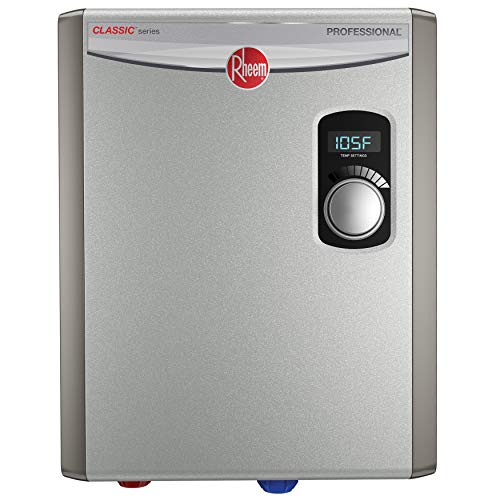
Rheem 18kW 240V Tankless Electric Water Heater, Gray
External digital thermostatic control with LED display (+/1 degree accuracy)
As an affiliate, we earn on qualifying purchases.
As an affiliate, we earn on qualifying purchases.
Conclusion
Ultimately, choosing between gas and electric tankless heaters is like selecting a path through a forest—one is paved and straightforward, while the other winds through the trees, demanding different tools and terrain. It’s about your house’s unique landscape—its energy setup, space, and needs—more than the heater itself. So, picture your home as the canvas, and let its features guide your decision, turning a simple choice into a seamless fit for your everyday comfort.

FOGATTI Natural Gas Tankless Water Heater Indoor – Max 7.5 GPM 170,000 BTU, CSA Certified Compact Design On Demand Instant Hot Water Heater – Instagas Comfort 170S Series
Powerhouse Performance: The FOGATTI tankless water heater takes up a third of the space of traditional tank heaters…
As an affiliate, we earn on qualifying purchases.
As an affiliate, we earn on qualifying purchases.

EcoSmart ECO 11 Electric Tankless Water Heater, 13KW at 240 Volts with Patented Self Modulating Technology
Endless On-Demand Hot Water; Consistent hot water when you need it that never runs out; Continuously monitored water…
As an affiliate, we earn on qualifying purchases.
As an affiliate, we earn on qualifying purchases.