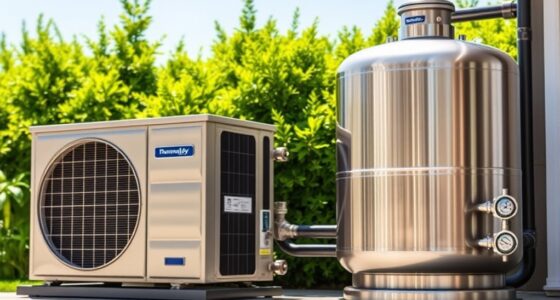

Heat pump thermostats serve as the control center for managing your home’s heating and cooling efficiently. They use advanced control strategies like programmable settings, zoning, and smart learning algorithms to optimize comfort and reduce energy waste. Modern models feature user-friendly interfaces, mobile apps, and alerts for maintenance. By understanding how these controls work, you can enhance your system’s performance and save money—exploring these features further will help you maximize your home’s efficiency and comfort.
Key Takeaways
- Heat pump thermostats regulate indoor temperature efficiently, acting as the central control for heating and cooling systems.
- Modern thermostats feature digital displays, touchscreen interfaces, and smartphone apps for easy system monitoring and adjustments.
- Advanced control strategies include programming, zoning, and smart learning algorithms to optimize comfort and energy savings.
- These thermostats help reduce energy waste by avoiding unnecessary system cycles and adjusting to occupancy patterns.
- Implementing modern control features enhances energy efficiency, lowers utility bills, and contributes to environmental sustainability.
Heat pump thermostats play a essential role in maintaining your home’s comfort by regulating temperature efficiently. They act as the brain of your heating and cooling system, ensuring your home stays at the desired temperature without wasting energy. A key aspect of these thermostats is their impact on energy efficiency. Modern heat pump thermostats are designed to enhance your system’s performance, reducing energy consumption and lowering utility bills. They achieve this by precisely controlling when and how your heat pump operates, avoiding unnecessary cycles that can waste power. This efficiency not only saves you money but also benefits the environment by reducing your carbon footprint.
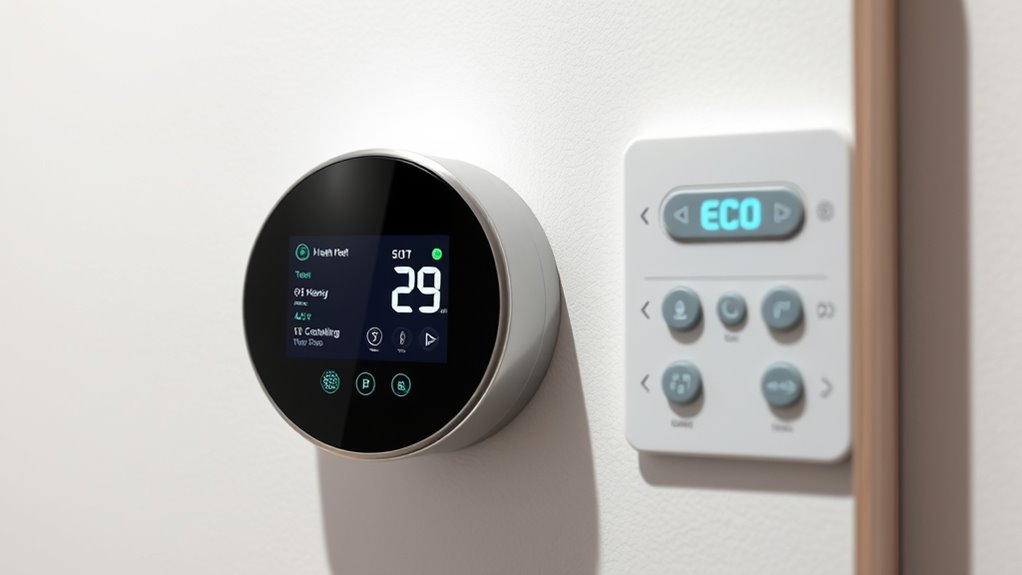
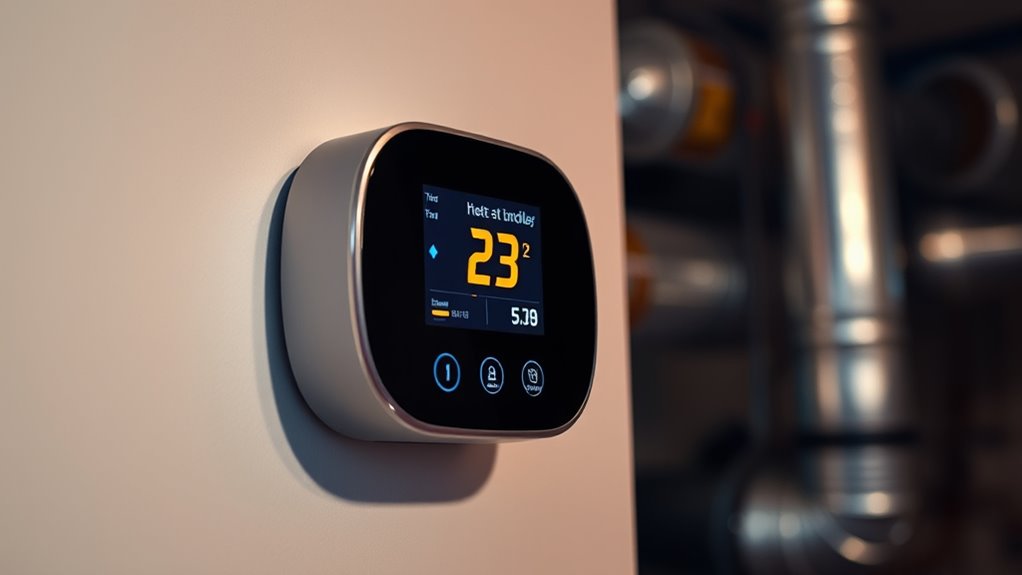
Another critical feature of heat pump thermostats is their user interface. A well-designed interface makes it simple for you to set your preferences and monitor your system’s operation. Many models now come with digital displays, touchscreens, or even smartphone apps, giving you quick access to temperature adjustments, scheduling, and system diagnostics. An intuitive user interface ensures you can easily customize your comfort settings without needing technical expertise. This ease of use encourages consistent adjustments, which can lead to better energy management over time. Additionally, some thermostats provide visual cues or alerts about system issues, helping you catch problems early and maintain peak performance. Furthermore, advancements in headphone connectivity have influenced the development of more user-friendly interfaces, making device control more intuitive and accessible.
Understanding how these control strategies work can further enhance your comfort and efficiency. Many thermostats incorporate programmable features, allowing you to set different temperatures for various times of the day or days of the week. This means your home can be warm when you wake up or return from work, and cooler when you’re away, saving energy during unoccupied periods. Some advanced thermostats use smart learning algorithms, adapting to your routines and automatically adjusting settings for maximum efficiency and comfort. Others feature zoning capabilities, enabling you to control different areas of your home independently, which minimizes energy waste by only conditioning spaces that are in use.
Frequently Asked Questions
How Do Heat Pump Thermostats Differ From Traditional HVAC Thermostats?
Heat pump thermostats differ from traditional HVAC thermostats by offering advanced features like zoning capabilities and Wi-Fi connectivity. You can control different zones independently, saving energy and increasing comfort. Wi-Fi allows you to manage your heat pump remotely through a smartphone app, giving you convenience and flexibility. These smart thermostats also learn your preferences over time, optimizing heating and cooling efficiently, unlike standard thermostats that only turn systems on or off.
Can I Upgrade My Existing Thermostat to a Smart Heat Pump Thermostat?
Yes, you can upgrade your existing thermostat to a smart heat pump thermostat. Many models offer smart features like Wi-Fi connectivity, remote control, and learning capabilities. Just check for compatibility upgrades—ensure your current system supports the new thermostat’s communication protocols. Installing one can improve energy efficiency and convenience, giving you better control over your heat pump’s operation and helping you save on utility bills.
What Are the Signs That My Heat Pump Thermostat Needs Recalibration?
Imagine your thermostat is feeling a bit like a rotary phone—outdated and less reliable. When your heat pump thermostat shows signs like inconsistent temperature readings, frequent cycling, or your home feels too hot or cold, it’s time for recalibration. Check calibration indicators such as temperature discrepancies or difficulty maintaining setpoints. If these issues persist, recalibrating guarantees thermostat accuracy, helping your system run efficiently and keeping your comfort on point.
How Does Outdoor Temperature Affect Heat Pump Thermostat Settings?
Outdoor temperature substantially impacts your heat pump thermostat settings. When it drops, your thermostat may need recalibration to guarantee accurate readings and ideal performance. Cold weather can cause it to misjudge indoor temperatures, leading to inefficient heating or cooling. You should check and adjust your thermostat calibration regularly, especially during extreme outdoor temperatures, to maintain comfort and energy efficiency. Proper calibration helps your heat pump respond correctly to outdoor temperature changes.
Are There Specific Control Strategies for Energy Savings in Extreme Climates?
Ever wondered how to save energy in extreme climates? You should implement climate-specific controls and seasonal adjustment strategies to optimize your heat pump’s performance. In very cold or hot weather, setting your thermostat to slightly higher or lower temperatures can reduce energy consumption without sacrificing comfort. These tailored control strategies help your system adapt efficiently, ensuring you stay comfortable while minimizing energy waste during harsh weather conditions.
Conclusion
Now that you understand how heat pump thermostats and control strategies work, you can optimize your system like a skilled conductor guiding an orchestra. Just as a masterful conductor brings harmony, proper control guarantees comfort and efficiency in your home. With this knowledge, you can make smarter choices and save energy, feeling confident that your heat pump operates smoothly—like a gentle breeze on a warm day, it’s there when you need it most.