When comparing heat pumps and wood-burning stoves for comfort and efficiency, consider that heat pumps provide consistent, automatic heating and can cool your home in summer, offering modern convenience. Wood stoves create cozy ambiance but require manual work and regular maintenance. Heat pumps typically use less energy over time, making them more efficient long-term, while wood stoves might be more budget-friendly upfront. To discover which option suits your lifestyle best, explore the details further.
Key Takeaways
- Heat pumps provide consistent, automatic heating and cooling, enhancing overall comfort compared to manual wood stove management.
- Wood stoves create a cozy ambiance but require manual fueling and maintenance, impacting convenience.
- Heat pumps are highly energy-efficient, leading to lower operating costs and stable indoor temperatures.
- Wood stoves may produce uneven heat distribution and require regular attention, affecting sustained comfort.
- Overall, heat pumps offer modern, low-maintenance comfort with higher efficiency, while wood stoves deliver traditional charm with manual effort.
When choosing a heating system, you might wonder whether a heat pump or a wood-burning stove is the better option. Both can keep your home warm, but they come with different advantages and challenges. A key factor to weigh is cost savings. Heat pumps typically cost more upfront but can save you money over time through lower energy bills, especially in moderate climates. They operate efficiently by transferring heat from the outside air or ground, which requires less energy than traditional heating methods. Wood stoves, on the other hand, usually have a lower initial purchase price and installation costs, making them appealing if you’re looking for a budget-friendly option upfront. However, the ongoing costs of buying firewood can add up, and efficiency varies depending on the stove’s quality and how well it’s maintained.
Heat pumps cost more initially but save money over time with lower energy bills; wood stoves are cheaper upfront but may have higher ongoing costs.
Installation complexity is another important consideration. Installing a heat pump can be more involved because it requires proper placement, electrical wiring, and sometimes additional modifications to your home’s ductwork or insulation. Professional installation is usually necessary to ensure the system runs safely and efficiently, which can increase initial expenses. With a wood stove, installation tends to be simpler, often involving setting up a chimney or flue for venting smoke. Still, proper safety measures are essential to prevent fire hazards or carbon monoxide leaks. If your home doesn’t already have a suitable chimney, installing one adds to the complexity and cost, but overall, the process is generally less complicated than setting up a heat pump system.
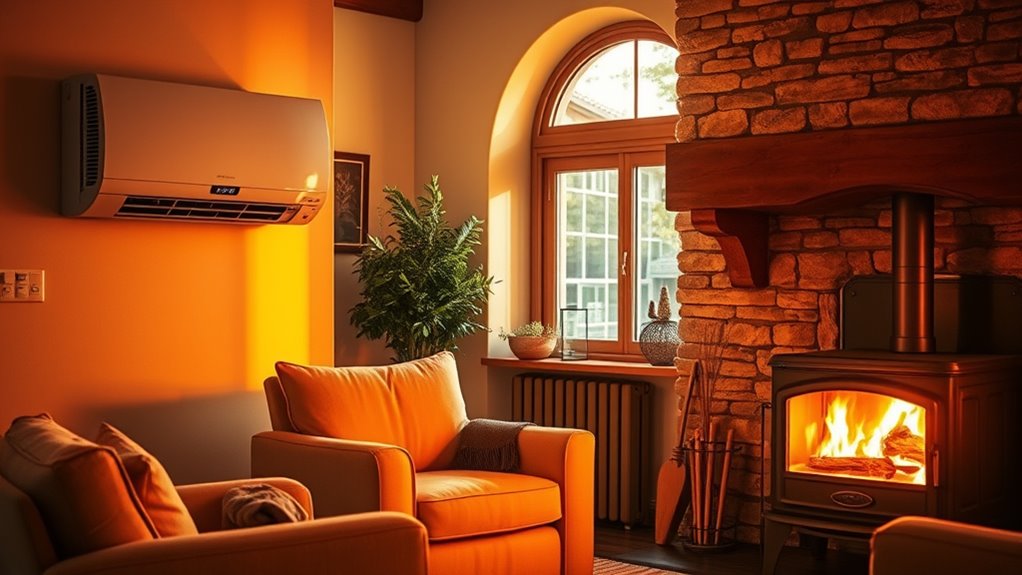
Beyond costs and installation, think about your lifestyle and preferences. Heat pumps offer the convenience of automatic temperature control, consistent heat, and minimal manual effort. They’re quiet, clean, and can also provide cooling during warmer months, adding versatility. Wood stoves require more hands-on management, like chopping, storing, and regularly refueling the fire. They produce a cozy ambiance but also generate ash and smoke, which means more maintenance and ventilation considerations. If you enjoy the rustic charm and don’t mind the effort, a wood stove might suit you. For those seeking ease and efficiency, a heat pump offers a modern, low-maintenance solution. Additionally, considering home energy efficiency**** can help determine which system aligns best with your overall home performance goals.
Ultimately, your choice depends on your budget, home setup, and personal preferences. If upfront costs and installation simplicity matter most, a wood stove could be the better fit. But if long-term savings, convenience, and energy efficiency are priorities, investing in a heat pump might be the smarter decision.
Frequently Asked Questions
What Are the Long-Term Maintenance Costs for Heat Pumps Versus Wood Stoves?
Your maintenance costs for heat pumps are generally lower over the long term, thanks to fewer moving parts and easier upkeep. Wood stoves, however, often require more frequent cleaning, chimney inspections, and part replacements, which can add up. When considering longevity, heat pumps tend to last longer with proper maintenance, while wood stoves may need more repairs over time. Overall, heat pumps usually offer more predictable and lower maintenance costs.
How Do Installation Requirements Differ Between Heat Pumps and Wood Stoves?
You’ll find that heat pumps require minimal space and straightforward installation, often needing proper ventilation for outdoor units and access to electrical sources. In contrast, wood stoves demand more space, proper clearance, and dedicated ventilation to vent smoke outside safely. You’ll also need enough room for fuel storage and clearance from combustible materials. Overall, heat pumps have simpler installation requirements, while wood stoves need careful planning around space and ventilation needs.
Can Heat Pumps and Wood Stoves Be Used Together Effectively?
Sure, you can turn your home into a cozy paradox by using heat pumps and wood stoves together. Hybrid heating with zoning strategies permits you to maximize comfort and efficiency, switching between eco-friendly heat pumps and the charm of a crackling fire. This dynamic duo ensures warmth on demand, reduces energy costs, and keeps your home perfectly heated—because who says you can’t have the best of both worlds?
What Are the Environmental Impacts of Each Heating Option Over Time?
You’ll find that heat pumps promote renewable energy use, reducing your carbon footprint and aiding in emission reduction over time. They’re highly efficient and environmentally friendly. Wood-burning stoves, on the other hand, can emit more particulates and greenhouse gases unless sustainably sourced. Over time, heat pumps generally have a lower environmental impact, making them a better choice for eco-conscious homes focused on long-term sustainability and reducing emissions.
How Do Initial Purchase Prices Compare for Heat Pumps and Wood Stoves?
Your upfront costs for a heat pump are generally higher than for a wood stove, with purchase prices often ranging from $4,000 to $8,000 depending on size and features. Wood stoves tend to have a lower initial purchase price, usually between $1,500 and $3,500. While the initial investment in a heat pump is higher, it can offer greater efficiency and lower operating costs over time.
Conclusion
Choosing between a heat pump and a wood-burning stove is like picking between a gentle breeze and a roaring fire—both bring warmth, but in different ways. Think about your comfort, efficiency, and the environment. A heat pump offers a quiet, steady embrace, while a stove ignites cozy scenes and rustic charm. Whichever you choose, remember, it’s about creating a warm haven where your comfort blooms like a well-tended garden amidst the seasons.