
Hopper size matters more than fancy features because it directly influences your operational efficiency and safety. A larger hopper reduces the need for frequent refills, minimizes stoppages, and keeps productivity steady during busy harvest times. It also helps prevent grain spoilage and overflow risks. While high-tech features are attractive, they can’t compensate for a hopper that’s too small for your workload. Keep going to discover how proper sizing can make a real difference for your operation.

Get backup power and energy gear delivered free with Prime
- Fast, free delivery on millions of items
- Prime Video, Amazon Music and more included
- Member-only deals all year
Key Takeaways
- Adequate hopper size directly affects operational efficiency and reduces downtime during busy harvest or transfer periods.
- Larger hoppers accommodate more grain, decreasing the need for frequent refills and enhancing productivity.
- Proper sizing minimizes spill risks and storage issues, ensuring safety and grain quality.
- Size impacts workflow continuity more significantly than high-tech features that offer marginal benefits.
- Choosing the right capacity supports long-term operational growth and reduces operational delays.

When choosing a hopper for your equipment, size often outweighs the allure of fancy features. The primary reason is straightforward: your needs for grain storage will dictate the most important aspect of the hopper—its capacity. While sleek designs or high-tech add-ons might seem appealing, they can’t compensate for a hopper that’s too small to handle your workload. If you underestimate the size you need, you’ll face frequent refills, which slow down your operations and create unnecessary downtime. Conversely, selecting a hopper with a larger capacity than you currently require can give you room to grow, reducing the need for multiple fills and increasing efficiency.
Understanding capacity limitations is crucial because they directly impact your productivity. When a hopper is too small, you’re forced to stop operations more often, which hampers workflow and can lead to delays during busy harvest seasons or high-demand periods. A larger hopper minimizes these interruptions, allowing you to load and unload grain with fewer stops. It’s tempting to go for a smaller, more economical option, but in the long run, a hopper with an adequate capacity helps you avoid the hassle of constant refilling and the risk of overflowing or spillage due to limited space. Remember, the capacity you choose should align with your typical grain volume and future growth plans. Additionally, selecting the right grain storage capacity can help you better plan for seasonal fluctuations and market demands.
Choosing the right hopper size ensures smoother operations and prevents delays during busy harvest periods.
Size also plays a role in managing grain storage effectively. A bigger hopper not only increases capacity but also enhances your ability to store grain safely. It helps you keep your grain dry and protected from the elements, provided it’s well-maintained. Proper hopper maintenance is essential to ensure your storage remains effective and to prevent issues that could compromise grain quality. If your operation involves shipping or transferring large quantities of grain, a larger hopper ensures smoother handling without frequent stops and starts. Moreover, a larger hopper can reduce the risk of grain spoilage by allowing more efficient handling and storage. Choosing a hopper with appropriate size considerations can further improve your overall efficiency and safety.
grain hopper with large capacity
As an affiliate, we earn on qualifying purchases.
As an affiliate, we earn on qualifying purchases.
Frequently Asked Questions
How Do I Measure the Appropriate Hopper Size for My Needs?
To measure the right hopper size, first consider your typical usage volume and the hopper material you prefer, like plastic or metal. Think about how much coffee or product you usually need at once. Also, match the size to your aesthetic design, ensuring it complements your machine’s look. By evaluating these factors, you’ll choose a hopper size that fits your needs, avoiding frequent refills and enhancing efficiency.
Are Larger Hoppers More Difficult to Clean or Maintain?
Larger hoppers can be a bit more challenging to clean because of their increased hopper capacity, which means more material and residue to remove. You’ll need to spend extra time ensuring all corners are thoroughly cleaned to prevent clogging or contamination. However, with regular maintenance and proper tools, cleaning larger hoppers becomes manageable. Just be prepared for the slightly increased cleaning challenges that come with bigger hopper capacity.
Does Hopper Size Affect Grinding Speed?
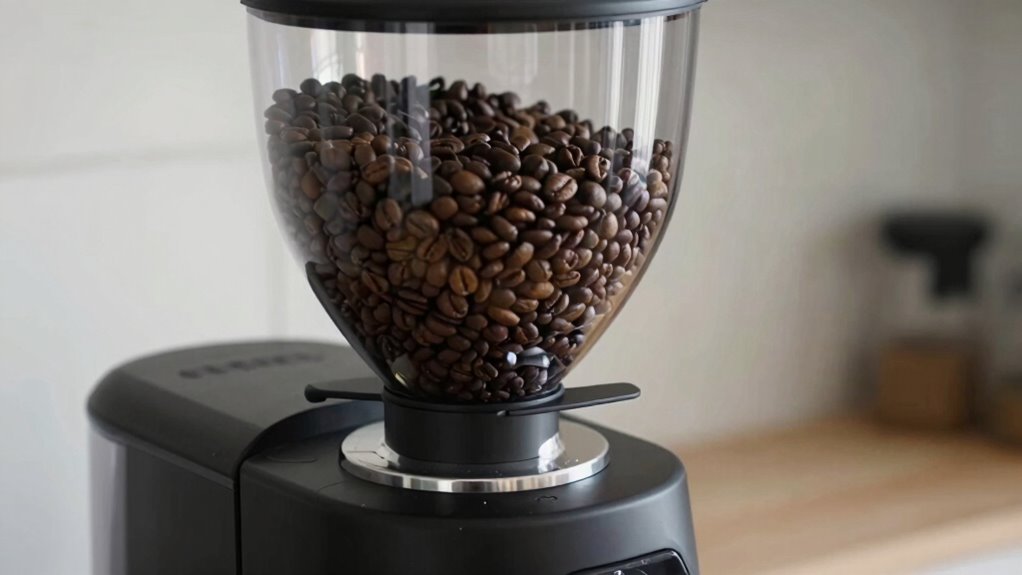
Yes, hopper size affects grinding speed because larger hoppers increase grinder capacity, allowing more beans to feed into the grinder at once. A bigger hopper can improve efficiency, especially during heavy use. The hopper material also plays a role; lightweight or smooth materials can facilitate quicker loading and less clogging. So, choosing a hopper with the right size and durable material helps you grind faster and more smoothly.
Can a Small Hopper Be Upgraded Later?
Think of your coffee setup as a garden; a small hopper is like a tiny flower pot. You can upgrade to a larger hopper later, but it’s not always straightforward—most machines have limited upgrade options. Check if your grinder supports hopper capacity upgrades; if it doesn’t, you might need a new machine. Planning ahead guarantees your coffee garden grows robustly without needing constant replants.
How Does Hopper Size Impact Overall Machine Durability?
A larger hopper generally enhances your machine’s durability because it distributes the load more evenly, reducing stress on the hopper material and shape. A sturdy hopper made from durable materials like stainless steel withstands frequent use, while the shape can influence how evenly material flows, preventing jams that cause wear. Bigger hoppers are less prone to damage from overfilling, making your machine last longer and perform more reliably.
As an affiliate, we earn on qualifying purchases.
Conclusion
So, when choosing a hopper, remember it’s like picking a sturdy bucket over a glittering vase—you want durability and capacity, not just shiny bells and whistles. A bigger hopper is your steady ship, ready to carry more load through rough seas, while fancy features are just the sparkles on the surface. Focus on size and strength, and your work will flow smoothly, like a well-oiled machine sailing confidently across calm waters.
As an affiliate, we earn on qualifying purchases.
As an affiliate, we earn on qualifying purchases.
Halloween Picks
halloween
As an affiliate, we earn on qualifying purchases.