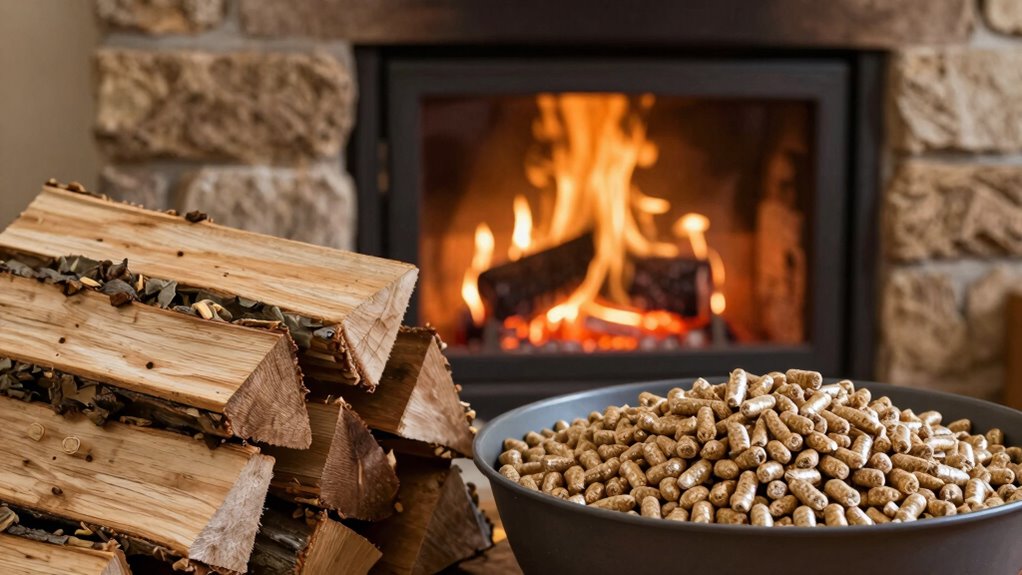

If you want a cost-effective, eco-friendly backup heat source, pellet stoves are a great choice because of their higher efficiency, cleaner emissions, and automatic features. Wood stoves offer a traditional look and reliable heat but require more effort for loading and cleaning. Your decision depends on whether you prefer easy operation and lower environmental impact or the classic charm and simplicity of wood. To discover which option best fits your needs, keep exploring the details.

Get backup power and energy gear delivered free with Prime
- Fast, free delivery on millions of items
- Prime Video, Amazon Music and more included
- Member-only deals all year
Key Takeaways
- Consider energy efficiency: pellet stoves burn fuel more completely, offering higher heat output with less fuel.
- Evaluate environmental impact: pellet stoves emit fewer pollutants and comply better with evolving emissions regulations.
- Assess ease of operation and maintenance: pellet stoves feature automated systems, while wood stoves require manual fueling and cleaning.
- Reflect on aesthetic and lifestyle preferences: traditional wood stoves provide a classic look; pellet stoves offer modern convenience.
- Account for future trends: regulations favor pellet stoves for cleaner emissions and long-term environmental benefits.
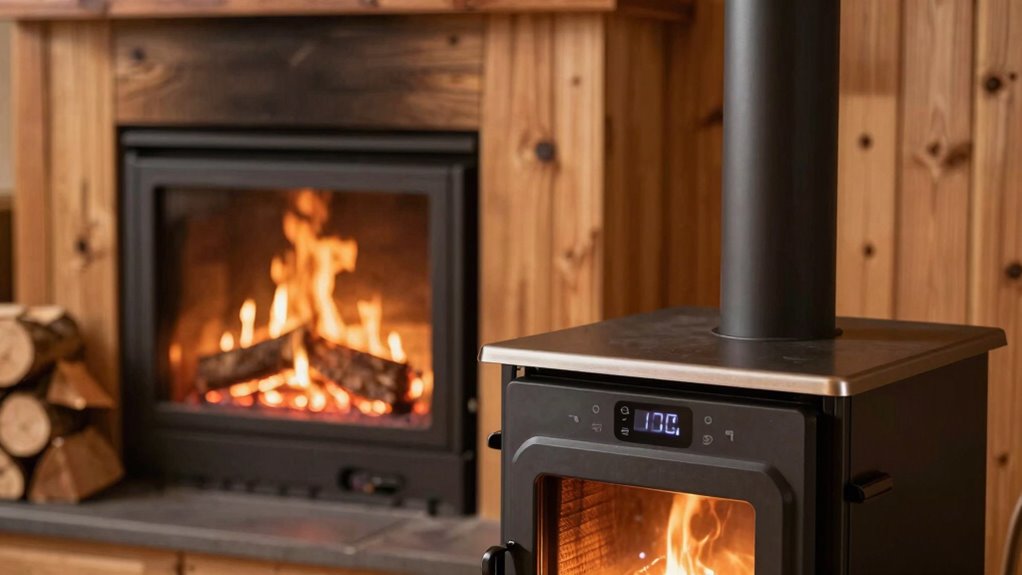
When choosing a backup heat source for your home, understanding the differences between pellet stoves and wood stoves can help you make an informed decision. Both options provide reliable warmth, but they vary significantly in terms of energy efficiency and environmental impact. Your choice depends on how you prioritize these factors, along with your lifestyle preferences and home setup.
Pellet stoves are known for their high energy efficiency. They utilize compressed wood pellets, which burn more completely and produce more heat with less fuel. This means you’ll get more warmth from less material, making pellet stoves a cost-effective and environmentally friendly option over time. The automated feeding system in most pellet stoves ensures consistent combustion, maximizing heat output and minimizing waste. Because they operate with precise control over airflow and fuel feed, pellet stoves tend to have lower emissions than traditional wood stoves, reducing their environmental footprint. If minimizing your carbon footprint and reducing fuel consumption matter to you, pellet stoves are a compelling choice.
Pellet stoves burn more efficiently, produce more heat with less fuel, and have lower emissions for a greener, cost-effective home heating option.
Wood stoves, on the other hand, have a long-standing reputation for providing robust heat and a classic aesthetic. They can be more straightforward to install and maintain, especially if you already have access to seasoned firewood. However, in terms of energy efficiency, traditional wood stoves usually burn less completely, leading to higher fuel consumption and potentially more ash and creosote buildup. This inefficiency translates into higher costs over time and a larger environmental impact, as more wood is needed to produce the same amount of heat. Additionally, wood stoves tend to emit more particulates and pollutants, which can negatively affect air quality and contribute to environmental issues, especially if not properly maintained. Recognizing that air quality is an important environmental concern, choosing the right type of stove can make a difference. Furthermore, advancements in combustion technology are helping traditional wood stoves become cleaner and more efficient, which is worth considering. Moreover, regulations surrounding emissions are increasingly favoring pellet stoves, making them a more future-proof choice.
Your decision should also consider convenience. Pellet stoves often feature electronic controls and automatic ignition, making them easier to operate, especially during power outages if equipped with a backup power source. Wood stoves, while simpler mechanically, require more manual effort to load, tend, and clean. If your priority is a low-maintenance, eco-conscious backup heat source, pellet stoves generally excel. But if you prefer a traditional look and don’t mind the upkeep, a wood stove might still be appealing.
Ultimately, your choice hinges on balancing energy efficiency, environmental impact, convenience, and personal preference. If reducing emissions and maximizing heat efficiency are top priorities, pellet stoves typically come out ahead. If you value simplicity and a nostalgic charm, a wood stove might suit you better.
pellet stove with automatic feed
As an affiliate, we earn on qualifying purchases.
As an affiliate, we earn on qualifying purchases.
Frequently Asked Questions
How Do Maintenance Costs Compare Between Pellet and Wood Backup Heaters?
Pellet heaters generally have higher maintenance costs than wood heaters because they require regular cleaning of the automated feed system and more frequent filter replacements. However, pellet heaters often offer better cost efficiency and user convenience, reducing overall effort. Wood heaters need less ongoing maintenance, making them cheaper to sustain long-term, but they may demand more manual labor. Your choice depends on balancing upfront costs with ongoing maintenance needs.
Which Option Offers Better Environmental Sustainability?
Pellet heaters generally offer better environmental sustainability because they use renewable resources more efficiently and produce fewer emissions. Pellet fuel is made from compressed sawdust and other waste, which helps reduce waste and promote emission reduction. Wood heaters, while renewable, often release more particulate matter and carbon monoxide. If sustainability is your priority, pellet options tend to be cleaner and more eco-friendly.
Are There Specific Safety Concerns With Pellet vs. Wood Backups?
Yes, there are safety concerns with both pellet and wood backups. Pellet stoves generally produce less smoke, which benefits air quality, but you must guarantee proper ventilation to prevent carbon monoxide buildup. Wood stoves produce more smoke and creosote, increasing fire risk and affecting air quality. Always follow manufacturer guidelines, guarantee proper combustion safety measures, and have regular inspections to keep your home safe and maintain good air quality.
How Does Fuel Storage Differ for Pellet and Wood Backup Systems?
You handle fuel differently for pellet and wood backup systems. Pellets require minimal storage space and are stored in sealed bins or bags, making fuel handling cleaner and more convenient. Wood, on the other hand, demands more storage room, often needing a dry, ventilated space to prevent moisture. Storage requirements for wood are bulkier and less tidy, while pellet storage is compact and easier to manage.
Which Backup Option Is More Suitable for Small Spaces?
For small spaces, pellet backup systems are more suitable because of their space efficiency and sleek design. They take up less room and often feature modern aesthetics that blend well with interior decor. Wood backups, on the other hand, require more storage and can be bulkier. If you prioritize saving space and maintaining visual appeal, a pellet backup offers a more practical and attractive solution for tight areas.
As an affiliate, we earn on qualifying purchases.
Conclusion
Choosing between pellet and wood is like selecting a trusty sidekick for winter’s adventure. Pellet stoves are the quick, efficient hero ready to jump into action, while wood stoves bring that rugged, timeless charm. Think of your home as a cozy fortress—you’ll want the best partner to keep it warm and safe. Whichever you pick, trust it to be your steadfast guardian through the cold, turning frosty nights into warm, comforting stories.
eco-friendly backup heating stove
As an affiliate, we earn on qualifying purchases.
As an affiliate, we earn on qualifying purchases.
As an affiliate, we earn on qualifying purchases.
Halloween Picks
halloween
As an affiliate, we earn on qualifying purchases.