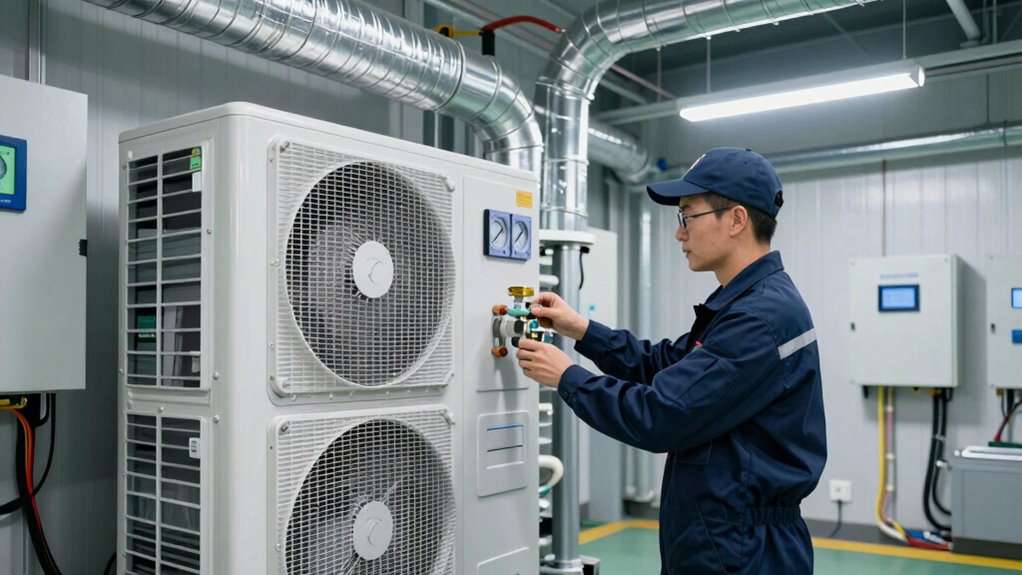
After installing your HVAC system, commissioning means testing and adjusting it to guarantee everything operates efficiently and meets the original design. It involves verifying the performance of components, calibrating controls, and fixing issues like airflow or sensor problems. This ongoing process improves comfort, reduces energy costs, and extends the system’s lifespan. If you want to understand how proper commissioning can save you money and keep your system reliable, there’s more to discover.
Key Takeaways
- Verifying and adjusting HVAC system components to ensure they operate as designed for peak efficiency.
- Testing controls, sensors, and automation to maintain accurate responses to environmental and occupancy changes.
- Monitoring system performance continuously to identify and resolve issues, ensuring long-term reliability.
- Fine-tuning airflow, temperature, and humidity levels for optimal indoor comfort and energy conservation.
- Maintaining ongoing calibration and maintenance to sustain system efficiency and extend equipment lifespan.
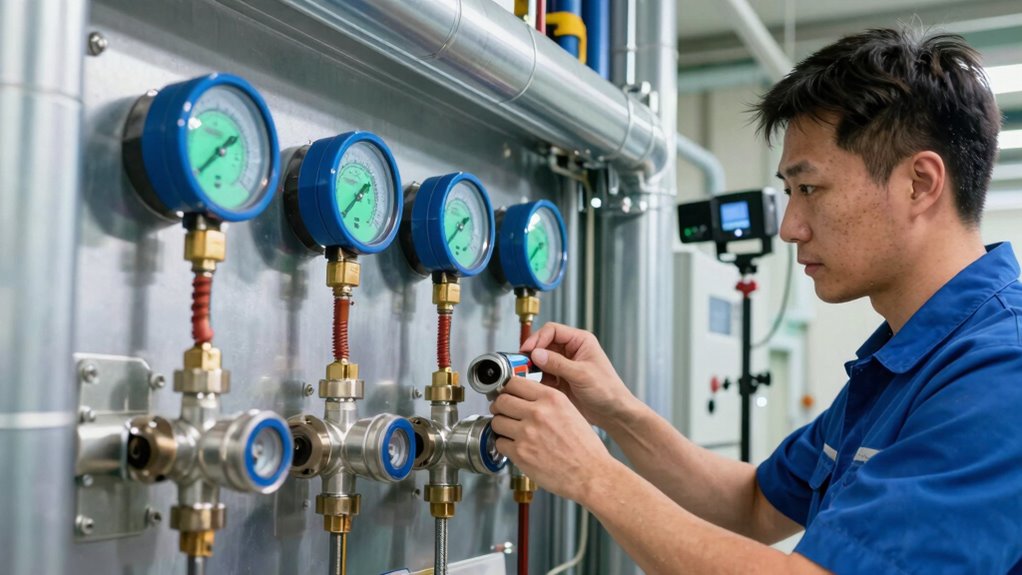
After the HVAC system is installed, commissioning guarantees it operates efficiently and meets design specifications. This process is essential because it ensures the system performs at its best, delivering comfort while conserving energy. When you focus on energy efficiency during commissioning, you’re not just reducing utility bills; you’re also contributing to environmental sustainability. Proper commissioning helps identify and rectify issues that could cause energy waste, such as improper airflow, incorrect thermostat settings, or system imbalances. By fine-tuning these elements, you maximize system efficiency and prevent unnecessary strain on components, which can extend the lifespan of your HVAC equipment. Additionally, system responsiveness can be improved through precise calibration, further enhancing overall performance.
Commissioning ensures HVAC efficiency, reduces energy waste, and extends equipment lifespan through precise system tuning.
System optimization is at the core of HVAC commissioning. It involves carefully testing and adjusting various parts of your system to guarantee everything works in harmony. You’ll verify that air handlers, chillers, boilers, and ventilation systems operate smoothly together, avoiding any bottlenecks or inefficiencies. During commissioning, you might find that certain zones aren’t receiving enough airflow or that temperature sensors need recalibration. Addressing these issues ensures your system responds accurately to your heating and cooling demands, maintaining comfort without wasting energy. This meticulous process ultimately results in a well-balanced system that adjusts dynamically, leading to lower operating costs and improved indoor air quality. Additionally, system documentation is prepared during commissioning to track all adjustments and ensure ongoing performance.
The commissioning process also includes verifying that control systems and automation are functioning correctly. You want your thermostat, sensors, and dampers to communicate seamlessly, making real-time adjustments based on occupancy and external weather conditions. When these controls are optimized, your HVAC system avoids unnecessary cycles, which can save significant energy over time. It also ensures comfort consistency, so you aren’t constantly adjusting settings or experiencing temperature swings. Additionally, proper control system setup plays a vital role in preventing system inefficiencies and ensuring energy savings. Regular monitoring and system calibration can further enhance performance by maintaining precise control over system operations. Implementing a comprehensive commissioning plan helps maintain these standards and supports continued energy efficiency. Consistent maintenance checks after commissioning help sustain these benefits over the long term.
You play a critical role in the commissioning process by providing feedback on comfort levels and reporting issues. This collaborative effort helps technicians fine-tune the system further. After commissioning, you’ll see the benefits clearly: energy savings, increased system longevity, and a comfortable indoor environment. Remember, commissioning isn’t a one-time event; it’s an ongoing process of monitoring and adjustments to keep your HVAC at peak performance. By prioritizing system optimization and energy efficiency, you safeguard your investment, deliver long-term value, reduce operational costs, and align with sustainability goals. Ultimately, effective commissioning guarantees your HVAC system functions as efficiently and reliably as possible, giving you peace of mind and a more comfortable space.
As an affiliate, we earn on qualifying purchases.
Frequently Asked Questions
How Often Should HVAC Commissioning Be Performed After Initial Installation?
You should perform HVAC commissioning periodically, typically every 1 to 3 years, depending on your system’s complexity and usage. During these checks, you’ll focus on system calibration to guarantee peak performance and energy efficiency. Incorporate maintenance scheduling into your routine to catch issues early, improve air quality, and extend equipment lifespan. Regular commissioning helps maintain comfort and prevents costly repairs, making it an essential part of your system’s ongoing care.
What Are Common Signs of Improper HVAC Commissioning?
You might notice uneven temperatures or high energy bills, which are common signs of improper HVAC commissioning. A poorly calibrated system can also result in inconsistent airflow, making your space uncomfortable. According to industry data, 30% of systems suffer from airflow issues due to improper commissioning. If your system isn’t properly calibrated or airflow isn’t optimized, it could be wasting energy and not performing efficiently.
Who Is Responsible for HVAC Commissioning During the Project?
During the project, you’re responsible for guaranteeing HVAC commissioning aligns with industry standards and contractor responsibilities. You need to coordinate with the contractor, who handles the technical testing and adjustments, verifying the system meets HVAC standards. Your role involves overseeing the process, reviewing documentation, and confirming that all commissioning tasks are completed properly. This ensures the HVAC system operates efficiently, reliably, and adheres to safety and performance requirements throughout the project.
Can HVAC Commissioning Improve Energy Efficiency Long-Term?
Hold onto your hat, because HVAC commissioning can definitely boost long-term energy efficiency. By fine-tuning your system for maximum performance, you’ll see better energy savings and improved comfort. Proper commissioning ensures your HVAC system operates at peak efficiency, preventing wasteful energy use. Regular checks and adjustments help sustain system optimization over time, making your investment worthwhile. It’s like having a trusty steed—keeps running smoothly for years to come.
What Is the Cost Range for Post-Installation HVAC Commissioning?
The cost for post-installation HVAC commissioning typically ranges from $0.50 to $1.50 per square foot, depending on your property’s size and service scope. You should perform a detailed cost analysis to understand the overall investment. The service scope includes system testing, balancing, and adjustments to optimize energy efficiency and performance. Investing in this process can save you money long-term by reducing energy consumption and ensuring your system runs smoothly.
As an affiliate, we earn on qualifying purchases.
Conclusion
After installation, HVAC commissioning guarantees your system operates at peak efficiency and comfort. By catching issues early, you can save up to 30% on energy costs annually. Think of commissioning as a final tune-up that ensures your HVAC works as intended, providing reliable temperature control and improved indoor air quality. Don’t skip this step—it’s the key to long-term savings and comfort. Stay proactive, and enjoy a more efficient, healthier indoor environment year-round.
As an affiliate, we earn on qualifying purchases.
As an affiliate, we earn on qualifying purchases.