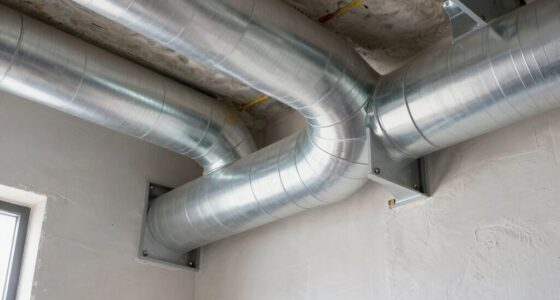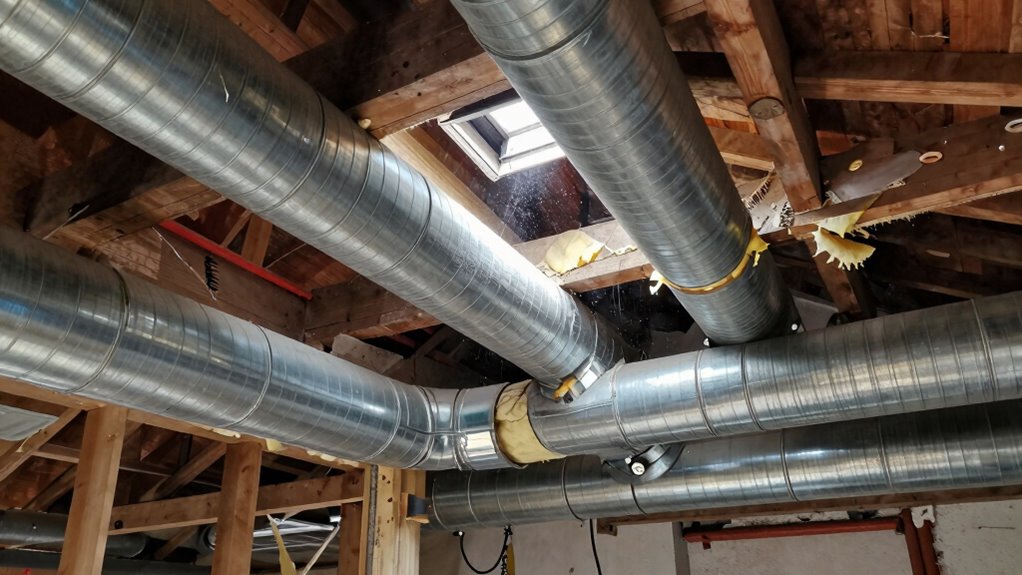

Duct retrofits in older homes often go wrong when you use outdated or poor-quality materials, which can lead to leaks, sagging, or even collapse. Hidden ducts behind walls or under floors make repairs more costly and complex. Lack of proper planning and inexperienced installation can cause improper sealing and inefficient airflow, raising energy bills. If you want to avoid these common pitfalls and get the best results, there’s more you should know.
Key Takeaways
- Using outdated or poor-quality materials can lead to leaks, sagging, or system failure.
- Hidden or damaged ducts often require extensive and costly demolition or replacement.
- Inadequate planning and improper installation cause leaks, reduced airflow, and increased energy costs.
- Failing to consider material compatibility can result in early duct system failure.
- Overlooking existing duct damage or space constraints can lead to costly, ineffective retrofits.
Are your home’s heating and cooling systems not performing as well as they used to? If so, you might be considering a duct retrofit to improve efficiency and comfort. But before you jump into the process, it’s important to understand how duct retrofits can sometimes go wrong, especially in older homes. Many homeowners overlook the complexities involved, particularly when it comes to the air duct materials used or the retrofit costs that can quickly add up. These overlooked details can turn what should be a simple upgrade into a costly headache.
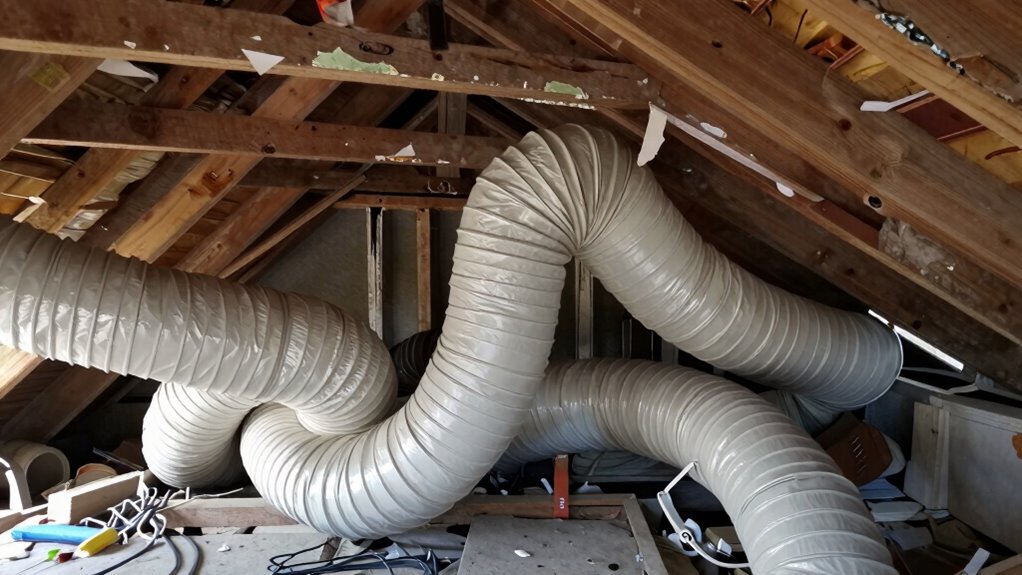
Older homes often have duct systems made from outdated or subpar materials, such as thin metal or poorly insulated ducts. When you attempt a retrofit, these materials may not hold up well under new demands or modern HVAC equipment. Using inappropriate air duct materials can lead to leaks, sagging, or even collapse, which compromises airflow and reduces system efficiency. Sometimes, the existing ducts are so damaged or poorly constructed that reusing them is not feasible at all, forcing you to replace large sections entirely. This can fundamentally increase retrofit costs, especially if the original ductwork is hidden behind walls or beneath floors, requiring extensive excavation or demolition. Without a clear plan, the costs can spiral beyond your expectations.
Outdated or damaged ducts often require costly replacement, especially when hidden behind walls or beneath floors.
Adding to the complexity, older homes often have irregular or cramped spaces where ducts are installed. When you upgrade, you might find that the new ductwork needs to be custom-fitted, which raises the retrofit costs even further. Poor planning or lack of experience can lead to improper sealing, resulting in leaks and inefficient airflow. These issues can cause uneven heating or cooling, making your system work harder and increasing energy bills. If you’re not careful, you might think a quick retrofit will fix everything, but in reality, it can expose underlying problems that need more extensive—and expensive—repairs. Being aware of the materials used in ductwork and their compatibility with modern HVAC systems is essential to avoid costly mistakes and ensure a successful retrofit. Additionally, understanding duct system lifespan and maintenance needs can help prevent future issues.
As an affiliate, we earn on qualifying purchases.
Frequently Asked Questions
How Long Does a Typical Duct Retrofit Take?
A typical duct retrofit takes about one to three days, depending on your home’s size and complexity. You’ll work with professionals who evaluate duct design and use insulation techniques to improve efficiency. During this process, they’ll carefully replace or upgrade existing ducts, sealing leaks and adding insulation to prevent energy loss. The timeline guarantees proper installation and testing, giving you a more comfortable, energy-efficient home in a short amount of time.
What Is the Cost Range for Retrofitting Ducts?
You might worry about costs, but duct retrofit expenses typically range from $1,500 to $4,500. Investing in duct insulation and sealing efficiency improves energy savings and comfort. The price varies based on home size, duct condition, and retrofit complexity. While it’s an upfront investment, a well-done retrofit boosts your home’s efficiency, reduces energy bills, and prevents costly repairs down the line. It’s a smart move for any older home.
Can Retrofits Improve Indoor Air Quality?
Yes, retrofits can improve indoor air quality by upgrading your ventilation systems and sealing leaks. When you install new filters or add fresh air intakes, you reduce pollutants and enhance airflow. Properly designed duct retrofits ensure better ventilation, which removes stale air and allergens. This way, you create a healthier indoor environment, making your home more comfortable and reducing potential respiratory issues caused by poor indoor air quality.
Are There Specific Signs Indicating Duct Retrofit Failure?
Think of your ducts as the veins of your home; if they’re failing, signs appear like damp air and uneven airflow. You’ll notice rooms that stay damp or humid, or vents that blow weak or inconsistent air. These are clear signs of duct retrofit failure. If you see these issues, it’s time to have a professional inspect your duct system to prevent further problems and improve your home’s comfort.
How Can I Find a Qualified Duct Retrofit Specialist?
To find a qualified duct retrofit specialist, start by searching for experienced HVAC contractors who focus on duct sealing and airflow optimization. Check their credentials, ask for references, and verify their insurance. Look for professionals with certifications like NATE or ACCA. You can also read reviews online. A skilled specialist will assess your system, guarantee proper sealing, and optimize airflow to improve efficiency and comfort in your older home.
As an affiliate, we earn on qualifying purchases.
Conclusion
If you’re considering a duct retrofit for your older home, remember it’s not always straightforward. Take, for example, a homeowner who upgraded their ducts but didn’t address existing insulation or sealing issues. As a result, they experienced increased energy bills and uneven heating. To avoid this, guarantee you consult professionals who can assess your home’s unique needs. Proper planning and expertise can make all the difference between a successful retrofit and costly setbacks.
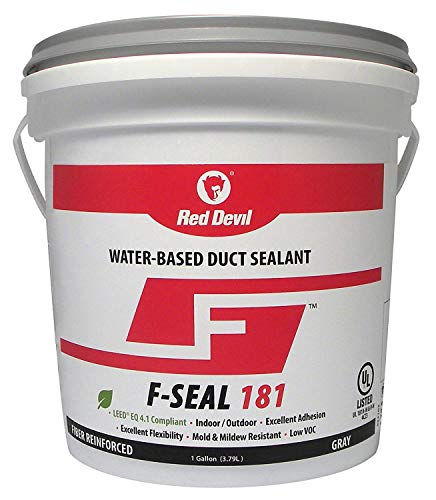
Red Devil 0841DX F-Seal 181 Duct Seal, Fiber Reinforced Water Based Duct Sealant, 1 Gallon, Gray, Made in USA
- Seals HVAC systems effectively: Fiber-reinforced, leak-proof formula
- Certified for all duct types: UL 181 A-M & B-M certified
- Indoor and outdoor use: Weather-resistant for versatile applications
As an affiliate, we earn on qualifying purchases.
As an affiliate, we earn on qualifying purchases.
As an affiliate, we earn on qualifying purchases.