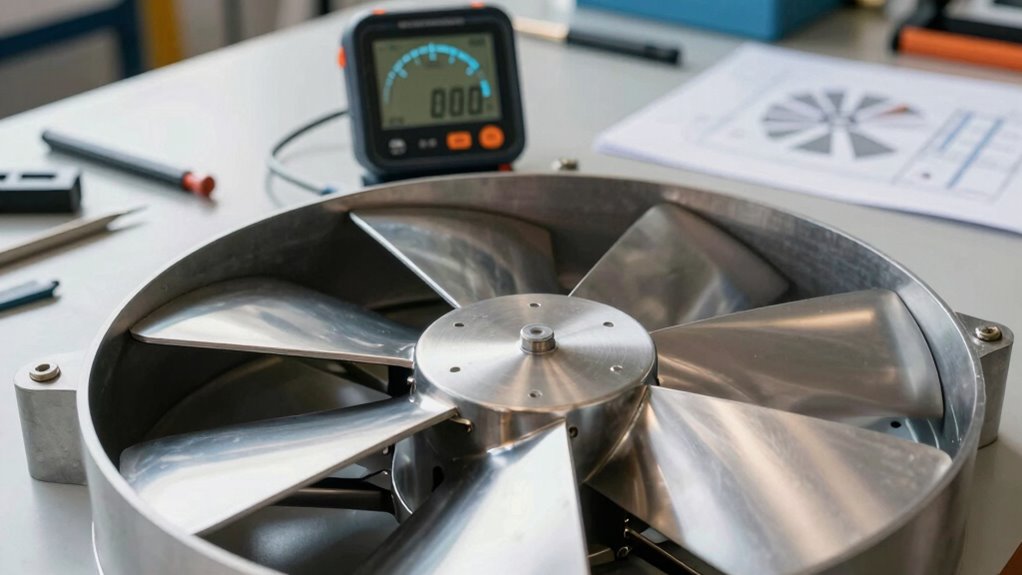

When choosing a fan, focusing only on its high CFM rating can be misleading. While a higher CFM means more airflow, it doesn’t guarantee efficiency, noise level, or proper installation. You should consider blade design, energy use, and how well the fan fits your space. A fan with a lower CFM but better design and installation can outperform a high-rated one. To make smarter choices, discover what else really affects performance and comfort.
Key Takeaways
- High CFM alone doesn’t ensure ventilation efficiency or airflow quality; design and installation matter more.
- Focusing solely on CFM can lead to overlooking noise levels and energy consumption.
- Proper blade design and installation techniques significantly impact actual airflow and fan performance.
- Balance between airflow, noise, and efficiency yields better comfort and effectiveness.
- Evaluating overall performance, not just CFM, is essential for choosing the best fan.

Have you ever wondered whether a high-CFM (cubic feet per minute) rating truly makes a fan better? It’s a common assumption that more airflow automatically means improved cooling or ventilation, but that’s not always the case. When you focus solely on CFM, you might overlook important factors like ventilation efficiency and noise levels. A high-CFM fan can move a lot of air, but if it’s not efficient, you could be wasting energy or creating unnecessary noise. Understanding what really matters helps you choose a fan that fits your space without causing more problems than it solves.
Ventilation efficiency is key. Just because a fan pushes a large volume of air doesn’t mean it’s doing so effectively. The design of the blades, the size of the fan, and how it’s installed all influence how well the airflow is directed and utilized. A fan with a high CFM rating that isn’t well-designed might circulate air poorly, leading to uneven ventilation or drafts in some areas while neglecting others. You want a fan that balances airflow with efficiency, ensuring it moves the right amount of air where it’s needed without wasting energy. Sometimes, a fan with a slightly lower CFM but better design can outperform a high-rated model in real-world conditions. Additionally, fan blade design plays a crucial role in optimizing both airflow and noise reduction, making it an important factor to consider during your selection process. Proper installation techniques can also significantly impact a fan’s efficiency, so paying attention to installation best practices can make a noticeable difference. Moreover, understanding the grading systems used to classify fans can help you select models with better performance and quality standards.
Effective ventilation depends on design, size, and installation—high CFM alone doesn’t guarantee optimal airflow or efficiency.
Noise levels are another crucial factor often ignored when chasing high CFM numbers. Fans that push more air tend to generate more noise, especially if they’re not engineered for quiet operation. High noise levels can be disruptive, especially if you’re using the fan in a bedroom, office, or any space where peace and quiet matter. It’s tempting to prioritize airflow, but if the fan sounds like a jet engine, it defeats the purpose of creating a comfortable environment. Look for fans that specify noise ratings or decibel levels. Often, manufacturers offer models that strike a good balance—delivering adequate ventilation without unbearable noise. Additionally, understanding the fan’s efficiency can help you choose models that optimize airflow while minimizing energy consumption and noise.
In the end, the most effective fan isn’t necessarily the one with the highest CFM rating. Instead, you should evaluate how well it manages ventilation efficiency and how quietly it operates. When you understand these factors, you can pick a fan that truly improves your space without causing unnecessary disruptions or wasting energy. So, next time you’re shopping, remember that bigger isn’t always better. Focus on quality and design, and you’ll find a fan that meets your needs without the extra noise or inefficiency.

ZMISHIBO 52 Inch Ceiling Fans with Lights, Remote&App Control, Flush Mount
- Ideal Room Size: Suitable for large living spaces
- Bright LED Light: 20W, 2000 lumens illumination
- Remote & App Control: Adjust settings easily via remote or app
As an affiliate, we earn on qualifying purchases.
As an affiliate, we earn on qualifying purchases.
Frequently Asked Questions
How Does Room Size Affect the Ideal CFM for a Fan?
You need a higher CFM fan for larger rooms to guarantee proper air circulation, which keeps the space comfortable and fresh. Using a fan with too low CFM can cause inadequate airflow, leading to stuffiness and increased fan noise as it struggles to circulate air effectively. For smaller rooms, a lower CFM fan works quietly, providing sufficient air movement without excessive noise, while larger rooms demand more powerful fans for ideal air circulation.
What Is the Impact of Fan Placement on Airflow Efficiency?
Imagine your fan as a swift river, its flow disrupted by obstacles. Proper placement minimizes airflow disruption, ensuring efficient circulation. Positioning it too close to obstructions or in corners causes obstruction effects, reducing airflow efficiency. For ideal performance, place the fan where it can freely circulate air without interference. This strategic placement maximizes airflow, keeps your space comfortable, and prevents energy waste caused by airflow disruption.
Do High-Cfm Fans Consume More Energy?
Yes, high-CFM fans tend to consume more energy because they move more air, which requires more power. However, their energy efficiency depends on the design; some models are optimized to deliver high airflow with less energy use. Keep in mind, higher CFM fans can generate increased noise levels, so balancing airflow needs with noise and energy efficiency is essential for choosing the right fan for your space.
How Often Should I Clean or Replace My Fan?
You should clean your fan every few months to keep it running smoothly and reduce fan noise. If you notice dust buildup or wobbling, replace or clean the blades sooner. Regular maintenance also preserves the aesthetic design and prevents vibrations that can cause noise. Even if your fan looks sleek, neglecting cleaning can decrease efficiency, so stay proactive. Consistent care guarantees quiet operation and extends your fan’s lifespan.
Are There Safety Concerns With High-Cfm Fans?
High-CFM fans can pose safety concerns if noise levels become excessive or if installation challenges aren’t properly addressed. You might notice louder operation, which can be disturbing or indicate a problem. Poor installation could lead to mechanical issues or electrical hazards. To stay safe, make certain professional installation, verify noise levels are acceptable, and regularly maintain the fan. Always follow manufacturer instructions to prevent safety risks associated with high-CFM fans.
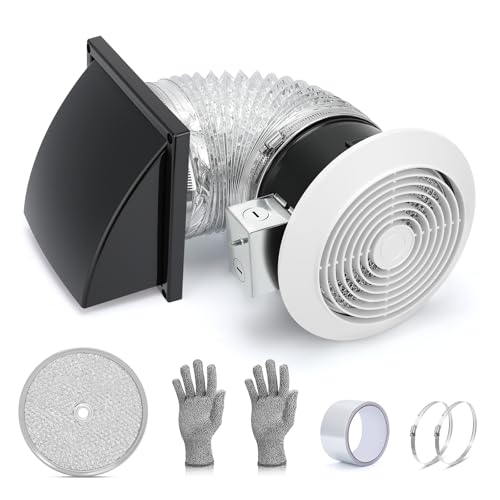
XABJU 512M 6 Inch Through Wall Exhaust Fan with Aluminum Grease Filter
- Easy Wall Mount Installation: Check fitment and wall thickness
- Adjustable Aluminum Duct: Extends from 2 to 15 inches
- Compatible with 6-20 Inch Walls: Flexible installation options
As an affiliate, we earn on qualifying purchases.
As an affiliate, we earn on qualifying purchases.
Conclusion
Now that you understand the importance of CFM, remember that a high-CFM fan can move up to 10,000 cubic feet of air per minute. That’s enough to cool a large room quickly and keep you comfortable. Don’t overlook this vital detail when choosing a fan—your comfort depends on it. When you make an informed decision, you’re not just buying a fan; you’re investing in a cooler, more comfortable environment for yourself and your loved ones.

VEVOR 24" Industrial Drum Fan, 8700 CFM High Velocity Floor Fan with 3-Speed Control, 360° Tilt & 0-2h Timer for Warehouse, Workshop, Factory, Basement
- Powerful Airflow: 8700 CFM high-velocity airflow
- Low Noise Operation: Minimized vibration and noise
- Three Speed Settings: Adjustable for different needs
As an affiliate, we earn on qualifying purchases.
As an affiliate, we earn on qualifying purchases.

MIDCVFRUN 4 inch Radon Fan Installation Kit – 2 Speed Radon Mitigation Fan 260/188CFM Inline Centrifugal Fan with Rubber Couplers (4 inch x 3 inch) and Air Pressure Indicator
- Complete Radon Mitigation Kit: Includes fan, couplers, and pressure indicator
- Dual Speed Operation: High speed 260 CFM, low speed 188 CFM
- Quiet Performance: 45dB at high speed, 32dB at low speed
As an affiliate, we earn on qualifying purchases.
As an affiliate, we earn on qualifying purchases.