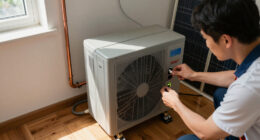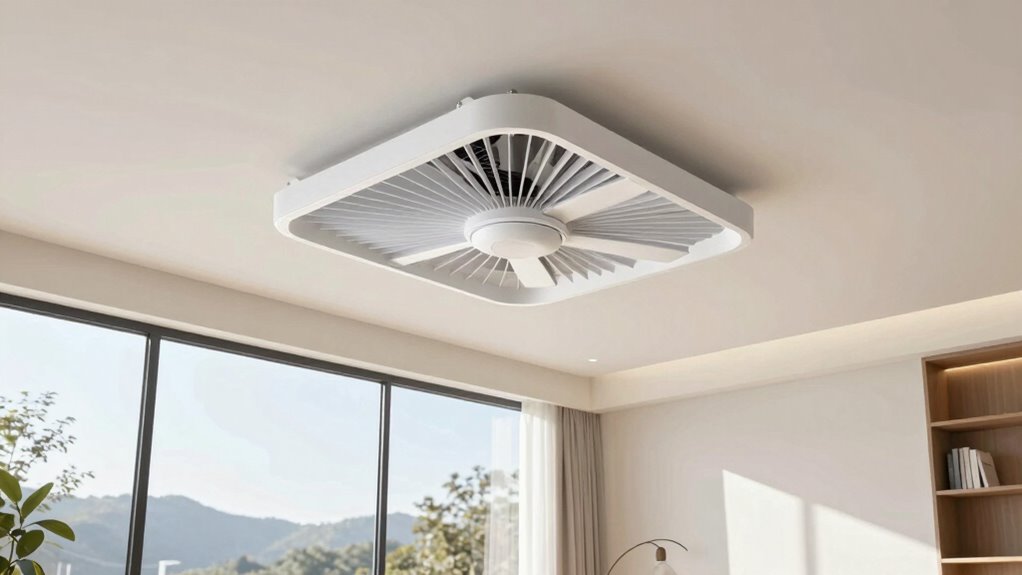

To see if a whole-house fan will work in your layout, check if your home has good airflow potential with open window placement and cross-ventilation on opposite sides. Confirm your attic has enough space and proper access for installation. Your home’s design, including ceiling height and openness, affects how well the fan circulates air. If the climate is right and vents are properly set, the fan can be very effective—keep exploring to find out more.

Get backup power and energy gear delivered free with Prime
- Fast, free delivery on millions of items
- Prime Video, Amazon Music and more included
- Member-only deals all year
Key Takeaways
- Assess if your home’s layout supports cross-ventilation with windows on opposite sides.
- Check ceiling heights and attic space for proper fan installation and airflow efficiency.
- Ensure windows are strategically placed to facilitate natural airflow when the fan is operating.
- Evaluate if your climate has cooler evenings or mornings to maximize fan effectiveness.
- Confirm that your home’s insulation and sealing won’t obstruct airflow or reduce ventilation benefits.

Deciding if a whole-house fan will work in your layout starts with understanding your home’s design and airflow patterns. These fans are known for their energy efficiency because they use noticeably less power than air conditioning units, but their effectiveness depends on how well your home allows for proper airflow. Before making a decision, you need to evaluate whether your house’s layout supports the natural ventilation process that a whole-house fan relies on. Open floor plans, good window placement, and ceiling height all influence how well the fan can circulate air. If your home is tightly sealed or has many small, obstructed windows, the fan might not deliver the desired cooling or ventilation benefits.
Assess your home’s design and airflow to determine if a whole-house fan can effectively cool your space.
You should also evaluate the installation requirements. Whole-house fans are usually installed in the attic, requiring enough space and proper access. Not all homes have the necessary attic clearance or structural support for this type of installation. If your attic is cramped or has insulation that would interfere with the fan’s operation, it might mean additional modifications or that a different cooling solution is better suited. Proper installation is essential for maximizing energy efficiency and ensuring the fan functions safely and effectively. This involves sealing duct connections, installing appropriate vents, and wiring the unit correctly, which often calls for professional help.
Next, think about your home’s typical temperature and humidity levels during the seasons when you’d use the fan. Whole-house fans work best when they can quickly exchange indoor air with cooler outdoor air, usually during the evenings and early mornings in warmer months. If your climate has high humidity levels or if outdoor air isn’t considerably cooler than inside, the fan might not achieve the cooling effect you want. In such cases, you could end up wasting energy without much relief. Climate conditions play a crucial role in the fan’s efficiency, making it important to assess your local weather patterns. Additionally, understanding your home’s ventilation capacity can help determine if the existing airflow can support the fan’s operation effectively. Properly assessing your air exchange rate can help you decide if the fan will provide sufficient ventilation for your home.
It’s also important to consider your home’s window placement, as this directly impacts the effectiveness of cross-ventilation and overall airflow. For a whole-house fan to perform best, you need to have cross-ventilation—windows open on opposite sides of your home to facilitate airflow. Without this setup, the fan might just circulate stale air or fail to bring in cooler outdoor air effectively. If your home has a lot of interior rooms without windows that open, the fan’s ability to ventilate the entire house diminishes. Additionally, understanding color accuracy can help you assess how well your home’s lighting and window placement will influence the visibility and effectiveness of the fan’s operation.
Ultimately, determining if a whole-house fan will work in your layout requires a thorough assessment of your home’s design, airflow potential, installation requirements, and climate conditions. When these elements align, you’ll find that a whole-house fan offers a cost-effective, energy-efficient way to keep your home cool naturally.
As an affiliate, we earn on qualifying purchases.
Frequently Asked Questions
Can a Whole-House Fan Be Used With Central Air Conditioning?
Yes, you can use a whole-house fan with central air conditioning. It enhances ventilation efficiency by naturally cooling your home during milder evenings, reducing reliance on the AC. However, consider noise levels, as some fans can be loud, potentially disrupting your comfort. When combined properly, this setup can improve airflow and energy savings, but make certain your home’s layout allows effective operation without compromising noise comfort or ventilation.
What Is the Ideal Ceiling Height for Installing a Whole-House Fan?
The ideal ceiling height for installing a whole-house fan is typically between 8 to 10 feet. This range guarantees proper fan placement, allowing for effective airflow and ventilation. If your ceiling is too high, the fan might struggle to move air efficiently; too low, and it could be obstructed. Measure your ceiling height carefully to determine the best fan placement and assure peak performance for your home.
How Loud Is a Typical Whole-House Fan During Operation?
A typical whole-house fan isn’t too loud, often producing noise levels comparable to a window air conditioner—around 50-60 decibels. You notice the hum, but it’s usually not disruptive, especially with good sound insulation in your home. The noise level varies depending on fan quality and installation, so investing in a quieter model can make operation more comfortable. Overall, it’s a manageable background sound during use.
Are There Specific Home Insulation Requirements for Installing a Fan?
You need to guarantee insulation compatibility and follow ventilation standards when installing a whole-house fan. Proper insulation prevents air leaks and maintains energy efficiency, so check that your insulation type and thickness are suitable. Additionally, adhere to local ventilation standards to ensure safe and effective airflow. If your insulation isn’t compatible or you overlook ventilation requirements, your fan might not perform at its best, leading to higher energy costs and potential safety issues.
How Much Energy Does a Whole-House Fan Typically Consume?
A whole-house fan typically consumes about 75 to 150 watts, making it energy-efficient compared to air conditioning. You’ll notice energy savings with lower operational costs since it uses less power. Operating the fan during cooler evenings can maximize these savings, helping you cut down on energy bills. Keep in mind, the exact energy use depends on the fan’s size and model, but overall, it’s a cost-effective way to ventilate your home.
As an affiliate, we earn on qualifying purchases.
Conclusion
Imagine your home as a breathing creature, its energy flowing smoothly with the help of a well-placed whole-house fan. When the layout aligns—open spaces, strategic vents—you’ll feel the cool rush of air like a gentle breeze through a window on a warm day. If your house’s design invites that flow, then a whole-house fan isn’t just a good idea—it’s the heartbeat of comfortable, efficient cooling. Trust your layout; it’s the key to success.
As an affiliate, we earn on qualifying purchases.
whole house fan installation kit
As an affiliate, we earn on qualifying purchases.
As an affiliate, we earn on qualifying purchases.
Columbus Day / Indigenous Peoples' Day Picks
long weekend sales
As an affiliate, we earn on qualifying purchases.