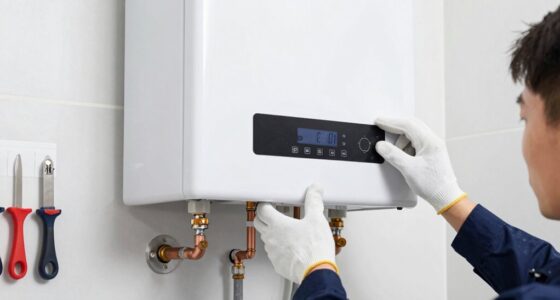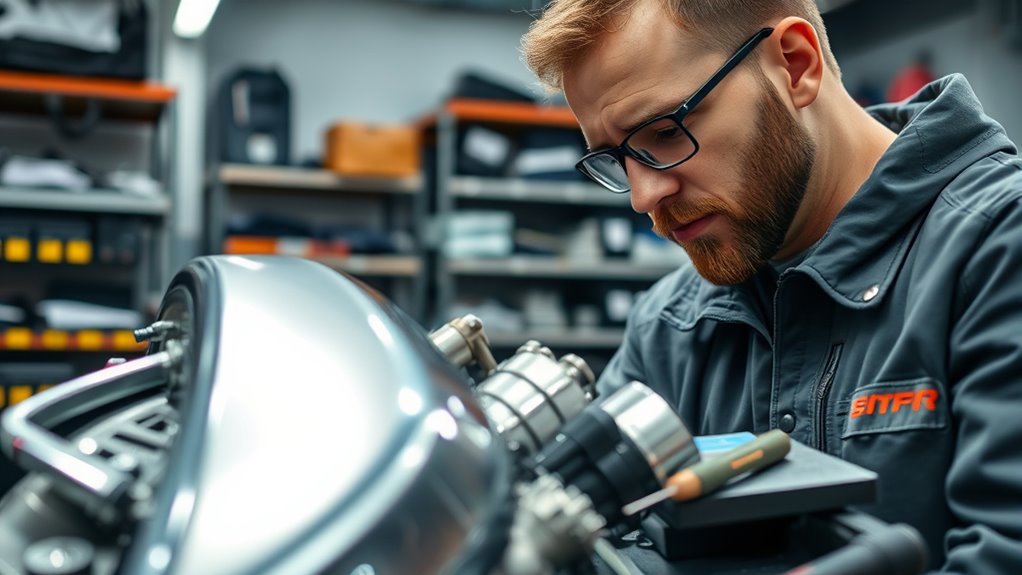

Regular annual inspections and tuning help you catch issues early, prevent costly breakdowns, and keep your equipment running at peak performance. By checking fluid levels, belts, brakes, and electrical systems, you make sure everything operates safely and efficiently. Tuning adjustments like ignition timing and sensor calibration can boost power and fuel economy. Maintaining a consistent schedule not only extends equipment lifespan but also saves you money long-term. Keep going to discover more about optimizing your equipment’s performance.
Key Takeaways
- Conduct thorough inspections to identify and address potential issues before they cause major problems or breakdowns.
- Review and maintain fluid levels, filters, belts, brakes, and electrical systems to ensure safety and reliability.
- Monitor performance metrics like fuel efficiency and engine temperature to detect deviations indicating maintenance needs.
- Perform tuning adjustments such as ignition timing and sensor calibration to optimize engine performance and efficiency.
- Schedule regular inspections and tuning to reduce downtime, extend equipment lifespan, and support data-driven maintenance decisions.

Have you ever wondered why your vehicle or machine performs better after a thorough inspection? It’s because regular evaluations help identify issues before they become major problems, guaranteeing everything runs smoothly. When you undertake an annual inspection, it’s essential to follow a detailed maintenance checklist. This checklist acts as your guide, covering critical components such as fluid levels, belts, filters, brakes, and electrical systems. By systematically reviewing each item, you prevent unexpected breakdowns and extend the lifespan of your equipment. This proactive approach also allows you to track performance metrics over time, providing measurable data on how well your machine is functioning. Monitoring these metrics, like fuel efficiency, engine temperature, or vibration levels, gives you concrete indicators of performance and helps you decide when adjustments are needed.
Performing a thorough inspection isn’t just about catching visible issues; it’s about understanding how each part contributes to the overall performance. When you check the condition of filters and fluids, for example, you guarantee ideal flow and prevent overheating or wear. This attention to detail keeps your machine operating at peak efficiency, saving you money on repairs and fuel costs. By regularly comparing performance metrics before and after maintenance, you can see tangible improvements, reinforcing the value of your efforts. This data-driven approach also helps you establish a baseline for future inspections, making it easier to spot deviations that might indicate trouble brewing.
In addition to the checklist, tuning plays a crucial role in maintaining ideal performance. Adjustments to ignition timing, fuel mixture, or sensor calibrations can greatly enhance efficiency and power output. When you perform these tune-ups during your annual inspection, you fine-tune your machine to work as it was intended, maximizing performance and longevity. It’s important to remember that a well-maintained vehicle or machine isn’t just about avoiding breakdowns; it’s about achieving consistent, reliable operation. Regular inspections, guided by a thorough checklist and supported by monitoring performance metrics, keep your equipment performing at its best year-round. Incorporating Gold IRA options into your long-term financial strategy can also provide a stable foundation for your future investments.
Ultimately, staying diligent with annual inspections and tuning isn’t just routine; it’s an investment in your machine’s health. With each check, you gain insight into its condition, ensuring it operates efficiently and safely. By tracking performance metrics and following a detailed maintenance checklist, you can catch issues early and implement corrective measures promptly. This proactive care keeps your vehicle or machine running smoothly, reduces downtime, and saves you money in the long run. Consistency in maintenance is the key to sustained performance, so make annual inspections a priority—you’ll notice the difference every time you hit the road or start your equipment.

Transmission Fluid Tester Kit Gasoline & Diesel Gearbox Oil Diagnostic Tool High-Precision Diagnostic Analysis Tool with 31.5in Probe Transmittance/Temperature Testing, 2.8in Display (4 Batteries)
【WHY NEED IT】Our transmission fluid tester features an advanced optical probe that measures light transmittance within the transmission…
As an affiliate, we earn on qualifying purchases.
As an affiliate, we earn on qualifying purchases.
Frequently Asked Questions
How Often Should My Vehicle Be Inspected Annually?
You should get your vehicle inspected annually to guarantee it stays in top shape. Follow your maintenance schedule and use an inspection checklist to catch issues early. Regular inspections help prevent breakdowns, improve safety, and increase efficiency. Consider scheduling your checkup before long trips or if you notice any unusual noises or performance changes. Staying proactive with these inspections keeps your vehicle reliable and can save you money in the long run.
What Are Signs My Equipment Needs Retuning?
You’ll know your equipment needs retuning if it’s running rough, experiencing decreased fuel efficiency, or failing emission testing. Watch for sensor calibration issues, like inaccurate readings or warning lights, which can affect performance. If your system isn’t responding as it should or if emissions are higher than normal, it’s time to schedule a retune. Regular checks ensure your equipment stays efficient and compliant with emission standards.
Can Tuning Improve Fuel Efficiency Significantly?
Think of your engine as a finely tuned orchestra; when perfectly synchronized, it performs beautifully. Tuning can considerably boost your fuel economy by optimizing engine performance, reducing waste, and improving efficiency. Proper engine optimization ensures each component works harmoniously, using less fuel for the same power. So, yes, tuning can make a noticeable difference, saving you money and helping the environment by lowering emissions.
What Are Common Issues Found During Inspections?
During inspections, you often find issues like worn brake pads, low fluid levels, and cracked belts. Routine maintenance helps catch these problems early, preventing breakdowns. Safety checks also reveal faulty lights, worn tires, or leaks that could compromise your safety. Addressing these common issues promptly ensures your vehicle runs smoothly, extends its lifespan, and keeps you safe on the road. Regular inspections are essential for peak performance and peace of mind.
Is DIY Tuning Advisable or Should Professionals Handle It?
You should opt for professional expertise over DIY safety when it comes to tuning your equipment. DIY tuning can be risky if you’re unfamiliar with the machinery, potentially causing damage or injury. Professionals have the right tools and experience to tune your equipment correctly, ensuring peak performance and safety. Trusting experts not only saves you time but also prevents costly mistakes, giving you peace of mind and better results.

AHL Car Auto Oil Filter Removal Tool Strap Wrench 60mm To 120mm Diameter Adjustable Compatible with Car, Truck, Honda Yamaha Suzuki
Product: Car Auto Oil Filter Removal Tool Strap Wrench ; 100% brand new material
As an affiliate, we earn on qualifying purchases.
As an affiliate, we earn on qualifying purchases.
Conclusion
Just like a car needs regular check-ups to run smoothly, your equipment benefits from annual inspections and tuning. I once ignored my bike’s squeal, only to find a loose chain that caused a breakdown on a vital ride. Regular maintenance prevents surprises and keeps everything running at peak performance. Think of it as tending a garden—you nurture it, and it rewards you with healthy blooms. Stay proactive, and your equipment will serve you reliably for years to come.

MOTO4U Motorcycles TDC Dial Indicator Timing Gage Kit for Ignition Adjusting Test Dial Indicator Tool
Function: Precision gauge for locating the piston TDC for precise ignition timing
As an affiliate, we earn on qualifying purchases.
As an affiliate, we earn on qualifying purchases.

ANGSO-AUTO ADAS Calibration Professional Tool Kit with Radar Aiming Corner Reflector Target Include Stand Marked with 0-30cm Scale- Compatible with Honda, Toyota, Mazda, Kia, Ford, GM and Hyundai
【Includes Radar Aiming Corner Reflector Target with Stand 】 Features a 0-30cm scale for easy height adjustment, ensuring…
As an affiliate, we earn on qualifying purchases.
As an affiliate, we earn on qualifying purchases.