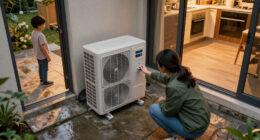
To make your backyard systems easier to live with, focus on strategic placement of outdoor equipment away from seating areas and windows, using sound barriers like fences, shrubs, or acoustic panels. Position loud devices on vibration-dampening pads to prevent vibrations from spreading. Incorporate natural landscaping such as trees and bushes to absorb and diffuse sound. By understanding how sound reflects and moves, you can design a quieter outdoor space—keep exploring to discover more effective noise control tips.

Get backup power and energy gear delivered free with Prime
- Fast, free delivery on millions of items
- Prime Video, Amazon Music and more included
- Member-only deals all year
Key Takeaways
- Place loud equipment away from seating areas and windows to minimize noise disturbance.
- Use sound barriers like fences, shrubs, or acoustic panels to block and absorb noise.
- Mount equipment on vibration-dampening pads to reduce vibration transmission and noise.
- Incorporate soft landscaping to naturally absorb and diffuse sound.
- Strategically position features considering sound reflection and propagation for quieter outdoor spaces.

Understanding the Noise and Placement Rule is essential for enhancing sound environments, whether you’re designing a workspace, a classroom, or a public space. When it comes to backyard systems, this rule becomes even more critical, as outdoor noise can easily disrupt your peace and quiet. By paying attention to proper placement and incorporating effective sound insulation and vibration management techniques, you can create a space that’s both functional and relaxing.
First, consider how sound travels in your yard. Sound waves tend to bounce off hard surfaces like concrete, brick, or metal, amplifying noise levels and making areas sound louder than they truly are. To combat this, you should strategically position loud equipment, like speakers or outdoor appliances, away from seating areas or windows. This placement minimizes direct sound transmission, reducing overall noise disturbance. Additionally, installing sound barriers such as fences, shrubs, or specialized acoustic panels can absorb or block sound waves, enhancing sound insulation. These barriers prevent noise from traveling beyond your backyard and keep external sounds from intruding on your outdoor space.
Strategically position loud equipment away from seating areas and use sound barriers to reduce noise and enhance outdoor tranquility.
Vibration management is equally important in controlling noise levels. Vibrations often carry sound through structures, so if your outdoor equipment is mounted on unstable or resonant surfaces, it can produce amplified noise. Placing equipment on vibration-dampening pads or isolators helps absorb these vibrations, preventing them from transmitting through the ground or structures nearby. This tactic reduces both the vibrational noise and the overall perception of loudness, making your backyard quieter and more comfortable. Recognizing how sound propagates and vibrations travel can help you better understand how to control noise.
Furthermore, thoughtful placement of elements within your yard can greatly influence acoustics. Position noisy devices away from common gathering spots, and consider placing soft landscaping—like trees, bushes, and lawns—around these objects. These natural elements serve as additional sound insulators by absorbing and diffusing sound waves, creating a buffer zone that minimizes noise impact. When designing your outdoor space, visualize how sound will move and reflect, adjusting the location of features accordingly for maximum noise reduction.
Finally, understanding how sound travels and how vibrations propagate can help inform better design choices, leading to a more peaceful outdoor environment. Ultimately, applying the Noise and Placement Rule involves understanding how sound travels, how vibrations propagate, and how strategic placement can mitigate noise pollution. By integrating sound insulation techniques and vibration management strategies, you make your backyard a more inviting and peaceful retreat. Whether it’s a barbecue spot, a play area, or a quiet corner for relaxation, thoughtful planning ensures your outdoor environment remains enjoyable without unwanted noise interruptions.
As an affiliate, we earn on qualifying purchases.
Frequently Asked Questions
How Do I Determine the Ideal Placement for My Backyard System?
To find the ideal placement for your backyard system, start by considering soundproof barriers like fences or shrubs to block noise. Use placement strategies that position the system away from your home and neighbors, reducing sound transfer. Keep it on level ground for stability, and avoid placing it near windows or outdoor living areas. This way, you minimize noise issues and maximize efficiency, making your backyard system more enjoyable and unobtrusive.
Are There Specific Noise Levels That Are Considered Acceptable?
You might be surprised to learn that acceptable noise levels typically stay below 55 decibels, similar to a normal conversation. Soundproofing techniques, like barriers or insulation, can assist in keeping noise within standards. Noise level standards vary by region, but generally, staying under these limits ensures your backyard system won’t disturb neighbors. Regularly monitoring sound levels and using noise meters can help you maintain a peaceful environment.
What Materials Help Reduce Noise Transmission Best?
You should choose soundproof barriers made from dense materials like mass-loaded vinyl or acoustic panels, as they effectively block noise transmission. Materials with high durability, such as concrete or treated wood, also help maintain long-term noise reduction. These options absorb and deflect sound, making your backyard more peaceful. Investing in durable, soundproof barriers guarantees your space stays quiet and private, even with ongoing noise sources nearby.
How Does Weather Affect Noise and Placement Considerations?
Weather impact can turn your backyard oasis into a noisy chaos or a peaceful retreat. Rain, wind, and snow can amplify noise transmission, making sound louder and more disruptive. To combat this, consider strategic noise mitigation by placing equipment in sheltered spots or adding barriers. You’ll want to adapt your placement to weather patterns, ensuring your outdoor space remains a tranquil haven despite the elements, and minimizing noise disturbance effectively.
Can These Rules Be Applied to Existing Backyard Systems?
Yes, you can apply these rules to existing backyard systems. Use landscaping barriers like shrubs or fences to block noise, and incorporate soundproofing techniques such as acoustic panels or soil mounds. These methods help improve sound insulation and privacy, making your outdoor space more comfortable. By strategically combining barriers with soundproofing, you can effectively reduce noise and enhance your backyard’s livability without extensive renovations.
vibration dampening pads for outdoor equipment
As an affiliate, we earn on qualifying purchases.
As an affiliate, we earn on qualifying purchases.
Conclusion
By following the Noise and Placement Rule, you set yourself up for a backyard that’s more peaceful and enjoyable. When you carefully consider where to place equipment and how to minimize noise, you’re tackling problems before they even start. Think of it as hitting two birds with one stone — creating a harmonious space and avoiding headaches down the line. Stick to these principles, and you’ll find your backyard becomes a true sanctuary, not a source of constant annoyance.
As an affiliate, we earn on qualifying purchases.
As an affiliate, we earn on qualifying purchases.
Halloween Picks
halloween
As an affiliate, we earn on qualifying purchases.