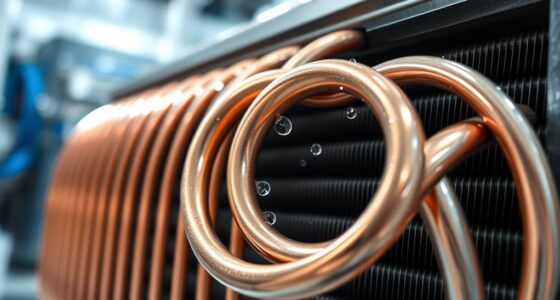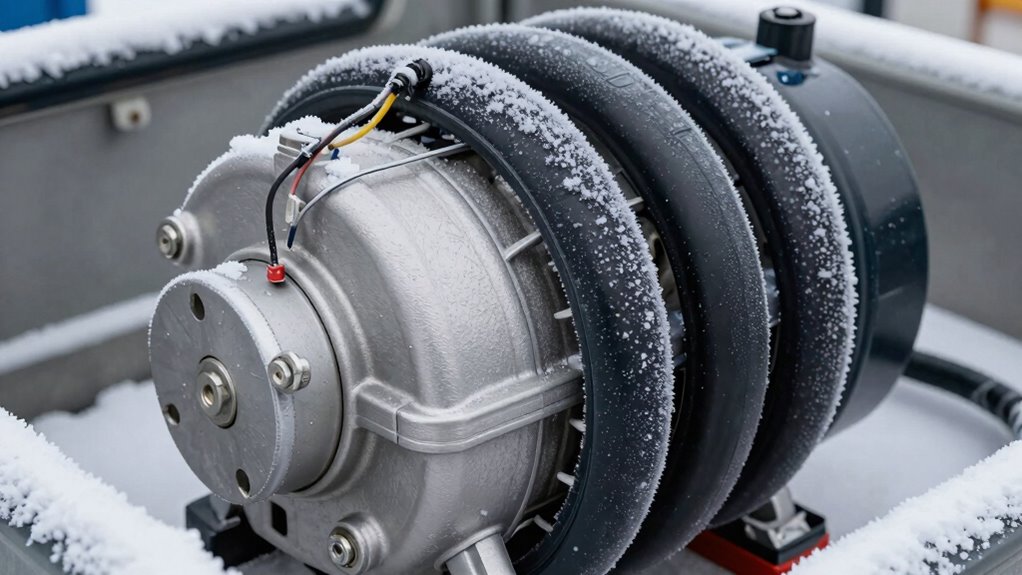

A crankcase heater is essential for protecting your compressor during winter by preventing refrigerant migration and liquid slugging. It keeps the oil warm and maintains the crankcase temperature above the refrigerant’s freezing point, reducing the risk of damage. When installed and connected to a thermostat, it turns on only when needed, ensuring efficient operation. If you’d like to understand the details behind how it safeguards your system, keep exploring further.

Get backup power and energy gear delivered free with Prime
- Fast, free delivery on millions of items
- Prime Video, Amazon Music and more included
- Member-only deals all year
Key Takeaways
- Crankcase heaters prevent refrigerant migration and liquid slugging during freezing temperatures.
- They are installed on the compressor’s crankcase and controlled by thermostats to regulate temperature.
- Proper operation keeps refrigerant in vapor form, protecting the compressor from damage.
- Regular maintenance ensures the heater functions correctly, reducing startup stress in cold weather.
- Using crankcase heaters extends compressor lifespan and maintains system efficiency in winter conditions.
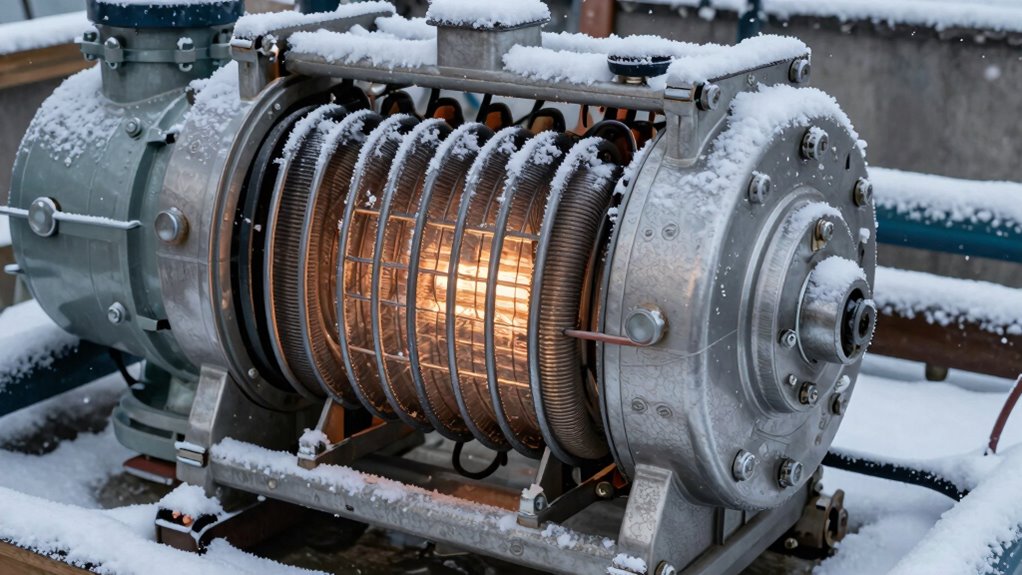
Have you ever wondered how you can prevent compressor damage during freezing temperatures? One essential solution is the use of a crankcase heater. This device plays a critical role in safeguarding your compressor, especially when cold weather causes refrigerant to migrate and settle in the compressor crankcase. When refrigerant accumulates there, it can cause a series of problems, including liquid slugging and oil dilution, both of which threaten the compressor’s health and longevity. By maintaining the crankcase at a temperature above the refrigerant’s freezing point, the heater prevents refrigerant migration, guaranteeing that refrigerant stays in the evaporator and reduces the risk of liquid refrigerant entering the compressor during startup.
Crankcase heaters prevent refrigerant migration, protecting compressors from damage during freezing temperatures.
When you activate the crankcase heater, it keeps the oil in your compressor warm and viscous, which is necessary for peak lubrication. Warmer oil circulates more easily, reducing wear and tear on internal components. Furthermore, by preventing refrigerant from condensing in the crankcase, the heater helps maintain proper refrigerant flow throughout your system. When refrigerant remains where it’s supposed to be—inside the evaporator and condenser coils—your system functions more efficiently. Reduced refrigerant migration means your compressor doesn’t have to work as hard to maintain proper pressure and temperature levels. This, in turn, enhances overall system efficiency and extends the lifespan of your equipment.
You might wonder about the practical aspects of using a crankcase heater. It’s typically installed on the compressor’s crankcase and connected to a thermostat that turns the heater on when temperatures fall below a certain point. This guarantees the heater only operates when necessary, conserving energy and preventing unnecessary wear. During cold weather, the heater maintains a slight warmth, ensuring refrigerant stays in vapor form and doesn’t condense into liquid. Proper installation and maintenance of the heater are crucial to ensure it functions effectively and efficiently. Additionally, understanding the refrigerant migration process helps in selecting the right heater settings and ensuring optimal system performance. Recognizing the importance of heater efficiency can also aid in troubleshooting and avoiding potential system failures. Regular inspections and adjustments help maximize the heater’s efficiency and prevent potential issues. This simple yet effective process minimizes stress on your compressor during startup, especially in winter when temperatures drop sharply.
In essence, the crankcase heater acts as a safeguard that improves both refrigerant flow and system efficiency. It prevents costly repairs caused by liquid slugging and reduces energy consumption by ensuring your compressor runs smoothly. Without it, cold temperatures could lead to refrigerant migration, increased wear, and decreased system performance. So, if you want to keep your HVAC or refrigeration system running reliably through winter, installing and properly maintaining a crankcase heater is a smart, proactive step. It’s an investment in your system’s durability, efficiency, and overall health, especially when facing severe winter conditions.
crankcase heater for HVAC compressor
As an affiliate, we earn on qualifying purchases.
As an affiliate, we earn on qualifying purchases.
Frequently Asked Questions
How Often Should the Crankcase Heater Be Inspected During Winter?
You should inspect the crankcase heater regularly during winter, ideally once a month, to guarantee it’s functioning properly. Regular heater maintenance helps prevent refrigerant migration and compressor damage, especially in cold weather. By actively monitoring the heater, you enhance winter safety and ensure reliable operation. Consistent inspections allow you to catch issues early, reducing costly repairs and keeping your system protected throughout the colder months.
Can a Crankcase Heater Be Used for All Types of Compressors?
You can’t use a crankcase heater for all types of compressors, as heater installation depends on compressor compatibility. Before installation, check the manufacturer’s specifications to guarantee the heater suits your specific compressor model. Using an incompatible heater can lead to inefficiency or damage. Always verify that the heater is designed for your compressor to protect it during winter and maintain ideal operation.
What Are Signs of a Malfunctioning Crankcase Heater?
When your crankcase heater falters, it’s like a silent alarm signaling trouble. You might notice oil leaks, frost buildup on the compressor, or inconsistent operation—clear signs of malfunction. For reliable operation, follow your heater maintenance schedule diligently, and perform crankcase heater troubleshooting regularly. Ignoring these signs can lead to compressor damage, but prompt detection keeps your system running smoothly. Stay vigilant, and your equipment will thank you with lasting performance.
Is There an Energy Efficiency Impact When Using a Crankcase Heater?
Using a crankcase heater does impact energy efficiency, but it’s essential for protecting your compressor in cold weather. While it consumes energy, it helps prevent costly damages that could lead to higher repair costs. A proper cost analysis shows that energy savings from avoiding compressor failure outweigh the heater’s energy use. Ultimately, maintaining this balance ensures your system stays reliable without considerably increasing operational costs.
How Does Ambient Temperature Influence Heater Operation?
Ambient temperature acts like a thermostat’s whisper, guiding heater efficiency. When it’s cold outside, the heater works harder, consuming more energy to keep the compressor warm. Conversely, in milder temperatures, the heater’s job becomes lighter, boosting efficiency. You’ll find that understanding this relationship helps you optimize operation, ensuring the crankcase heater runs just enough to protect the compressor without wasting energy, especially during winter’s chill.
refrigerant crankcase heater thermostat
As an affiliate, we earn on qualifying purchases.
As an affiliate, we earn on qualifying purchases.
Conclusion
If you ignore the crankcase heater, your compressor could freeze solid and come to a complete halt—like a frozen statue in the middle of winter! Protecting your equipment isn’t just a good idea; it’s your secret weapon against catastrophic failure. With the right heater, you’ll keep things running smoothly, no matter how brutal the cold gets. Don’t risk it—arm your compressor with this winter safeguard and stay ahead of disaster!
As an affiliate, we earn on qualifying purchases.
refrigerant migration protection device
As an affiliate, we earn on qualifying purchases.
As an affiliate, we earn on qualifying purchases.
Halloween Picks
halloween
As an affiliate, we earn on qualifying purchases.