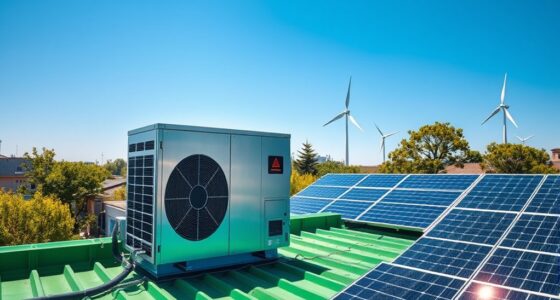

If you mismatch your solar panels and batteries, it can slow down your system’s recharging. Using panels that are too small leaves batteries partially drained, while oversized panels risk damaging them. Incorrect pairing causes energy flow inefficiencies, leading to slower charging times and higher long-term costs. Proper matching guarantees your system recharges efficiently and lasts longer. Stick around to discover how to avoid this common mistake and optimize your solar setup for better performance.
Open a free Amazon Business account
Business pricing, bulk buying and tax-exempt orders.
As an affiliate, we earn on qualifying purchases.
Key Takeaways
- Pairing mismatched panels with different voltage or current ratings reduces energy transfer efficiency.
- Improper panel pairing causes slower battery recharging and decreases overall system performance.
- Over- or under-sized panels relative to battery capacity can lead to overcharging or incomplete recharging.
- Incorrect pairing creates imbalances that hinder optimal energy flow and prolong recharge times.
- Proper matching of panel specifications ensures faster, more efficient battery recharging.
Pairing solar panels incorrectly can substantially reduce your system’s efficiency and cost you more in the long run. One of the most common mistakes homeowners make is mismatching panels without considering their specifications, especially battery capacity and shading issues. When panels aren’t properly paired, your system might struggle to recharge your batteries efficiently, leaving you with slower energy recovery and higher electricity bills.
Battery capacity plays an essential role in how your solar system functions. If you connect panels that don’t match your storage needs, you risk undercharging or overcharging your batteries. For example, if your batteries have a high capacity but are paired with smaller panels, they won’t receive enough energy during the day to recharge fully. This imbalance causes your batteries to remain partially drained, which diminishes their lifespan and limits your system’s ability to store excess energy for cloudy days or nighttime use. Conversely, pairing large panels with small batteries can lead to overcharging, potentially damaging your storage and reducing overall system efficiency. Properly matching your panels to your battery capacity ensures you’re maximizing energy flow and prolonging your system’s life.
Shading issues are another vital factor often overlooked during panel pairing. If you place panels in shaded areas or connect panels with different shading patterns, your system’s performance will suffer markedly. Shading on even a single panel can create a bottleneck for the entire string, reducing the current flow and decreasing the recharging rate. When panels are mismatched in shading conditions, the overall output drops, and your batteries recharge much slower than they should. To prevent this, you need to carefully evaluate shading patterns and position your panels to minimize shadows. Using microinverters or power optimizers can also help mitigate shading effects and improve energy production from partially shaded panels. Additionally, understanding solar system design principles can help you optimize panel placement and prevent shading issues from the start. Regularly inspecting your panels for shading or debris can also prevent efficiency losses over time. Properly matching panel specifications and considering shading can also help you avoid these common pitfalls and ensure consistent energy flow.
In essence, pairing solar panels without considering battery capacity and shading issues is a mistake that hampers your system’s ability to recharge efficiently. Ensuring your panels are correctly matched to your battery size maximizes energy storage and usage, and addressing shading concerns helps maintain consistent output. When you pay attention to these details, you’re not only enhancing your system’s performance but also protecting your investment over time. Proper pairing allows your solar system to operate smoothly, delivering reliable energy and saving you money in the long run. Additionally, staying informed about system maintenance can help you identify and rectify these issues proactively.
solar panel battery matching kit
As an affiliate, we earn on qualifying purchases.
As an affiliate, we earn on qualifying purchases.
Frequently Asked Questions
How Do Different Panel Types Affect Pairing Compatibility?
Different panel types, like monocrystalline and polycrystalline, affect pairing compatibility because they have varying voltage and current outputs. You need to take into account battery compatibility to ensure your batteries can handle the panel’s power, and inverter matching to prevent overloads or inefficiencies. Mixing panel types without proper checks can reduce system performance, so always match panel types with compatible batteries and inverters for optimal recharging and longevity.
Can Pairing Panels of Different Ages Impact Efficiency?
Pairing panels of different ages can reduce efficiency because older panels experience efficiency degradation, which lowers their output over time. When you connect panels with varying lifespans, the overall system performance may suffer, as the older panel drags down the newer one’s potential. This mismatch can cause uneven current flow, decreasing total energy production and making your system less effective. To maximize efficiency, match panels with similar ages and degradation levels.
What Tools Are Needed to Troubleshoot Panel Pairing Issues?
To troubleshoot panel pairing issues, you’ll need a multimeter to check voltage and wiring connections, ensuring they’re secure and correct. Inspect your wiring connections for corrosion, loose wires, or damage, which can hinder performance. Regular battery maintenance, like cleaning terminals and checking charge levels, helps prevent issues. Using these tools, you can identify mismatched voltages or faulty wiring that may be slowing recharging, allowing you to make necessary adjustments for maximum efficiency.
How Does Shading Influence the Pairing Mistake?
Shading effects can dramatically worsen shading impact, making your solar panels less efficient. When one panel is shaded, it creates a bottleneck that slows the entire system’s recharging process. This uneven light exposure causes mismatched voltage levels, triggering the pairing mistake. You must guarantee panels are free from shade and properly paired; otherwise, shading effects will continue to hinder peak energy flow and prolong recharging times.
Are There Specific Brands Better for Proper Pairing?
Certain brands excel in panel brand compatibility and inverter matching, making it easier for you to pair panels correctly. Look for reputable manufacturers like LG, SunPower, and Panasonic, which are known for their quality and compatibility. Ensuring your panels and inverter are compatible minimizes pairing mistakes and maximizes efficiency. Always check manufacturer guidelines and consult with professionals to select brands that work seamlessly together, improving your solar system’s performance.
solar panel microinverters for shading
As an affiliate, we earn on qualifying purchases.
As an affiliate, we earn on qualifying purchases.
Conclusion
To maximize your solar panel efficiency, avoid pairing mismatched panels, as this can considerably slow recharging times. When panels are mismatched, they can reduce overall system output by up to 25%, wasting your investment and energy potential. Remember, pairing panels with similar voltage and wattage guarantees ideal performance and faster recharge cycles. By paying attention to these details, you’ll harness the sun’s power more effectively, saving money and supporting a greener future.
solar panel and battery capacity calculator
As an affiliate, we earn on qualifying purchases.
As an affiliate, we earn on qualifying purchases.
As an affiliate, we earn on qualifying purchases.
NFL season / tailgating Picks
team gear
As an affiliate, we earn on qualifying purchases.