
Understanding flash gas helps you grasp how refrigerant systems work more efficiently. When high-pressure liquid expands, it instantly vaporizes, creating a mix of liquid and vapor called flash gas. Too much flash gas disrupts your system’s gas flow, reducing performance and increasing energy use. By controlling vapor production during expansion, you can improve heat transfer and prolong component life. Keep exploring to discover how managing phase changes can make your refrigerant system run smoother and more efficiently.

Get backup power and energy gear delivered free — and shop member deals
- Fast, free delivery on millions of items
- Access to Prime Big Deal Days deals on October 6–7
- Prime Video, Amazon Music and more included
Key Takeaways
- Flash gas is the vapor produced instantly during refrigerant expansion, affecting flow and system efficiency.
- Managing flash gas prevents uneven heat transfer and reduces compressor workload.
- Proper control of vaporization ensures a balanced liquid-vapor mix for optimal performance.
- Excessive flash gas disrupts smooth refrigerant flow, leading to higher energy consumption.
- Understanding phase changes helps in troubleshooting and optimizing refrigerant system operation.
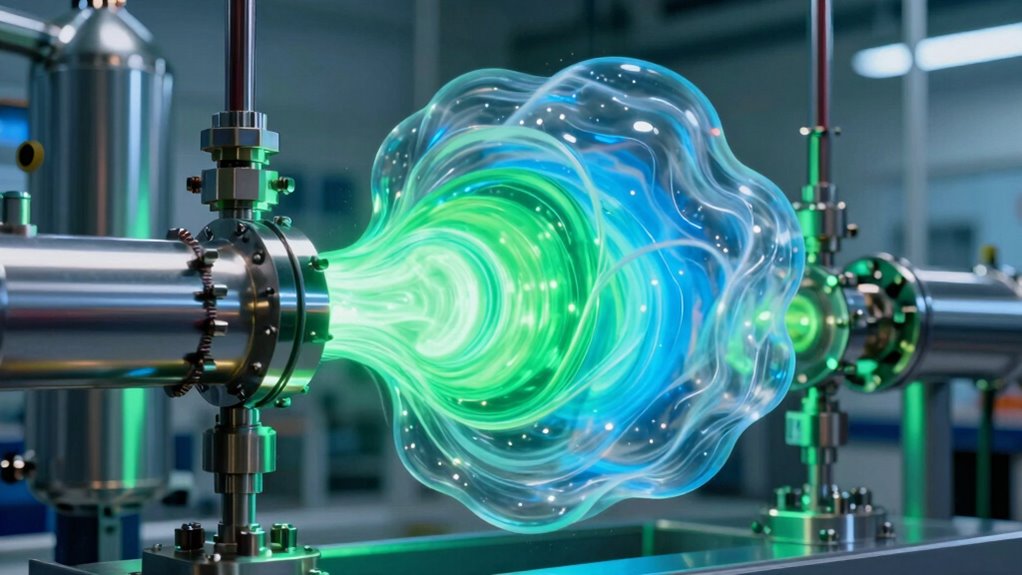
Have you ever wondered how refrigerant systems efficiently transfer heat? It all comes down to understanding the gas concept, particularly how the refrigerant moves and transforms within the system. At the core, the system’s ability to maximize thermodynamic efficiency depends on controlling and optimizing gas flow dynamics. When refrigerant gases flow through various components—compressors, condensers, expansion valves, and evaporators—their behavior influences how effectively heat is absorbed or released. If the gas flow isn’t properly managed, the system loses efficiency, leading to higher energy consumption and reduced cooling or heating performance.
The flash gas concept is a game-changer because it clarifies how refrigerant gases behave during phase changes, especially during expansion. When the high-pressure liquid refrigerant expands through an expansion valve, a portion of it instantly vaporizes—a process known as flash vaporization. This creates a mixture of liquid and vapor at a lower pressure and temperature. Understanding this mixture is *essential* because it impacts the overall thermodynamic efficiency of the system. If too much flash gas forms prematurely, it can disrupt the ideal gas flow dynamics, causing uneven heat transfer and increased compressor work. Additionally, recognizing how phase change processes influence the cycle can help prevent common inefficiencies.
By grasping the flash gas concept, you realize that controlling the amount of vapor produced during expansion helps optimize the refrigerant’s cycle. Less unintended flash gas means smoother gas flow, better heat absorption in the evaporator, and less work required by the compressor. When the system maintains a proper balance between liquid and vapor phases, it operates more efficiently, conserving energy and reducing wear on components. This balance is closely related to understanding gas flow dynamics, which play a crucial role in system performance. Furthermore, understanding how pressure and temperature are interconnected in the cycle allows for more precise adjustments to improve efficiency. This understanding makes refrigerant systems less of a black box and more of a finely tuned machine where each phase change and gas flow dynamic matters. Additionally, an understanding of the phase change process can help you identify potential issues related to improper vaporization.
Knowing how the flash gas influences the system allows you to troubleshoot and improve performance more effectively. For instance, adjusting expansion device settings or selecting refrigerants with suitable thermodynamic properties can minimize unnecessary flash gas formation. This leads to a more stable, efficient cycle where the refrigerant’s phase changes are predictable and controlled. Ultimately, the flash gas concept simplifies complex thermodynamic behaviors, making refrigerant systems easier to understand and optimize. When you consider the interplay between gas flow dynamics and phase changes, you can design or maintain systems that run with maximum efficiency, saving energy and extending equipment lifespan. It’s this insight that finally makes refrigerant systems make sense. Additionally, understanding system components and their roles further enhances your ability to improve overall efficiency.
As an affiliate, we earn on qualifying purchases.
Frequently Asked Questions
How Does the Flash Gas Concept Improve System Efficiency?
The flash gas concept improves system efficiency by optimizing thermodynamic efficiency and conserving energy. When refrigerant passes through the expansion device, it creates flash gas, which separates into vapor and liquid. This process allows the system to better match the evaporator’s cooling capacity, reducing unnecessary compressor work. As a result, you save energy, lower operational costs, and achieve more effective cooling, making the system more reliable and environmentally friendly.
Can Existing Refrigerant Systems Be Upgraded to Use the Flash Gas Concept?
You can upgrade existing refrigerant systems to use the flash gas concept, but retrofit challenges exist. You’ll need to modify components like expansion devices or sensors, which can be complex and costly. The cost implications vary depending on system age and design, so it’s essential to evaluate whether the efficiency gains outweigh retrofit expenses. Consulting with specialists helps you determine if a retrofit makes financial and technical sense for your setup.
Are There Environmental Benefits to Using the Flash Gas Concept?
You’ll be pleased to know that using the flash gas concept can considerably reduce environmental impact, cutting refrigerant emissions by up to 30%. This shift enhances sustainability benefits by lowering greenhouse gases and conserving energy. Imagine a future where your cooling systems are cleaner and more eco-friendly, making a real difference for the planet. Embracing this technology helps you support sustainable practices and reduces your carbon footprint effectively.
What Types of Refrigerants Are Compatible With This Gas Concept?
You can use various refrigerants with the flash gas concept, but refrigerant compatibility is essential to guarantee system efficiency and safety. Consider material considerations like compatibility with specific metals and plastics, as some refrigerants may cause corrosion or degradation. Always check manufacturer guidelines for refrigerant compatibility, and select materials that withstand the refrigerant’s chemical properties to optimize system performance and longevity.
How Does the Flash Gas Concept Impact System Maintenance?
Like a skilled captain steering stormy seas, you’ll find the flash gas concept simplifies system maintenance, enhancing refrigerant safety and system longevity. It reduces the risk of refrigerant leaks and minimizes wear on components, making upkeep easier and more reliable. By understanding this concept, you can proactively troubleshoot issues, extend equipment life, and guarantee safe operation, ultimately saving time and reducing costly repairs.
As an affiliate, we earn on qualifying purchases.
Conclusion
Now that you understand the flash gas concept, everything clicks into place. You see how refrigerant systems operate more efficiently when you grasp the role of gas in the cycle. It’s like connecting the dots—once you get it, the whole process makes sense. With this knowledge, you’re better equipped to troubleshoot or optimize systems. Remember, understanding these fundamentals is the key to turning the tide in your favor, so don’t let this knowledge slip through your fingers.
As an affiliate, we earn on qualifying purchases.
refrigerant system troubleshooting kit
As an affiliate, we earn on qualifying purchases.
As an affiliate, we earn on qualifying purchases.
Fall Picks
fall essentials
As an affiliate, we earn on qualifying purchases.