A heat pump’s refrigeration cycle includes key parts like the evaporator coil, where your indoor air absorbs heat; the compressor motor, which pressurizes the refrigerant; and the condenser coil, where heat is released to the surroundings. The refrigerant moves through these components, changing from liquid to vapor and back, to transfer heat efficiently. The expansion valve controls refrigerant flow, ensuring smooth operation. Keep exploring to discover how each part works together for ideal performance.
Key Takeaways
- The evaporator coil absorbs heat from indoor air during cooling or heating cycles.
- The refrigerant facilitates heat transfer by changing phase between liquid and vapor.
- The compressor motor compresses refrigerant vapor to high pressure and temperature.
- The condenser coil releases heat to the surroundings, condensing refrigerant back into liquid.
- The expansion valve regulates refrigerant pressure, ensuring efficient cycle operation.
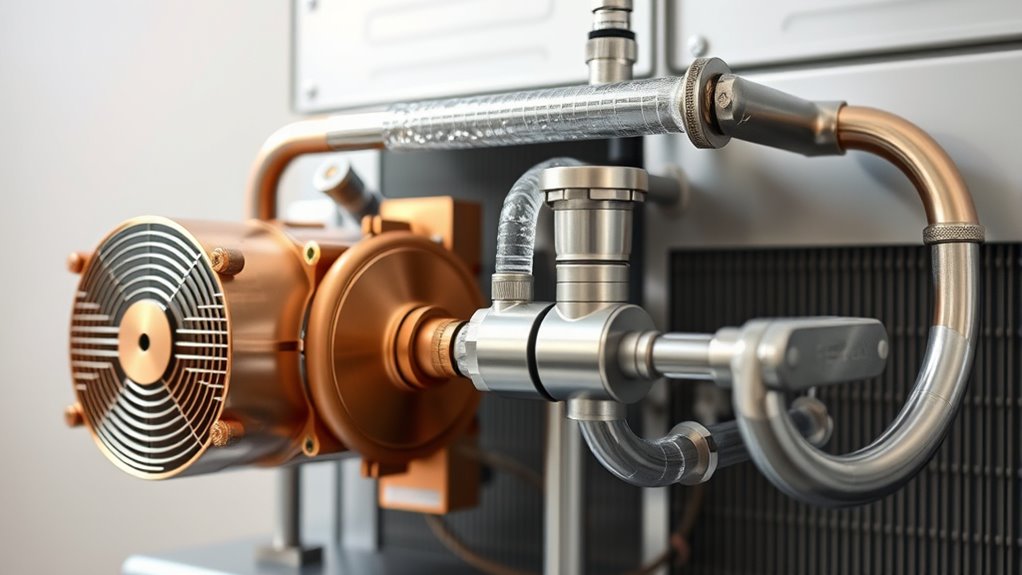
Understanding the components of a heat pump refrigeration cycle is essential for grasping how these systems transfer heat efficiently. One of the main parts you’ll encounter is the evaporator coil. This coil is where the refrigerant absorbs heat from the indoor air during the cooling cycle or releases heat into the home during heating. When the refrigerant flows through the evaporator coil, it’s in a low-pressure, low-temperature state, which makes it capable of extracting heat effectively. As air passes over the coil, the refrigerant absorbs thermal energy, warming up and changing from a liquid to a vapor. This process is crucial because it initiates the cycle of heat transfer that makes the heat pump versatile throughout the year.
Next in the cycle, the vaporized refrigerant moves to the compressor motor. The compressor motor’s role is to compress this low-pressure vapor, raising its temperature and pressure. When the refrigerant is compressed, it becomes a hot, high-pressure gas, ready to release heat either inside or outside, depending on whether you’re heating or cooling. The compressor motor is vital because it maintains the flow of refrigerant through the system, ensuring the cycle continues smoothly. Its efficiency directly impacts the overall performance of the heat pump, with modern designs incorporating variable-speed motors to optimize energy consumption.
Once compressed, the hot refrigerant gas travels through the condenser coil, where it releases heat to the surroundings, either warming your home or cooling it, depending on the mode. After releasing heat, the refrigerant condenses back into a liquid state. The liquid refrigerant then passes through an expansion valve or metering device, where its pressure drops, preparing it to re-enter the evaporator coil and begin the cycle again. This continuous process hinges on the effective operation of each component, especially the evaporator coil and compressor motor, which work in tandem to transfer heat efficiently. Additionally, the refrigerant itself plays a crucial role in facilitating heat transfer and maintaining system efficiency throughout the cycle.

Westinghouse Natural Gas Tankless Water Heater Indoor Installation Max 7.9 GPM 180,000 BTU, WIFI Enable Temp Self Modulating Non Condensing High Efficiency for House or Commercial, APOLO Performance
【On-Demand Efficiency】 Westinghouse tankless water heater works only needed, saving energy and costs. Compact yet powerful for whole-home...
As an affiliate, we earn on qualifying purchases.
Frequently Asked Questions
How Does the Refrigerant Flow Through the Cycle?
You see refrigerant movement as it flows through the cycle, starting from the compressor where it’s pressurized. It then moves through the condenser, releasing heat, and then to the expansion valve, where pressure drops. From there, it enters the evaporator, absorbing heat before returning to the compressor. Cycle regulation ensures this refrigerant flow is smooth and efficient, maintaining ideal heating or cooling performance.
What Role Does the Expansion Valve Play?
Imagine you’re diagnosing a heat pump that isn’t heating properly. The expansion valve plays a vital role here by regulating pressure, which causes the refrigerant to cool and expand. This pressure regulation guarantees the refrigerant absorbs heat efficiently in the evaporator coil. Without the expansion valve, the refrigerant wouldn’t lower its pressure enough, reducing heat absorption and compromising the system’s performance.
How Is the Compressor Different From Other Components?
You notice that the compressor’s function is to compress refrigerant, raising its pressure and temperature before it moves through the cycle. Unlike other components, the compressor actively changes the refrigerant’s state, making it essential for heat transfer. Different compressor types, such as reciprocating, scroll, or rotary, serve various applications, but all share the goal of maintaining cycle efficiency by compressing refrigerant effectively.
What Are Common Issues in Heat Pump Cycles?
You might notice common issues like refrigerant leakage, which reduces efficiency and causes system failure, or compressor noise, indicating potential mechanical problems. Leaks can lead to insufficient heating or cooling, while noisy compressors often suggest wear or damage. Regular maintenance helps spot these issues early, preventing costly repairs and keeping your heat pump running smoothly. Stay attentive to unusual sounds and refrigerant levels to guarantee peak performance.
How Does the Cycle Adapt to Temperature Changes?
Imagine a chilly winter evening where your heat pump adjusts seamlessly. When ambient temperature drops, the cycle responds by increasing compressor activity to maintain efficiency. It modulates refrigerant flow and expands or contracts components to optimize heat transfer. This adaptive process guarantees your system keeps working efficiently despite temperature swings, preventing energy waste and maintaining comfort. Your heat pump intelligently adapts, balancing cycle efficiency with changing ambient conditions.

23000 BTU Mini Split AC & Heat Pump, 230v Energy Efficient Wall-Mounted Ductless Air Conditioner with WiFi Control, r32 Eco-Friendly Refrigerant, Cools/Heats Up to 1500 Sq.Ft, Quiet Operation
Powerful Cooling & Heating - This 23000 BTU mini split system delivers reliable cooling (63-90℉) and heating (32-80℉)...
As an affiliate, we earn on qualifying purchases.
Conclusion
So, now that you’re an expert on heat pump components, you can impress everyone with your knowledge—just don’t start charging for consultations. Remember, these parts work together smoothly, like a well-oiled (or should I say, well-evacuated) team, keeping your home cozy or cool. If you ever feel overwhelmed, just pretend it’s a high-tech dance, and you’re the star. After all, understanding refrigeration cycles is clearly your new superpower—who knew?
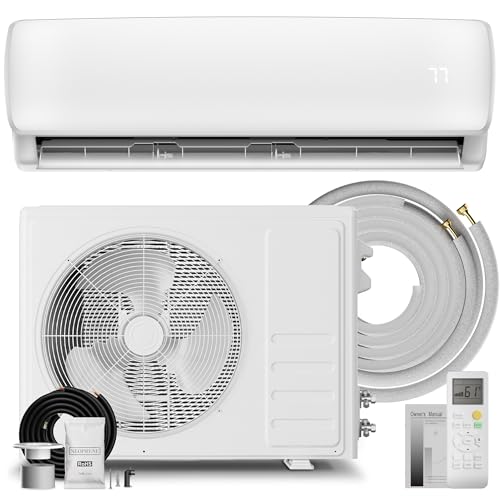
MEPTY 9000BTU Mini Split AC/Heating System, 19 SEER2 Energy Efficient Mini Split Air Conditioner with Heat Pump, 110V Cools Up to 450sq.ft, Ductless Inverter AC Unit with Pre-Charged Condenser
⭐Advanced Energy Saving: Advanced inverter technology with leading 19 SEER2 rating delivers superior performance through ensuring that the...
As an affiliate, we earn on qualifying purchases.
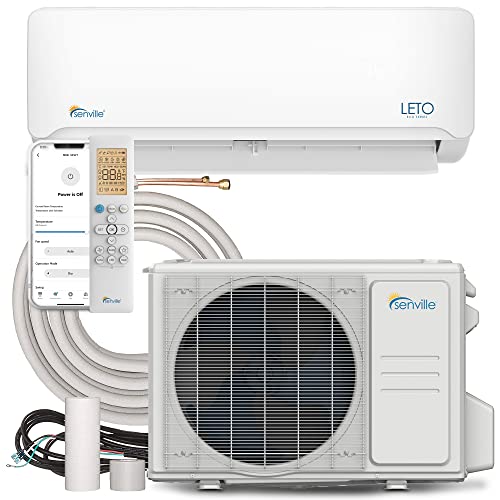
Senville LETO Series Mini Split Air Conditioner Heat Pump, 12000 BTU 110/120V, Inverter, Works with Alexa, SEER2 20.8, 1 Ton, White
Alexa Enabled Mini Split AC/Heating System: Integrate with voice control or app, allowing you to adjust your mini...
As an affiliate, we earn on qualifying purchases.