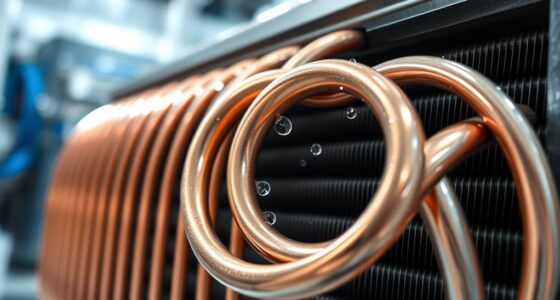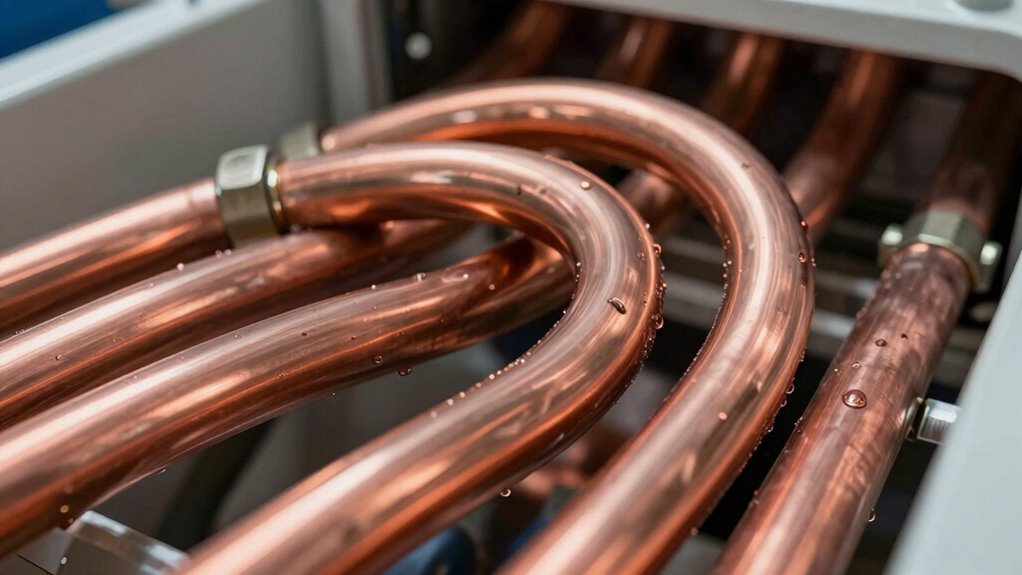

Long refrigerant lines can hide oil return problems that hurt your system’s efficiency and damage the compressor. Oil tends to settle in areas with bends or restrictions, making it hard for it to flow back to the compressor. If oil isn’t properly returned, it can cause overheating, system wear, or failure. To keep your system running smoothly, it’s essential to understand how design and oil flow interact—stay with us for more insights.

Get backup power and energy gear delivered free — and shop member deals
- Fast, free delivery on millions of items
- Access to Prime Big Deal Days deals on October 6–7
- Prime Video, Amazon Music and more included
Key Takeaways
- Long refrigerant lines increase oil trapping, reducing oil return to the compressor.
- Proper line sizing and strategic placement of oil traps improve oil circulation.
- Oil tends to settle in bends or restrictions, hindering proper oil flow.
- System design must account for oil flow dynamics to prevent accumulation.
- Maintaining refrigerant and oil balance ensures system efficiency and longevity.
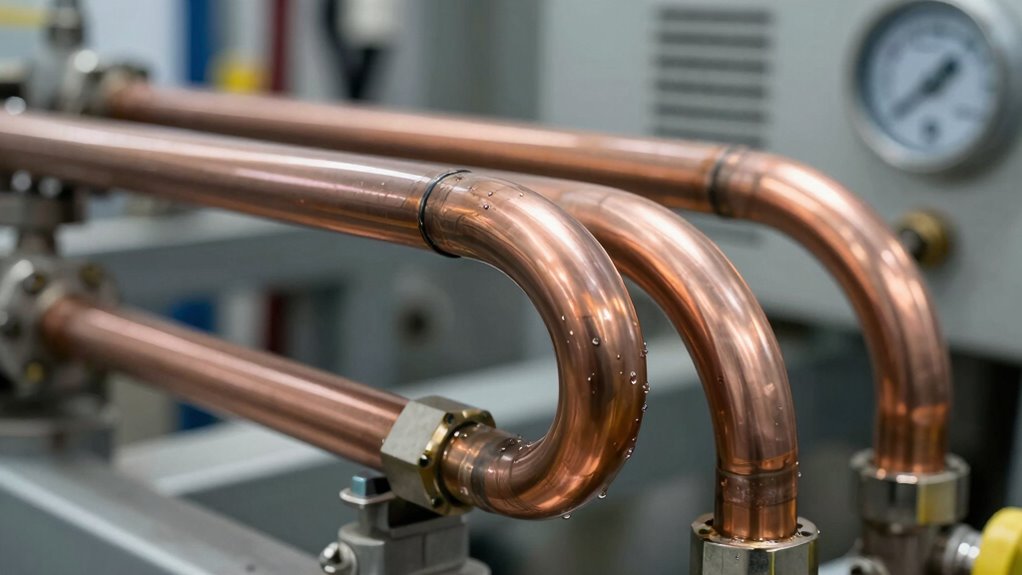
Have you ever wondered why, after changing your engine oil, some of it seems to disappear or fail to return to the sump? While it might seem like a straightforward process, the same principle applies when dealing with refrigerant lines in HVAC systems. In these systems, refrigerant circulates along with tiny amounts of oil that lubricate the compressor and other moving parts. When refrigerant travels through long lines, especially those with multiple bends or restrictions, the oil can’t always keep up with the refrigerant flow. As a result, oil may settle in certain parts of the system instead of returning to the compressor. This uneven oil distribution compromises the refrigerant balance, leading to inefficient cooling, increased wear, and even system failure over time. The longer the refrigerant lines, the more pronounced this problem becomes because the oil has a greater distance to travel, and the chances of it getting stranded increase.
Understanding the dynamics of oil flow helps you grasp why maintaining proper refrigerant balance is essential. When oil gets trapped, it can’t reach the compressor, which relies on a consistent oil supply to operate smoothly. This disruption can cause the compressor to overheat or seize, reducing the system’s lifespan. To combat this, technicians often incorporate oil traps or accumulator devices along long lines, helping to guide the oil back to the compressor. Proper system design, including the correct sizing of lines and strategic placement of oil management components, minimizes the oil return problem and keeps the refrigerant balance stable. Additionally, system design plays a crucial role in optimizing oil circulation and preventing the accumulation of oil in undesired areas.
Furthermore, effective system design considers the oil flow dynamics, which are crucial for preventing oil from getting stranded in long or complex refrigerant lines. A thorough understanding of refrigerant flow, including how it interacts with oil, can significantly improve system efficiency and longevity. In essence, the challenge isn’t just about moving refrigerant but ensuring the oil circulates effectively within the entire system. Long refrigerant lines make it difficult for oil to flow freely, leading to uneven distribution and potential damage. If you want your HVAC system to run efficiently and last longer, paying attention to how refrigerant and oil interact is crucial. Proper maintenance, system design, and understanding the importance of oil flow help prevent the oil return problem from impacting your system’s performance. In the end, keeping the refrigerant balance steady ensures your system remains reliable and effective over time.
HVAC oil trap for refrigerant lines
As an affiliate, we earn on qualifying purchases.
As an affiliate, we earn on qualifying purchases.
Frequently Asked Questions
How Does Refrigerant Type Influence Oil Return Issues?
Refrigerant type markedly influences oil return issues because different refrigerants have varying compatibility and affect oil viscosity. Some refrigerants, like POE oils, mix better with certain refrigerants, promoting smoother oil return. Others may cause oil separation or sluggish flow due to incompatible refrigerant-oil blends. You need to take into account refrigerant compatibility and how it impacts oil viscosity, especially in long lines, to prevent oil trapping and guarantee efficient system operation.
What Are Signs of Poor Oil Return in Long Lines?
You might notice uneven cooling, strange noises, or compressor failures—ironic signs that oil circulation is poor despite refrigerant flowing. These issues often point to inadequate oil return, especially in long lines where refrigerant compatibility impacts oil movement. When oil stagnates, your system struggles, revealing the hidden problem. Pay attention to these symptoms, because ignoring them hampers efficient operation and can lead to costly repairs.
Can Adjusting System Charge Fix Oil Return Problems?
Adjusting the system charge can sometimes improve oil circulation and reduce refrigerant migration issues, but it’s not always a fix. When you tweak the charge, you influence pressure and flow, which helps move oil back to the compressor. However, if long refrigerant lines cause poor oil return, you might need additional solutions like oil traps or system modifications to guarantee proper oil circulation and prevent refrigerant migration from harming system efficiency.
How Does Ambient Temperature Affect Oil Flow?
Ambient temperature drastically impacts oil flow, almost like a hurricane swirling through your system. When it’s hot, oil viscosity drops sharply, making it flow like water, but in cold weather, it thickens into goo, resisting movement. Thermal expansion causes refrigerant lines to stretch and contract, further hindering oil return. You need to take these temperature effects into account because they directly influence how smoothly the oil circulates back to the compressor.
Are There Specific Compressor Types More Prone to Oil Trapping?
Certain compressor types, like reciprocating and scroll compressors, are more prone to oil trapping because of their design, affecting oil circulation and potentially impacting durability. You should monitor these compressors closely, especially if long refrigerant lines are involved, since poor oil return can reduce their lifespan. Proper installation and maintenance guarantee efficient oil flow, helping preserve compressor durability and preventing frequent breakdowns caused by oil trapping.
refrigerant line oil return device
As an affiliate, we earn on qualifying purchases.
As an affiliate, we earn on qualifying purchases.
Conclusion
So, now that you understand the hidden oil return issues in long refrigerant lines, will you take proactive steps to prevent costly breakdowns? Remember, neglecting proper oil management can lead to inefficient cooling and equipment failure. Don’t wait until a problem forces your hand—anticipate and address these challenges early. After all, isn’t safeguarding your system’s longevity worth a little extra effort today? Stay vigilant and keep your refrigeration running smoothly.
HVAC accumulator for long refrigerant lines
As an affiliate, we earn on qualifying purchases.
As an affiliate, we earn on qualifying purchases.
refrigerant system oil management tools
As an affiliate, we earn on qualifying purchases.
As an affiliate, we earn on qualifying purchases.
Fall Picks
fall essentials
As an affiliate, we earn on qualifying purchases.