When handling refrigerants, always wear gloves, goggles, and long sleeves to protect your skin and eyes from frostbite or injuries. It is vital to have proper ventilation by using fans or exhaust systems to quickly disperse harmful fumes, especially in confined spaces. Proper setup and continuous airflow reduce the risk of vapor buildup and health hazards. Staying vigilant and following safety steps is essential; explore further details to keep yourself safe during refrigerant work.
Key Takeaways
- Always wear appropriate protective gear, including gloves, goggles, and long sleeves, to prevent frostbite and eye injuries.
- Ensure proper ventilation in the workspace to disperse refrigerant fumes and prevent vapor buildup.
- Use mechanical ventilation equipment like exhaust fans to extract heavier-than-air refrigerant vapors from low areas.
- Handle refrigerants carefully, following manufacturer guidelines, and avoid leaks or accidental contact with skin and eyes.
- Regularly monitor air quality with detectors to maintain a safe environment and prevent health hazards.

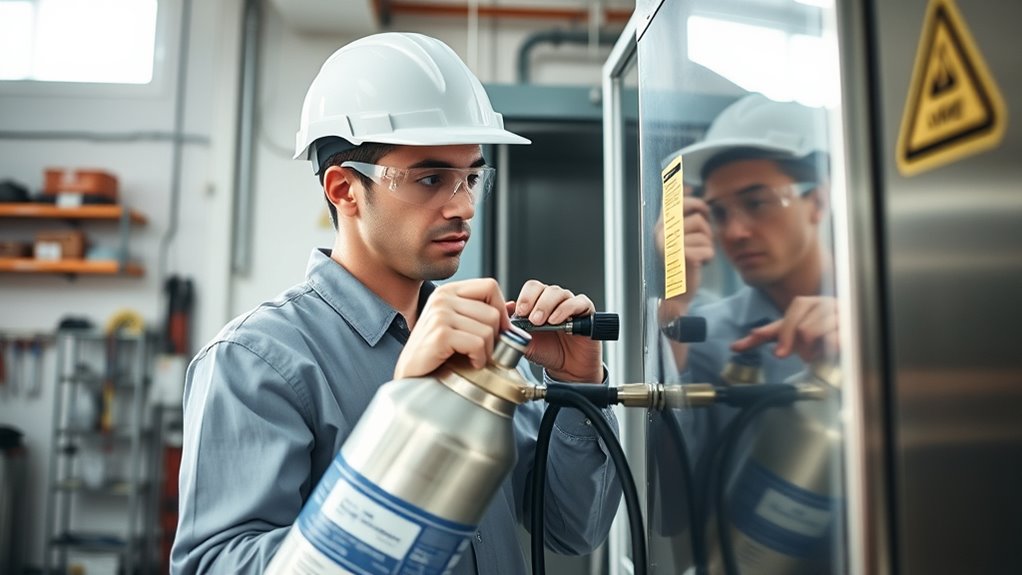
Handling refrigerants safely is essential to prevent health hazards, property damage, and environmental harm. When you’re working with refrigerants, wearing the right protective gear is critical. This gear includes gloves, goggles, and long sleeves to shield your skin and eyes from potential leaks or accidental contact. Refrigerants can cause frostbite or eye injuries if they come into direct contact, so never skip protective equipment. Furthermore, some refrigerants are toxic or irritating, making protective gear your first line of defense. Always inspect your gear before starting work to guarantee it’s intact and properly fitted.
In addition to personal protective equipment, understanding ventilation requirements is indispensable. Refrigerants often release fumes that can be harmful if inhaled in high concentrations. Proper ventilation helps disperse these fumes quickly, reducing the risk of suffocation or intoxication. Before starting any refrigerant-related task, ensure your workspace has adequate ventilation—either through open windows, exhaust fans, or mechanical ventilation systems. If you’re working in a confined space, make sure it’s equipped with proper exhaust systems and that you use portable fans or ventilation hoods to keep the air fresh. Never work in an enclosed area without sufficient airflow, as refrigerant vapors can accumulate rapidly and pose serious health risks. Proper ventilation is vital for maintaining safe working conditions.
Handling refrigerants also demands attention to ventilation requirements during recovery, charging, or leak repairs. You should set up a dedicated workspace that promotes continuous airflow, preventing refrigerant vapors from lingering. Using portable ventilation equipment can help maintain a safe environment, especially when you’re working in tight or enclosed spaces. Remember, refrigerant vapors are heavier than air and tend to settle in low areas, so position exhaust fans accordingly to extract fumes effectively. Always monitor the air quality with suitable detectors, especially if you’re unsure about the ventilation adequacy.
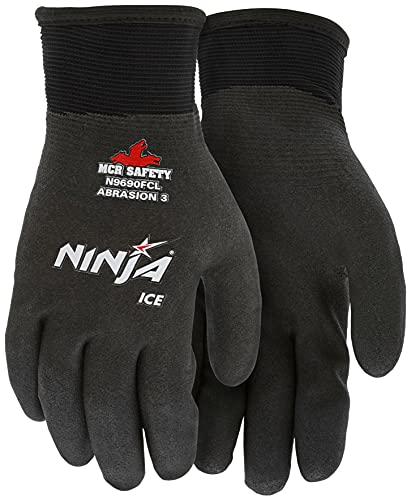
MCR Safety Gloves N9690FCL Ninja Ice Insulated Work Gloves 15-Gauge Black Nylon with Acrylic Terry Interior Fully Coated with HPT, Large, 1 Pair
Gloves/Cold Weather Gloves
As an affiliate, we earn on qualifying purchases.
As an affiliate, we earn on qualifying purchases.
Frequently Asked Questions
Can Refrigerants Cause Long-Term Health Effects?
Refrigerants can cause long-term health effects if you’re exposed to them over time. Continuous or long-term exposure might lead to health risks such as respiratory issues, nerve problems, or organ damage, especially if you’re not using proper safety measures. To protect yourself, always follow safety guidelines, wear protective gear, and guarantee adequate ventilation. Staying cautious helps reduce potential health risks from prolonged refrigerant exposure.
Are There Eco-Friendly Refrigerant Alternatives?
Yes, there are eco-friendly options and natural alternatives to traditional refrigerants. You can consider using hydrocarbon-based refrigerants like propane or isobutane, which have lower global warming potential. Additionally, natural refrigerants such as ammonia and carbon dioxide are gaining popularity for their minimal environmental impact. These eco-friendly options help reduce your carbon footprint and are safer for the environment, making them excellent choices for sustainable refrigeration systems.
How Should Spills Be Safely Cleaned Up?
Coincidentally, spills happen unexpectedly, so you should act quickly and carefully. First, put on protective gear like gloves and goggles to shield yourself. Use spill containment measures—absorbent materials or barriers—to prevent the refrigerant from spreading. Never use water directly on the spill, and ventilate the area. Properly dispose of contaminated materials according to local regulations, ensuring your safety and environmental protection.
What Are the First Steps During Refrigerant Leaks?
When you detect a refrigerant leak, start by stopping the system if possible. Use leak detection methods to locate the source quickly. Always wear protective gear, including gloves and goggles, to prevent exposure. Ventilate the area to disperse refrigerant fumes, and avoid open flames or heat sources. Carefully contain and repair the leak, then guarantee the area is properly ventilated before resuming operation.
Do Refrigerants Affect Indoor Air Quality?
Refrigerants can considerably impact indoor air quality, causing contamination when refrigerant emissions leak into the space. You might notice a chemical smell or experience symptoms like headaches or dizziness if indoor air becomes contaminated. To protect yourself, make certain of proper handling, ventilation, and leak detection. Staying vigilant about refrigerant emissions helps maintain a healthier indoor environment and minimizes potential health hazards linked to compromised air quality.

SENSYX Rechargeable HVAC Refrigerant Leak Detector, Halogen Freon Sniffer, Air Conditioning Detection, Automotive Gas Finder (SFD201 Refrigerant&Combustible Gas Detector)
RECHARGEABLE LITHIUM BATTERY: Enjoy the convenience of cordless operation with our rechargeable lithium battery. A USB-C cable is…
As an affiliate, we earn on qualifying purchases.
As an affiliate, we earn on qualifying purchases.
Conclusion
Remember, handling refrigerants isn’t just a task—it’s a responsibility that affects your safety and the environment. By following proper procedures, you protect yourself and those around you, like a guardian shielding what matters most. Don’t let complacency be your downfall; instead, embrace caution as your shield. When you prioritize safety, you turn a potentially dangerous task into a declaration of care. After all, isn’t safeguarding what truly matters?

VEVOR Air Mover Blower Fan 12 Inch, 3198CFM 585W with 33ft Flexible Duct, Industrial Portable Ventilator Blower/Exhaust, Orange
Efficient Ventilation: Powerful 585W AC motor features 3198 CFM airflow, swiftly clearing smoke and odors. Its flexible PVC…
As an affiliate, we earn on qualifying purchases.
As an affiliate, we earn on qualifying purchases.

VEVOR 1 HP Refrigerant Recovery Machine – Dual Cylinder Portable AC Recovery Machine with High Pressure Protection 120V 60Hz Recovery Machine HVAC for Vapor Liquid Refrigerant, Car Air Conditioning
Dual-cylinder Configuration: The 1 HP dual-cylinder brush motor refrigerant recovery machine boasts a maximum liquid recovery rate of…
As an affiliate, we earn on qualifying purchases.
As an affiliate, we earn on qualifying purchases.