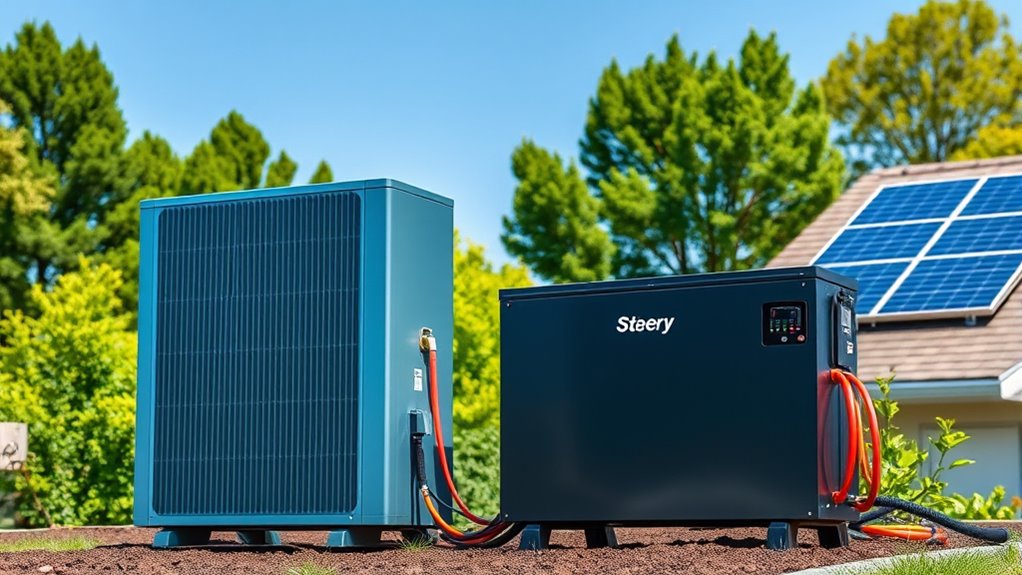

Integrating battery storage with renewable-powered heat pumps allows you to maximize energy efficiency and lower costs by storing surplus solar energy for later use. This setup helps you shift consumption to times when renewable energy is abundant or electricity rates are lower. It also supports grid stability and provides backup during outages, giving you more control over your energy use. To discover how this combination can benefit your home, keep exploring the possibilities.
Key Takeaways
- Battery storage enables energy arbitrage, storing excess renewable energy for later use with heat pumps, reducing costs.
- Integrating batteries supports grid stability by smoothing out fluctuations from variable renewable sources.
- Batteries provide backup power, ensuring continuous heat pump operation during outages or grid disruptions.
- Coupling batteries with heat pumps enhances renewable energy utilization, lowering carbon emissions.
- Stored energy allows better control of heating schedules, optimizing costs and maximizing renewable energy use.
Renewable-powered heat pumps are transforming home heating by offering an eco-friendly alternative to traditional systems, but their efficiency can be notably enhanced when paired with battery storage. By integrating batteries, you can optimize energy use, reduce reliance on the grid, and make the most of renewable generation. This combination not only lowers your carbon footprint but also helps stabilize the grid during peak demand periods. When your heat pump operates during times of high renewable energy production, you’re supporting grid stability and easing the burden on utility providers.
Battery storage allows you to perform energy arbitrage—buying electricity when prices are low, storing it, and using it when prices are high. This practice can considerably cut your energy costs by shifting consumption away from expensive peak times. For instance, if your solar panels generate surplus power during the day, you can store this excess energy in your batteries rather than sending it back to the grid or wasting it. Then, during the evening or when electricity rates spike, you draw from your stored energy to power your heat pump. This not only saves money but also maximizes the value of your renewable energy investment.
Furthermore, with battery storage, you gain greater control over your energy consumption patterns. Instead of passively drawing power from the grid, you become an active participant in the energy market. You can time your heat pump’s operation to coincide with periods when renewable energy is abundant or when electricity is cheapest, thereby reducing your overall costs and supporting a cleaner energy grid. This flexibility becomes especially important as more renewable sources come online, creating fluctuations that challenge grid stability. Your battery acts as a buffer, smoothing out these fluctuations and ensuring your home remains warm without overloading the system.
In addition, pairing batteries with heat pumps can improve resilience during power outages. When the grid experiences disruptions, your stored energy can keep your heating system running, maintaining comfort and safety. This independence from the grid is increasingly valuable as communities face more extreme weather events and grid stresses. Incorporating reliable backup power systems can further enhance your home’s energy resilience and readiness.
Frequently Asked Questions
How Does Battery Storage Impact the Overall System Cost?
Battery storage increases your system cost initially due to investment in technology and installation. However, a thorough cost analysis shows it can save you money long-term by reducing energy bills and optimizing renewable energy use. The technological integration can enhance system efficiency, but it’s essential to weigh upfront costs against potential savings. Proper planning guarantees you maximize benefits while managing the overall system cost effectively.
What Are the Maintenance Requirements for Integrated Battery and Heat Pump Systems?
You’ll need to regularly check battery calibration to guarantee peak performance and prevent efficiency loss. Additionally, maintenance involves inspecting for corrosion prevention, especially on terminals and connectors, to avoid damage and prolong system life. Keep the heat pump filters clean and ensure proper operation of the cooling and heating components. Routine inspections and timely servicing help maintain system reliability, efficiency, and safety, reducing potential repair costs over time.
How Does Climate Affect Battery Performance in These Setups?
Climate impacts your battery performance through temperature variability, which can reduce energy density and efficiency. Extreme cold or heat causes batteries to degrade faster and store less energy, affecting overall system reliability. To optimize performance, you should consider climate-specific cooling or heating solutions and select batteries designed for temperature fluctuations. Proper insulation and management systems help maintain stable temperatures, ensuring your battery’s energy density stays high and performance remains consistent.
Can Existing Heat Pumps Be Upgraded With Battery Storage?
You can definitely upgrade existing heat pumps with battery storage, but it’s not a walk in the park. You’ll need to check battery compatibility to confirm the new system works seamlessly with your current setup. Retrofit challenges include space constraints, electrical adjustments, and ensuring safety standards. While it’s doable, consulting a professional helps you avoid hiccups and makes the upgrade smoother. Don’t put all your eggs in one basket—plan carefully!
What Are the Best Practices for Maximizing Battery Lifespan in This Context?
To maximize battery lifespan, you should regularly perform battery calibration to guarantee accurate energy readings and prevent overcharging or deep discharging. Practice energy balancing by distributing load evenly and avoiding peak usage times. Keep the battery system in a stable environment, and monitor its temperature regularly. Proper maintenance, combined with smart energy management and avoiding unnecessary cycling, helps extend battery life and maintains ideal performance in renewable-powered heat pump systems.
Conclusion
Imagine your home as a symphony, where renewable heat pumps are the melody and batteries are the steady rhythm keeping everything in sync. By integrating battery storage, you not only store excess energy but also create harmony during peak times. Studies show this pairing can cut energy costs by up to 30%. Just like a well-conducted orchestra, combining these technologies guarantees your home runs smoothly, efficiently, and sustainably—resonating with a brighter, greener future.