Biomass hybrid systems with heat pumps combine the strengths of both to create a flexible, efficient heating solution. During colder months, biomass provides reliable heat, while heat pumps perform well in milder weather. This combination cuts reliance on fossil fuels, lowers emissions, and offers cost savings. With components like boilers, heat pumps, and solar collecters working together, you’ll enjoy a resilient system. Continue exploring to discover how these innovations can benefit your energy needs.

Get backup power and energy gear delivered free — and shop member deals
- Fast, free delivery on millions of items
- Access to Prime Big Deal Days deals on October 6–7
- Prime Video, Amazon Music and more included
Key Takeaways
- Biomass hybrid systems combine biomass boilers and heat pumps for efficient, renewable heating tailored to seasonal variations.
- These systems optimize energy use by relying on biomass during cold months and heat pumps in milder weather.
- Integration includes components like solar collectors, thermal storage, and advanced control systems for seamless operation.
- Benefits include reduced fossil fuel dependence, lower emissions, increased system flexibility, and cost savings.
- Future developments focus on enhanced efficiency, smart grid integration, and policy-driven incentives for wider adoption.
How Biomass and Heat Pumps Complement Each Other
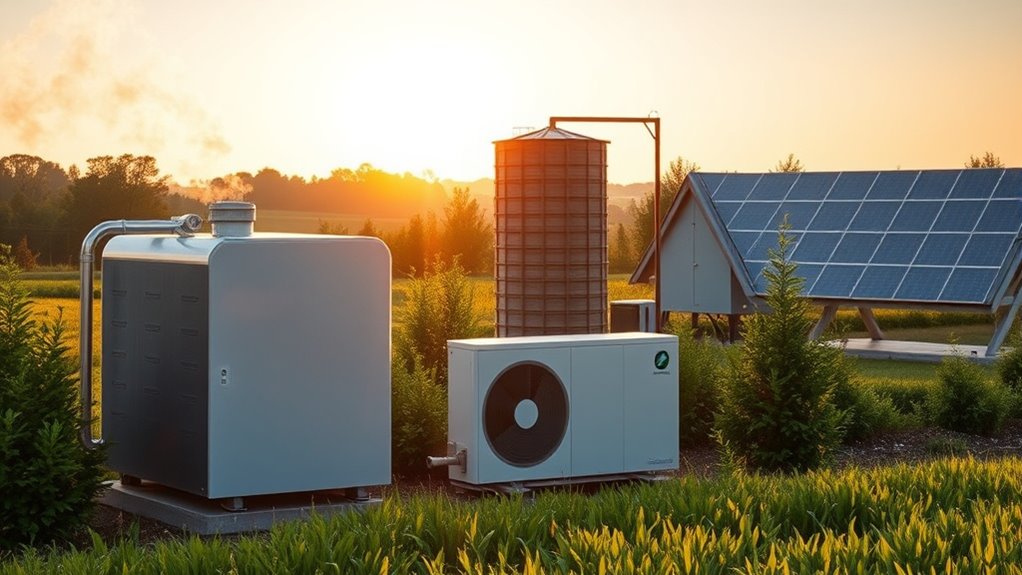
Biomass and heat pumps can work together effectively because they each excel under different conditions. Biomass energy provides a reliable, renewable heat source, especially during colder months when ambient temperatures drop. It can operate independently, offering consistent heat regardless of outside conditions. Heat pump efficiency, on the other hand, peaks during milder weather, as they perform best when the temperature differential is smaller. By integrating both systems, you can optimize energy use: biomass handles high-demand periods and cold weather, while heat pumps efficiently heat during moderate temperatures. This synergy reduces reliance on fossil fuels, enhances overall system efficiency, and guarantees a steady, eco-friendly energy supply. Combining these technologies creates a flexible, resilient heating solution tailored to varying seasonal needs. Additionally, understanding potential pitfalls in adopting new payment technologies can help ensure the financial sustainability of such integrated systems.
Components and Design of Hybrid Systems

A hybrid biomass and heat pump system combines key components that work seamlessly together to deliver efficient heating. The core elements include the biomass boiler, heat pump, and controls for system coordination. Solar integration enhances system efficiency by capturing renewable energy, reducing reliance on fossil fuels. Proper design guarantees ideal operation and energy flow. You should consider factors like system sizing, insulation, and integration points for solar and heat sources. Here’s an overview:
| Component | Function | Key Feature |
|---|---|---|
| Biomass Boiler | Provides thermal energy from biomass | Fuel flexibility |
| Heat Pump | Extracts heat from environment | Energy-efficient operation |
| Control System | Manages component interaction | Optimizes system performance |
| Solar Collector | Captures solar energy | Enhances renewable input |
| Storage Tank | Stores thermal energy | Balances supply and demand |
Additionally, understanding system efficiency is crucial for optimizing overall performance and maximizing energy savings.
Benefits of Integrating Biomass With Heat Pump Technology
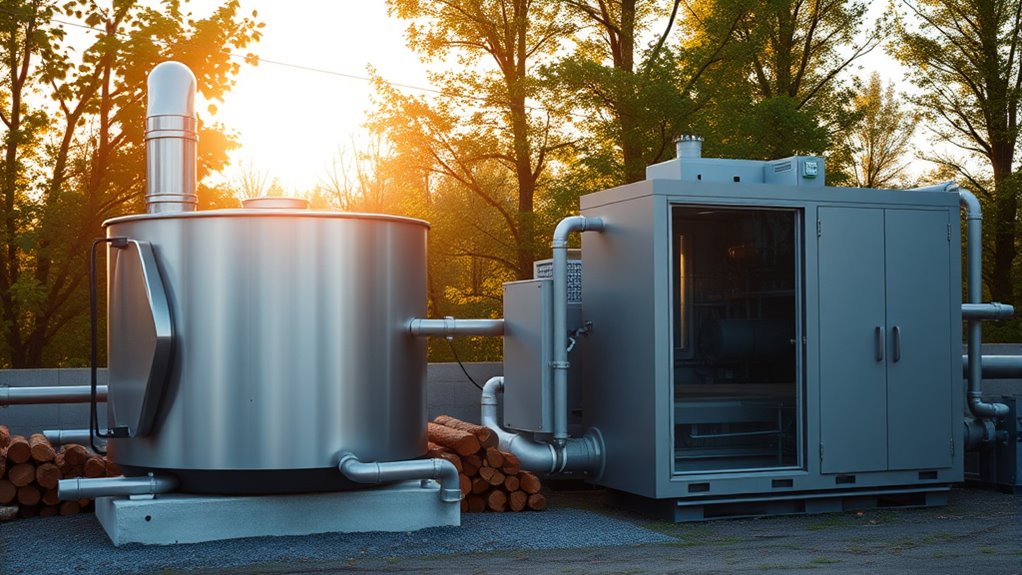
Integrating biomass with heat pump technology offers significant advantages by combining renewable energy sources to maximize efficiency and reduce costs. Using biomass feedstock as a supplementary heat source can support the heat pump during peak demands or colder periods, improving overall heat pump efficiency. This hybrid approach reduces reliance on fossil fuels, lowering carbon emissions and operational expenses. You benefit from increased system flexibility, as biomass can be stored and used as needed, ensuring consistent heating even when renewable energy sources fluctuate. Additionally, integrating biomass can extend the lifespan of your heat pump system by lessening its workload. Comfort and support solutions, such as reliable heating options, are enhanced through this hybrid system, providing a more resilient and cost-effective heating solution. Overall, this combination optimizes energy use, enhances sustainability, and provides a more resilient and cost-effective heating solution.
Applications and Case Studies
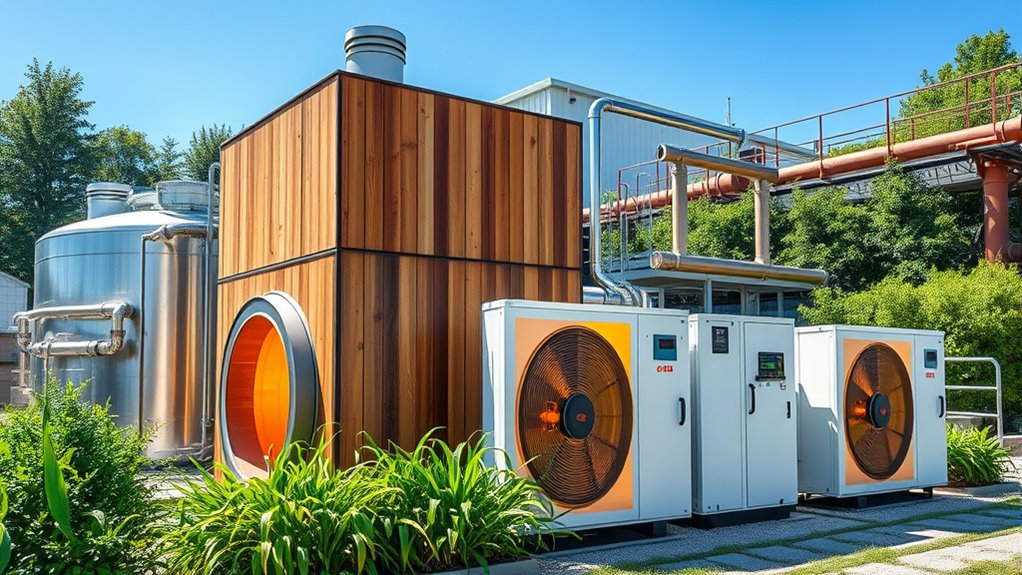
Have you seen how hybrid biomass and heat pump systems are transforming real-world applications? These systems are increasingly used in residential, commercial, and industrial settings to reduce energy costs and emissions. For example, some communities adopt biomass heat pumps to support biodiversity conservation by utilizing local waste resources, minimizing environmental impact. Policy incentives, such as grants or tax credits, encourage adoption, making these systems more accessible. Case studies highlight successful implementations where hybrid systems improve energy efficiency while promoting sustainable practices. In rural areas, they provide reliable heating solutions that also preserve local ecosystems. As these applications grow, you’ll see more integration in policies aimed at reducing carbon footprints, demonstrating how hybrid biomass and heat pumps can be practical, eco-friendly solutions for diverse needs.
Future Trends and Developments in Hybrid Energy Solutions

As technological advances accelerate, hybrid energy solutions like biomass and heat pump systems are poised to become even more efficient and versatile. Future trends focus on achieving carbon neutrality and leveraging policy incentives to drive adoption. You can expect developments such as:
- Integration of smart grid technology to optimize energy use and reduce emissions.
- Increased government incentives encouraging sustainable system deployment.
- Innovations in biomass processing and heat pump efficiency to lower costs and environmental impact.
- Enhanced privacy and cookie management practices to ensure user trust and compliance with evolving regulations.
These trends will help you reduce reliance on fossil fuels, meet stricter climate targets, and benefit from supportive policies. As hybrid solutions evolve, they’ll become more accessible, helping you contribute to a sustainable, low-carbon future while enjoying reliable, cost-effective heating and cooling.
Frequently Asked Questions
What Are the Environmental Impacts of Biomass Hybrid Systems?
You’re wondering about the environmental impacts of biomass hybrid systems. These systems can reduce your carbon footprint by utilizing renewable resources, but they may also affect biodiversity if forests are not managed sustainably. Burning biomass releases some emissions, so it is crucial to balance energy benefits with ecological concerns. Properly managed systems help minimize negative impacts, making them a more environmentally friendly option while supporting renewable energy goals.
How Do Maintenance Requirements Differ Between Biomass and Heat Pumps?
You’ll find that maintenance complexity varies between biomass and heat pumps. Biomass systems often require more frequent upkeep, like cleaning ash and maintaining fuel supply, which can affect the system lifespan. Heat pumps generally need less maintenance, mainly periodic filter changes and inspections. Overall, understanding these differences helps you plan for ongoing care, ensuring your system remains efficient and prolongs its lifespan with proper maintenance.
What Are the Initial Costs for Installing Hybrid Systems?
Your initial investment in a hybrid system might seem intimidating—like purchasing a spaceship! The cost analysis varies depending on system size, technology, and installation complexity. Typically, hybrid systems cost more upfront than traditional setups, but they offer long-term savings through efficiency. Expect to spend a substantial amount initially, but the energy savings and environmental benefits will make your investment worthwhile over time.
Can Biomass Hybrids Be Integrated With Existing Heating Infrastructure?
You can often integrate biomass hybrids with your existing heating infrastructure, but it comes with some integration challenges. You’ll need to evaluate your current system for compatibility, addressing retrofit considerations like space, piping, and control systems. Upgrading parts may be necessary to guarantee smooth operation. Consulting professionals helps identify potential issues early, making the integration process more efficient and ensuring your hybrid system works seamlessly with your current setup.
How Do Seasonal Variations Affect System Performance?
Oh, the joys of seasonal variations—just when you think your system’s all set, solar fluctuations and efficiency fluctuations throw a wrench in the works. You might expect steady performance, but winter’s chill and summer’s sun can cause your biomass hybrid system to stumble. These fluctuations challenge system stability, making you realize that adapting to seasonal changes isn’t just a bonus but a necessity for reliable heating year-round.
Conclusion
By blending biomass and heat pumps, you create a symphony of renewable energy, where each plays its part in harmony. This hybrid system acts as a steadfast tree rooted in sustainability, offering stability and resilience. As you embrace this innovative partnership, you’re planting seeds for a greener future, nurturing a cycle of clean energy that grows stronger with each season. Together, they symbolize hope—an enduring forest of possibilities in your pursuit of sustainable living.
Fall Picks
fall essentials
As an affiliate, we earn on qualifying purchases.