
TL;DR

Get backup power and energy gear delivered free with Prime
- Fast, free delivery on millions of items
- Prime Video, Amazon Music and more included
- Member-only deals all year
California Gov. Gavin Newsom signed Assembly Bill 2493, requiring utilities and independent transmission developers to submit schedules for major upgrades needing a state permit. The law gives the California Public Utilities Commission a monitor role and authority to order remedial action when projects fall behind. A CPUC report says nearly 22 gigawatts of renewable and battery projects depend on transmission projects already delayed.
California Gov. Gavin Newsom signed Assembly Bill 2493, a law requiring utilities and independent transmission developers to provide schedules for major grid upgrades that need a permit from the California Public Utilities Commission. The measure gives the CPUC a new monitoring role and authority to order remedial actions if projects fall behind, amid delays that the commission says are holding up clean energy and battery connections.
Under AB 2493, companies responsible for major transmission upgrades must submit project schedules to the CPUC. The law also establishes a transmission development monitor within the commission to track progress. If the monitor finds that a utility or developer is not on schedule, the CPUC must require remedial actions. The source report does not describe the specific actions or penalties that could follow.
The scale of the delays is set out in a November 2025 CPUC report. Nearly 22 gigawatts of renewable generation and battery installations depend on transmission projects that have already experienced delays, the report says. Of that capacity, 13.2 gigawatts have already been delayed or are at risk of delay because of transmission timelines. These figures describe projects’ dependence on delayed upgrades; they do not establish that all the generation or storage has been canceled.
The measure was sponsored by the state branches of the American Clean Power Association and the Union of Concerned Scientists. Alex Jackson, executive director of American Clean Power–California, said the law is intended to add oversight rather than punish utilities. The policy change addresses the timing and visibility of upgrades, not the separate construction, permitting and cost challenges that can affect whether a line is built.
Delays Put Clean Power Connections at Risk
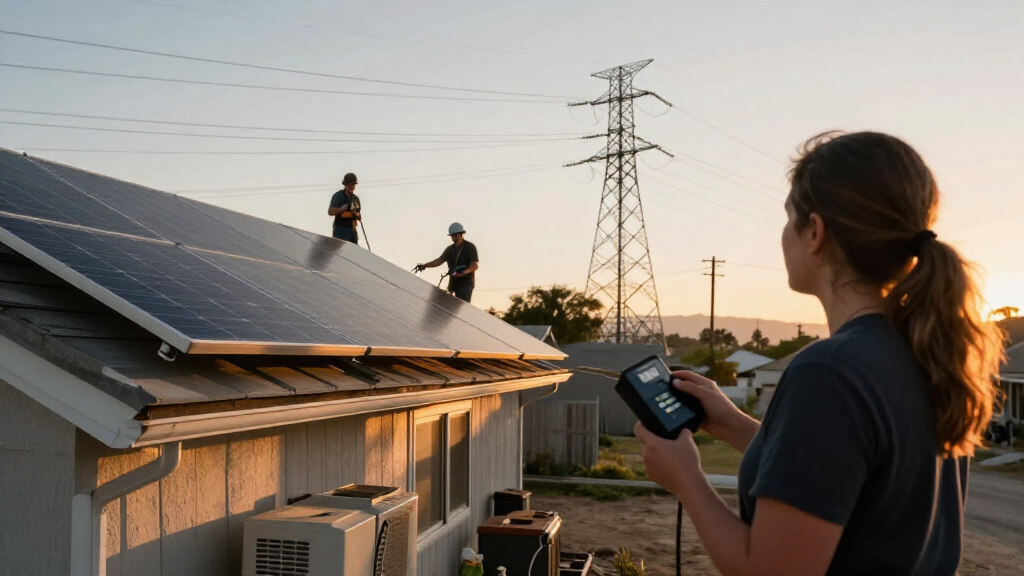
Transmission lines carry electricity from power plants and storage sites to the grid and the customers who use it. When a necessary upgrade is postponed, a renewable energy or battery project can face a longer wait to connect, even if the project itself is progressing. The CPUC figures indicate that large amounts of proposed clean generation and storage are exposed to this risk.
The law’s practical significance is that regulators are to receive schedules and monitor project progress, rather than leaving the timing of upgrades solely to the companies developing them. That may give state officials and project developers earlier notice of slippage and a route to seek corrective action. The source does not establish that the law will speed construction or specify how quickly the CPUC will intervene.
The issue also affects California’s longer-term energy plans. The source report says the state needs to add 7 to 8 gigawatts of capacity annually for two decades to meet its climate targets, roughly twice the current pace. That is the report’s estimate of the capacity-addition challenge; it is not a forecast that AB 2493 alone will deliver that expansion.
renewable energy transmission line monitor
As an affiliate, we earn on qualifying purchases.
As an affiliate, we earn on qualifying purchases.
California’s Transmission Buildout Gap
The state has approved substantial transmission investment. According to the source report, the California grid operator approved just under $28 billion in new projects over the five years preceding the report. But approvals do not mean that projects are completed on schedule, and the reported delays leave a gap between planning and the upgrades needed to connect new electricity resources.
Transmission projects can be difficult to site, permit and build, and the source notes that these obstacles are not unique to California. The state’s climate targets make the timing especially consequential, because they require a sustained increase in electricity capacity. AB 2493 focuses on oversight of projects that require CPUC permits; it does not, based on the available account, remove the broader barriers to building new lines.
Developers have also described learning late in a project’s development that a needed upgrade has been postponed. One developer, whose identity was withheld in the report, said a project had been planned around a substation upgrade expected in late 2026 or early 2027, before the developer received notice that it would be delayed by five years or more. That account is an attributed example, not a published assessment of every delayed project.
“The goal is not to punish utilities, but “simply to provide more oversight.””
— Alex Jackson, executive director of American Clean Power–California
battery storage project monitoring system
As an affiliate, we earn on qualifying purchases.
As an affiliate, we earn on qualifying purchases.
Implementation Details Remain Open
The available report does not say when the CPUC will appoint the monitor, how frequently it will review schedules or what forms of remedial action it can require. It also does not identify which specific upgrades will be covered first or provide a timeline for the commission’s implementation of the law.
It remains unclear how much the new oversight will change construction timelines. The reported 22 gigawatts and 13.2 gigawatts are measures of projects dependent on upgrades that have experienced or face delay, not confirmed totals of capacity permanently lost. The source does not provide project-by-project completion dates or establish that every risk will result in a delay.
As an affiliate, we earn on qualifying purchases.
CPUC Monitoring and Utility Schedules
The next steps are for the CPUC to establish the monitor role and put the new scheduling and oversight requirements into practice. Utilities and independent developers covered by the law will need to submit schedules for major upgrades requiring a commission permit. The commission is then responsible for tracking progress and ordering remedial actions when projects are off track.
Further details from the CPUC will clarify how it defines and reviews schedule slippage, what actions it can require and how developers will learn about changes. Until those procedures and project updates are available, the law’s effect on the timing of delayed upgrades—and on the clean energy projects waiting to connect—remains undetermined.
power grid project management tools
As an affiliate, we earn on qualifying purchases.
As an affiliate, we earn on qualifying purchases.
Key Questions
What does California’s AB 2493 require?
It requires utilities and independent transmission developers to submit schedules for major upgrades that need a CPUC permit. It also creates a commission monitor to track progress and requires the CPUC to order remedial actions when projects are behind schedule.
How much clean energy and storage is affected by transmission delays?
A November 2025 CPUC report said nearly 22 gigawatts of renewable generation and battery installations depend on transmission projects that have experienced delays. It said 13.2 gigawatts had been delayed or were at risk of delay because of transmission timelines.
Will the law make delayed transmission projects finish sooner?
That is not yet known. The law adds schedules, monitoring and a mechanism for remedial action, but the source report does not provide implementation details or evidence of an effect on completion dates.
Why does California need more transmission capacity?
The source report says the state needs to add 7 to 8 gigawatts of capacity each year for two decades to meet its climate targets, roughly twice its current pace. New transmission is needed to connect power sources and storage to the grid.
Source: rss
Halloween Picks
halloween
As an affiliate, we earn on qualifying purchases.