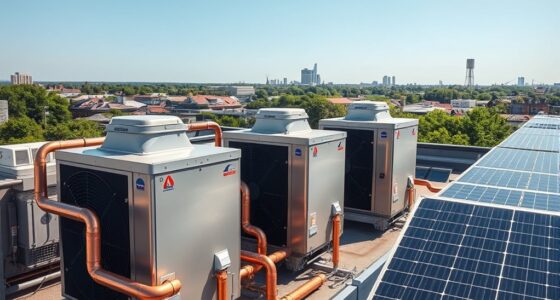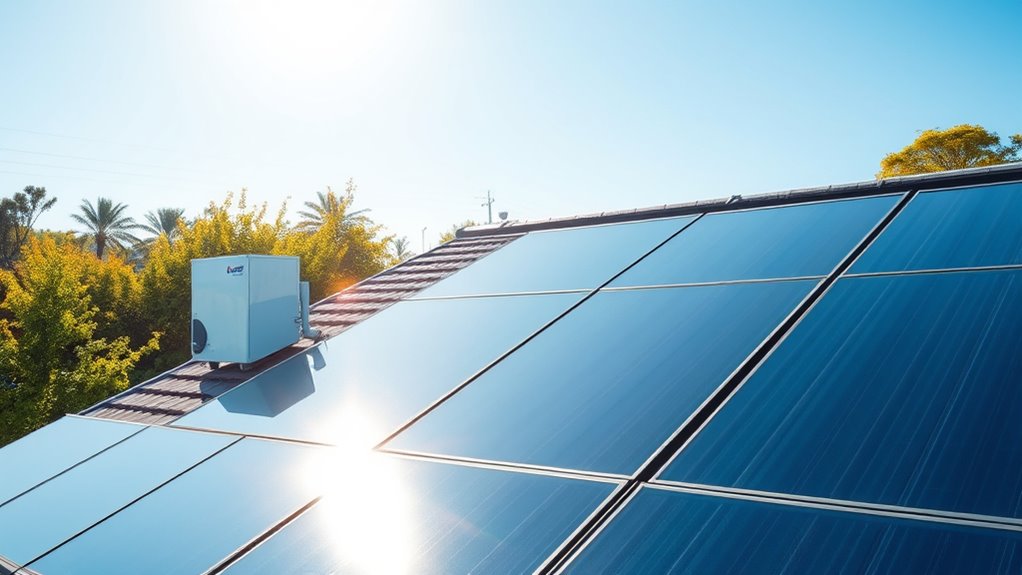

Integrating renewable energy sources like solar photovoltaics and geothermal systems with heat pumps can substantially cut your home’s carbon footprint and energy bills. Solar PV systems provide clean electricity that powers heat pumps efficiently, while geothermal taps into stable underground temperatures for reliable heating and cooling. This layered approach ensures consistent comfort year-round. If you want to discover how these technologies work together to create an eco-friendly, cost-effective energy system, keep exploring further.
Key Takeaways
- Heat pumps are vital for transitioning to renewable home heating, reducing fossil fuel reliance.
- Integration with solar PV and geothermal enhances efficiency, sustainability, and energy independence.
- Solar PV offsets electricity needs, while geothermal offers reliable, year-round heating.
- Combining renewable sources with heat pumps lowers emissions and supports decarbonization goals.
- Technological advancements are making renewable-integrated heat pump systems more affordable and easier to install.
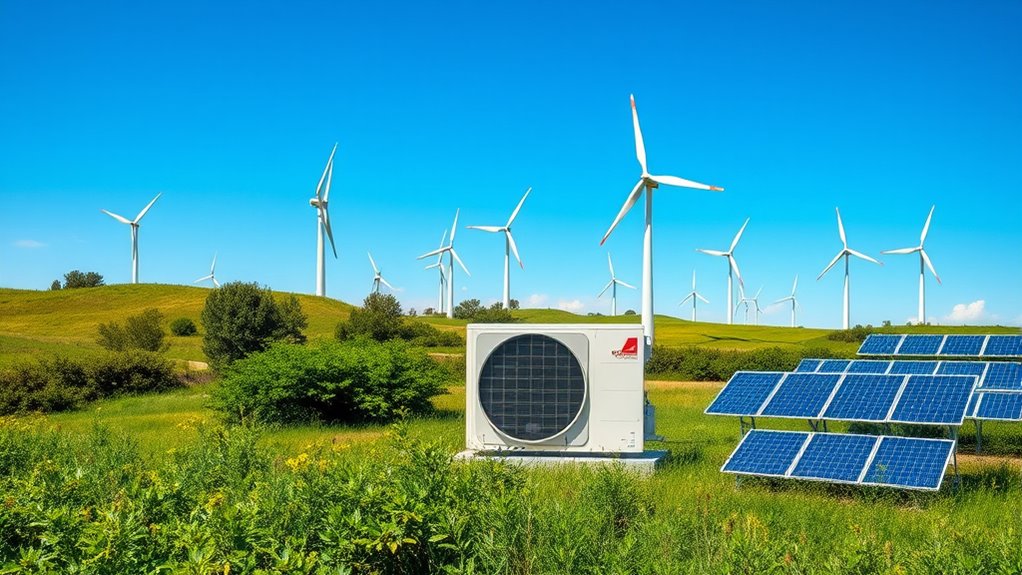
Renewable energy sources are transforming how we heat our homes, and heat pumps play a vital role in this shift. By combining heat pumps with renewable energy technologies like solar photovoltaics and geothermal heating, you can substantially reduce your reliance on fossil fuels, lower your energy bills, and decrease your carbon footprint. Solar photovoltaics, for example, allow you to generate your own electricity from sunlight, which can power your heat pump directly or supply energy to the grid, making your entire heating system more sustainable. When paired with a heat pump, solar PV systems can optimize energy use, especially during sunny days when excess solar power is available, reducing the need for grid electricity. This synergy not only cuts costs but also enhances energy independence.
Combining heat pumps with solar and geothermal energy reduces costs, reliance on fossil fuels, and carbon footprint for sustainable home heating.
Geothermal heating, on the other hand, taps into the stable underground temperature to provide efficient, year-round heat. When integrated with a heat pump, geothermal systems become even more effective, as the heat pump circulates fluid through underground loops to extract heat in winter or cool your home in summer. This integration offers a highly reliable and energy-efficient solution, especially in regions with extreme temperatures. The combination of geothermal heating with heat pumps minimizes energy waste and maximizes efficiency, making it a smart choice for long-term sustainability.
The beauty of combining these renewable sources with heat pumps is that they work together seamlessly to maximize your home’s energy performance. Solar photovoltaics can offset the electricity demands of your heat pump during peak sunlight hours, while geothermal heating provides a consistent source of warmth regardless of outdoor weather conditions. This layered approach guarantees your home remains comfortable and energy-efficient throughout the year. Additionally, advances in technology have made these systems more accessible and easier to install, allowing you to take full advantage of renewable energy integration without substantial upfront costs.
Furthermore, integrating renewable energy sources with heat pumps aligns with global efforts to decarbonize the energy sector. It helps you contribute to reducing greenhouse gas emissions while enjoying reliable, cost-effective heating. As policies and incentives increasingly favor renewable solutions, adopting a combination of solar photovoltaics or geothermal heating with heat pumps becomes not just environmentally responsible but also economically advantageous. This integrated approach empowers you to be part of the transition toward a cleaner, more sustainable energy future, ensuring your home stays warm and eco-friendly for years to come.
Frequently Asked Questions
What Are the Initial Costs for Integrating Renewable Energy With Heat Pumps?
You’ll find that initial costs for integrating renewable energy with heat pumps vary, depending on your system size and location. Conducting a thorough cost analysis helps you understand expenses, including equipment, installation, and permits. Luckily, financing options like loans or government incentives can ease the financial burden. By exploring these, you can make informed decisions and potentially reduce upfront costs, making sustainable energy more accessible and affordable.
How Do Weather Conditions Affect the Efficiency of Combined Systems?
Weather variability considerably impacts your combined system’s efficiency, especially with seasonal performance fluctuations. For instance, heat pumps operate ideally when outdoor temperatures stay between 35°F and 70°F, but efficiency drops in colder weather, reducing output by up to 25%. In hot climates, cooling demands increase, affecting overall performance. Understanding these weather conditions helps you plan for maximum energy use and maintain system efficiency year-round.
Are There Government Incentives for Installing Renewable Heat Pump Systems?
Yes, there are government incentives like grants and tax credits available when you install renewable heat pump systems. These programs aim to make renewable energy more affordable, encouraging you to switch to sustainable heating solutions. You should check your local, state, or federal programs, as eligibility and benefits vary. Taking advantage of these incentives can markedly reduce your upfront costs and accelerate your shift to cleaner energy.
What Maintenance Is Required for Hybrid Renewable and Heat Pump Setups?
You’ll find that maintaining your hybrid renewable and heat pump system is surprisingly straightforward—think of it as regular car care. You’ll need to calibrate the system periodically to keep it running efficiently and watch for component replacements, like filters or sensors, which may wear out over time. While it’s not exactly a full-time job, staying on top of these tasks ensures your system performs at its best and saves you money in the long run.
How Long Is the Typical Lifespan of Integrated Renewable Heat Pump Systems?
Your integrated renewable heat pump system typically lasts around 15 to 20 years, thanks to system durability. Advances in technology have improved components’ lifespan and efficiency, ensuring you get the most out of your investment. Regular maintenance can extend this lifespan further. As technological advancements continue, future systems may become even more durable, reducing replacement frequency and increasing long-term reliability for your renewable energy setup.
Conclusion
By embracing renewable energy and heat pumps, you’re opening the door to a greener future, where your home becomes a beacon of sustainability. Think of it as planting a seed that grows into a flourishing tree, providing clean energy for years to come. Together, these technologies form a powerful alliance, turning your everyday actions into waves of positive change. So, step forward confidently—you’re part of a movement shaping a brighter, cleaner world for everyone.