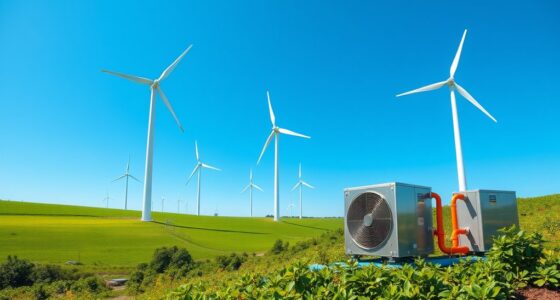
Integrating EVs and heat pumps into your solar system requires a holistic design approach focused on maximizing efficiency and sustainability. You’ll need to size your solar array to meet increased energy demands, incorporate batteries for storing excess energy, and use smart management systems to schedule appliance use during peak production. These steps help reduce reliance on the grid and waste. If you keep exploring, you’ll discover how these strategies create a resilient, future-proof energy setup.

Get backup power and energy gear delivered free with Prime
- Fast, free delivery on millions of items
- Prime Video, Amazon Music and more included
- Member-only deals all year
Key Takeaways
- Integrating EVs and heat pumps requires sizing solar arrays to meet combined energy demands and maintain surplus for storage.
- Battery storage is essential for balancing supply, enabling efficient use of solar energy during low production periods.
- Smart energy management optimizes the timing of EV charging and heat pump operation based on real-time solar output.
- Proper integration prevents energy waste, reduces reliance on the grid, and enhances overall system resilience.
- Future-proof design considers capacity expansion and advanced controls for evolving EV and heat pump technologies.
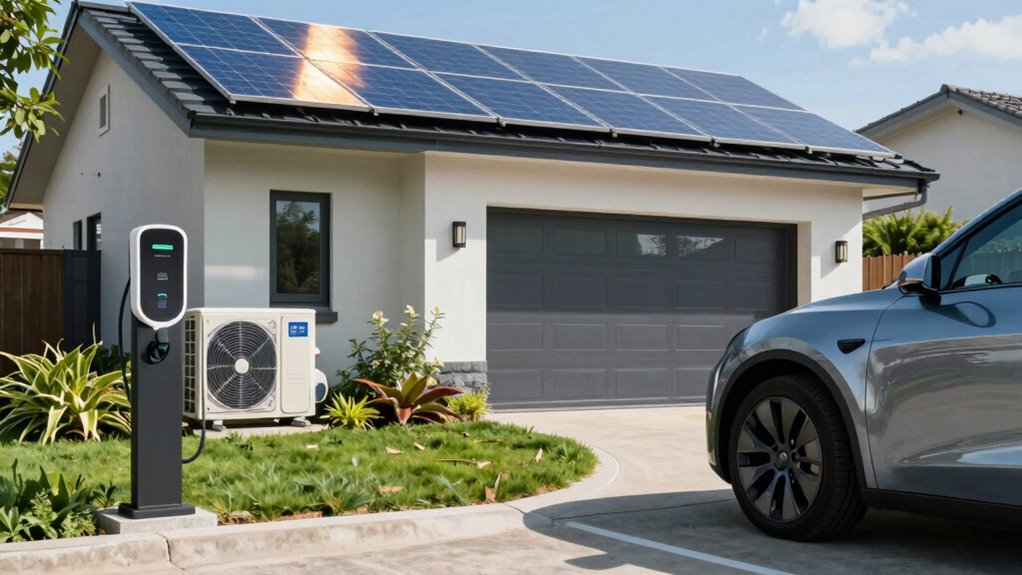
Have you ever wondered how electric vehicles (EVs) and heat pumps are shaping the future of sustainable living? These technologies are more than just innovations; they’re catalysts for transforming how we design solar systems. As you plan your solar setup, understanding how to incorporate EVs and heat pumps can profoundly influence your energy strategy. One key aspect is battery integration, which involves seamlessly connecting batteries to your solar array, EV charger, and heat pump. This integration ensures that excess solar energy gets stored efficiently, so you can draw from it later when the sun isn’t shining. Proper battery integration helps prevent energy waste and balances supply and demand, making your system smarter and more responsive. Additionally, being aware of potential heat pump failures and how to address them can help maintain system reliability and efficiency over time. Recognizing the importance of energy storage is crucial, as it enables your system to function effectively during periods of low solar production. Incorporating smart energy management systems can further optimize your setup by automatically adjusting appliance operation based on real-time data. Efficiency optimization becomes vital as you adapt your solar design to accommodate these appliances. EVs and heat pumps demand substantial energy, and if your system isn’t optimized, you might find yourself relying heavily on grid energy or wasting excess power. To avoid this, you need to fine-tune your system so it aligns with your energy usage patterns. This could mean scheduling EV charging during peak sunlight hours or activating your heat pump when solar production is highest. Such strategies maximize the use of renewable energy, reduce costs, and minimize your carbon footprint. Including smart controllers or energy management systems can further enhance efficiency by automating these adjustments, ensuring your appliances operate at the most opportune times. Furthermore, considering the interplay between EVs, heat pumps, and solar design encourages a holistic approach. Instead of viewing each component separately, you recognize their mutual influence. For example, the size of your solar array should account for the energy needs of your EV and heat pump. A larger array might be necessary to meet increased demand while still maintaining surplus energy for storage. This approach not only improves system efficiency but also future-proofs your home as EVs become more common and heat pumps gain popularity. In essence, integrating batteries effectively and optimizing efficiency are central to making your solar system sustainable and resilient. As you adapt your design, you’re not just installing panels—you’re creating a cohesive energy ecosystem that leverages the full potential of renewable sources. By doing so, you’ll guarantee that your investment supports a cleaner future, reduces reliance on fossil fuels, and keeps your home powered sustainably for years to come. The choices you make now influence how well your system performs and how seamlessly it integrates technology like EVs and heat pumps into your everyday life. Incorporating battery capacity planning early in your design process can ensure your system remains adaptable as your energy needs grow.
As an affiliate, we earn on qualifying purchases.
Frequently Asked Questions
How Do EV Charging Habits Impact Solar Energy Storage Needs?
Your EV charging habits considerably impact your solar energy storage needs. Frequent charging during peak sunlight hours allows better vehicle integration, reducing reliance on grid power. However, if you charge mostly at night or during off-peak times, you’ll need larger energy storage to optimize your solar system’s performance. By adjusting your habits, you can enhance energy optimization, making your solar setup more efficient and cost-effective while supporting your EV charging demands.
What Are the Long-Term Maintenance Costs for Heat Pumps in Solar Homes?
Your heat pump’s long-term maintenance costs are generally moderate, mainly involving periodic inspections, filter changes, and occasional refrigerant refills. Well-maintained systems tend to last 10-15 years, offering good system longevity. By investing in regular upkeep, you can reduce unexpected repairs and extend the heat pump’s lifespan, ultimately lowering maintenance costs over time. Proper care guarantees your solar-powered home remains efficient and cost-effective for years to come.
How Can Solar Design Adapt to Future EV and Heat Pump Technology Changes?
Think of your solar design as a flexible sail catching future winds. To adapt to evolving EV and heat pump tech, you should prioritize modular systems that can upgrade easily. Focus on enhancing battery efficiency and seamless grid integration, ensuring your system remains resilient and efficient. This way, your solar setup stays ahead of the curve, ready to harness new technologies without costly overhauls.
What Are the Financial Incentives for Integrating EVS and Heat Pumps With Solar?
You can benefit financially by integrating EVs and heat pumps with solar, thanks to incentives like tax credits and rebates that boost battery efficiency and support grid integration. These programs help offset installation costs and encourage renewable energy use. By leveraging these incentives, you not only save money upfront but also enhance your system’s efficiency, making your home more sustainable and reducing long-term energy expenses.
How Does Climate Variation Influence Solar System Sizing for EV and Heat Pump Compatibility?
Think of climate zones and weather patterns as the weather’s mood swings, shaping your solar system’s size. In colder climates, you’ll need a larger system to meet the heat pump and EV demands, while milder zones may require less. You must adapt your solar design to these variations, ensuring your panels can handle seasonal changes and keep your energy flow steady, no matter the weather’s unpredictable dance.
smart energy management system for solar
As an affiliate, we earn on qualifying purchases.
As an affiliate, we earn on qualifying purchases.
Conclusion
You might worry that integrating EVs and heat pumps complicates solar design, but it actually offers a smarter, more efficient way to power your home. By embracing these technologies, you reduce reliance on the grid and lower your energy costs. Don’t let initial concerns hold you back—modern solar solutions are flexible and adaptable, making it easier than ever to create a sustainable, cost-effective lifestyle. The future of energy is here, and it’s within your reach.
EV charger compatible with solar panels
As an affiliate, we earn on qualifying purchases.
As an affiliate, we earn on qualifying purchases.
As an affiliate, we earn on qualifying purchases.
Fall Picks
fall essentials
As an affiliate, we earn on qualifying purchases.